 Episode Two in our newest Seasonal Video series, Gesima: the Sundays in Pre-Lent, was uploaded yesterday. The second and last episode in the series, it is focused on the Collect, Epistle and Gospel for both Sexagesima Sunday and Quinquagesima Sunday plus commentary on Shrove Tuesday, the last day before Lent.
The purpose of this series and the other Seasonal Videos that will come out later this year (including complete series on Lent, Easter and Trinity seasons) is to help Anglicans and other traditional Christians understand the rich historical legacy they’ve received since the days of the Apostles as a means of defense in the world’s War on Christianity. I believe it is absolutely vital to the Church that 21st C. Christians do not lose their connections with the liturgies and traditions of Christianity. There is strength and wisdom in knowing you are saying the same prayers which Christians all around the world have been saying for centuries and centuries. All this modern desire to rephrase the historical into vague, colorless modern vocabulary, and singing hymns that call to mind an Oscar Meyer hotdog jingle rather than real spirituality, is just a way to change the meaning. After a few years it becomes like the secret told in sequence to ten different people, with what emerges having nearly nothing similar to the original story. Frankly, this is what makes me thankful to be an Anglican, using a nearly unchanged prayer book that is largely unaltered since 1549 A.D. and is based upon liturgies, translated into English, which had been in use in one form or another since the early centuries of Christianity.
In addition to pictures of notable Anglican Churches, the episode also includes reference to several hymns from The St. Chrysostom Hymnal suitable for Sexagesima and Quinquagesima Sundays. Information about the Hymnal is available at our Virtual Bookstore on my Amazon Author Central page.
Watch Episode Two. Listen to the Podcast of Episode Two
On the topic mentioned about, concerning traditional doctrine and practice: On Monday, the Washington Times published an Op-Ed on Christianity and the risk it, and Western Civilization, face in today’s world. I’ve linked the article below. A must-read article from Monday, 1/29/2018 Washington Times.
 I’ve been working on the slides and script for Episode One in the Lent A.D. 2018 seasonal video. which must be uploaded days before Ash Wednesday, 2/14. There will be three main areas of interest in Episode One: church meaning of the season; origin of the season; and discussion of services (Holy Communion and Penitential Office) for Ash Wednesday. The first draft of the title/masthead is at left. The image of a draped Cross is copyright Can Stock Photo, Inc./Robhainer. There will be pictures of Anglican Churches around the world, especially altars, including St. Paul’s in London. Episode Two will be focused on First, Second, Third, and Fourth Sundays in Lent. I’m still searching for pictures to use in the series. Any suggestions would be welcome. Pass them along to me via email at: front.stjohnanglican@earthlink.net.
As always, thank you for your interest in and support for the Anglican Internet Church. May the Lord bless you in all that you do in His Name. Amen. Glory be to God for all things! Amen!
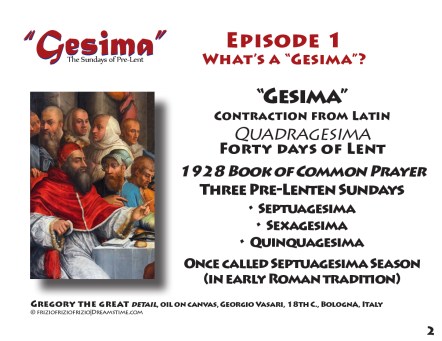 The next teaching series in the AIC Seasonal Video category, Gesima: the Sundays of Pre-Lent, begins today with Episode One. In Episode One I discuss the origin (both the historical and language) of the name, the season’s importance for traditional Anglican worship and a discussion of the first Sunday in the season, Septuagesima Sunday, including appropriate music.
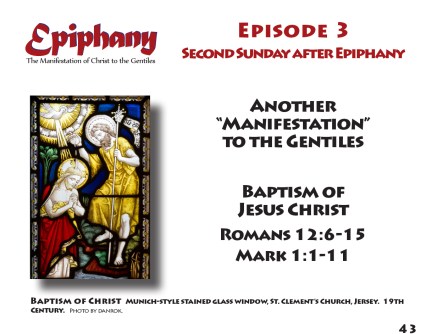 Episode Three, the final episode, in the AIC Seasonal Video series, Epiphany: the Manifestation of Christ to the Gentiles, is now available in both video and podcast versions. Episode Three is exclusively focused on the Second Sunday after Trinity through the Sixth Sunday after Trinity, including the complicated rules for their celebration in years with both 26 and 27 Sundays after Trinity. For each Sunday there is a discussion of the theme of the day, the Epistle and Gospel readings, and appropriate music for the day or season. Includes music added for the St. Chrysostom Hymnal, complete in one volume, released earlier this year.
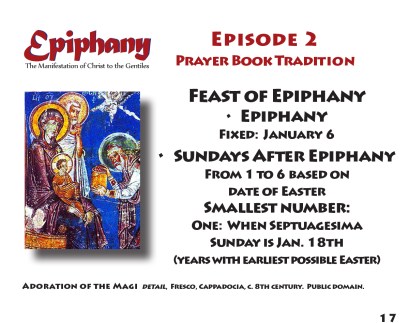 Episode Two in the revised 2018 A.D. edition of Epiphany: the Manifestation of Christ to the Gentiles is now available both on our YouTube channel and through the episode links on the Digital Library page. The focus of Episode Two has been changed since last week’s blog post. The topics are Epiphany Eve, Epiphany (Day) and the First Sunday after Epiphany, including appropriate Scripture readings from the 1928 Book of Common Prayer, the Proper for the Feast, the timeline of how and when St. Matthew’s “wise men” acquired a number and names, and seasonal music for Epiphany in The St. Chrysostom Hymnal (now available in a single volume paperback edition).
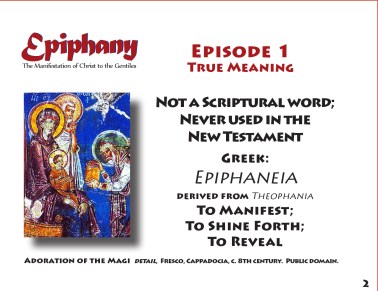 Yesterday I uploaded to our YouTube channel Episode One in the 2018 A.D. version of Epiphany: the Manifestation of Christ to the Gentiles. The series has been revised and expanded into three episodes. Episode One is focused on the sharp difference between the secular and Church meaning of Epiphany and the timing and manner of the development of Epiphany as its own Season in the Church Calendar. The series includes a revised script and many new illustrations and adjustments to format, including more slides, more white background per slide, and cross-references to related AIC videos, publications and podcasts.
 On this the 12th and final day of the Twelve Days of Christmas, Jan. 5th, the key words are GRACE & FAITH. The music is Hark! The Herald Angels Sing by Charles Wesley (1789 A.D.), played to the tune Mendelssohn.
 On the Twelfth Day of Christmas, Jan, 4th, the key words are Glorifying God. The music for this episode in the AIC Video series, The Twelve Days of Christmas, is Good Christian Men, Rejoice, using John Mason Neal’s 1853 translation from the Latin carol, In Dulci Jubilo. It’s an arrangement frequently used in the background for street singers in movies, television and videos on Charles Dickens’ A Christmas Carol.
 In the AIC Seasonal Video presentation, The Twelve Days of Christmas, the episode for the Tenth Day of Christmas – Jan. 3rd – the key word is COMMANDMENTS. The musical theme is a horn arrangement of God Rest Ye Merry, Gentlemen.
 Here we are just after the start of a New Year A.D. 2018, when the secular world is ready to turn to commerce and politics, but it’s still one of the Twelve Days of Christmas. For Jan 2nd, the Ninth Day of Christmas, the key word is ANGELS. The opening music for today’s video is — surprise, surprise! — Angels We Have Heard on High, with kudos to Edward Shippen Barnes for his pre-WWII arrangement of an old English Carol. The episode is filled with examples of Angels in Scripture and tradition.
 The New Year begins with the Eighth Day of Christmas, when the key word is CHURCH. The musical theme is What Child Is This?, originally published by William Chatteron Dix in 1865 A.D. and set to the English folk tune Greensleeves.
 Anglican Internet Church