Eighteenth Sunday after Trinity, A.D. 2026

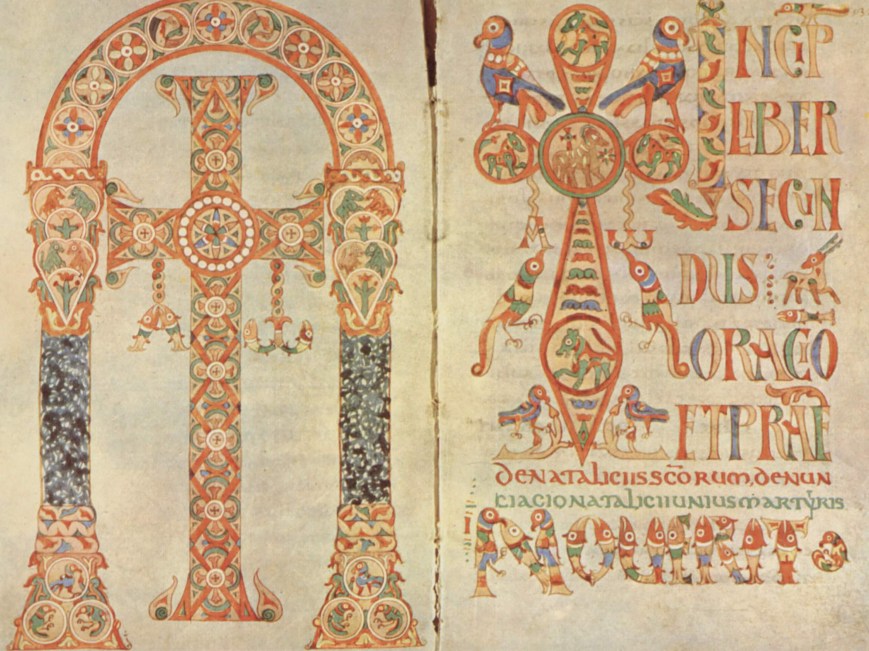
A.D. 2026 is one of those years with a long Trinity season. There will be 24 Sundays after Trinity, followed by Sunday next before Advent on November 22nd. Since, for reasons unrecalled now, I did not post commentary on the Collect, Epistle and Gospel readings for Eighteenth Sunday after Trinity in A.D. 2025 and A.D. 2023, I take this opportunity to do so in A.D. 2026. The Collect for Eighteenth Sunday after Trinity is a modified version which Archbishop Cranmer derived from the Gelasian Sacramentary for the 1549 Book of Common Prayer, with the addition of the phrase, “the world, the flesh and the devil” which was added with the 1662 Book of Common Prayer. The Gelasian Sacramentary is named after Pope Gelasius, who ruled at Rome from 492 A.D. to 496 A.D.. The Gelasian document appeared for the first time at Paris, France, in the mid-8th C. In the English tradition the Gelasian Sacramentary was widely used in the English Church before the separation from Rome during the reign of Henry XVIII in the third decade of the 16th C. As I did in A.D. 2024, I share with viewers an image of the cover cover and first page of an edition of the Gelasian Sacramentary printed in the 8th C. It is not clear whether this is an image of the first edition of the Gelasian document. It is one of the many historic documents shared and entered into the public domain from the enormous collection found in the Yorck Project. The original of the Gelasian Sacramentary is at the Vatican Library, Rome, Italy,.

Gelasian Sacramentary, Title page (left) and 1st page (right), colors and gold on parchment, 8th C.,
The Yorck Project, commonly called 10,000 Masterworks, published in a DVD in 2002 A.D.. Public Domain.

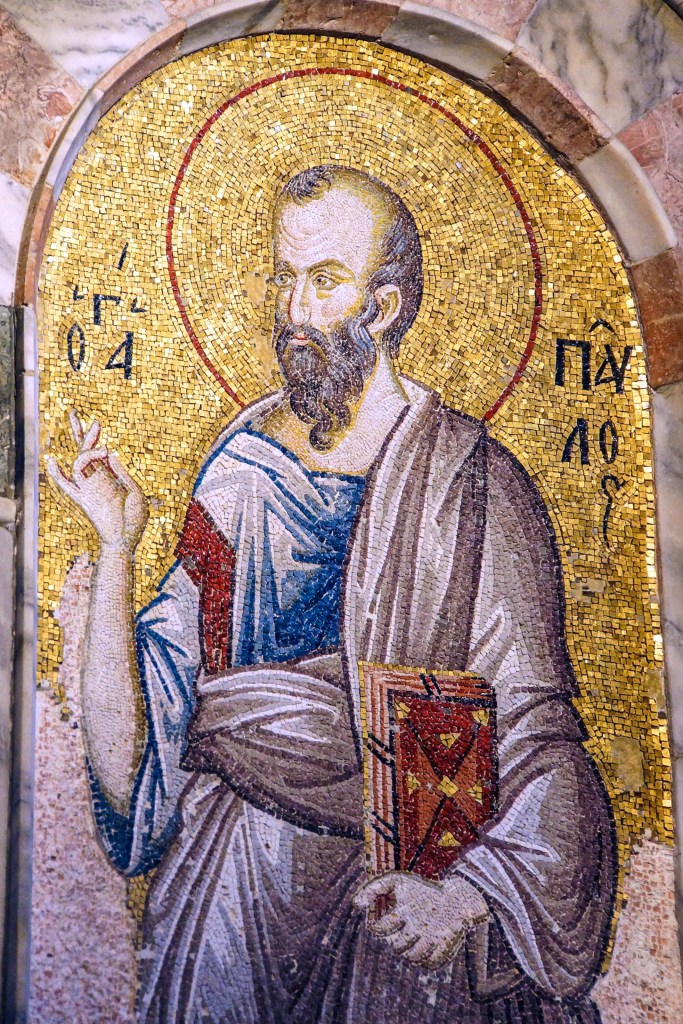
Themes of the Collect are mankind’s long struggle against the “temptations of the world, the flesh, and the devil” and the need for humanity to “follow thee, the only God.” The phrase, “world, the flesh and devil,” was derived from the petitions for deliverance (“deceits of the world, the flesh, and the devil”) in the Litany (B.C.P. p. 54). The Epistle reading, 1 Corinthians 1:4-9, is a reminder by St. Paul to the constantly-wavering congregation he established at Corinth that faith in Jesus Christ and His teachings, was, is and remains always for mankind the only path to being “blameless in the day of our Lord Jesus Christ. The Gospel reading, Matthew 22:34-46, is St. Matthew’s account of Jesus’ lesson to the Pharisees on two questions: “which is the great commandment in the law” and the identity of Jesus Christ: “what think ye of Christ? whose son is he?” This encounter happened on the Tuesday following Palm Sunday in 30 A.D.. (Tuesday before Easter in the B.C.P.). The reading should be seen in the context that the Pharisees had calculated that there were 613 commandments in Scripture and that the authors of the Book of Common Prayer included Jesus’ answer following the Ten Commandments in the Holy Communion liturgy (B.C.P. page 69). The Collect and the two readings from Scripture are powerful reminders of the absolute need of all the faithful to rely upon the Christian truth, as opposed to the many and varied temptations offered constantly in newspapers, radio, television and the Internet to follow the fickle teachings of men (and women). I have never found, through many web searches, an illustration that is not a modern cartoon-like interpretation. If anyone knows of one, I would like to hear detailed information.

This week’s Collect, Epistle and Gospel lessons are an enduring lesson in the need for paying attention to traditional Christian teachings. This point of view seems completely alien to those who go so far as rewriting the New Testament to fit their beliefs. Take heart. This kind of variation has been with the Church Universal from the beginning. There is more on this subject in the episodes of our Christian Education Video Series, The War on Christianity, linked from the Digital Library page.

As always, thank you for your interest and support. Glory be to God for all things! Amen!
Seventeenth Sunday after Trinity, A.D. 2026

For many weeks now I have been struggling for inspiration on what to post to this Blog. Having posted revised versions of commentaries on the Collect, Epistle and Gospel readings for Trinity season in A.D. 2024 and A.D. 2025, there seemed nothing new to add. Nonetheless, in A.D. 2026, there has been an abundance of evidence that the Church Universal is more than ever under threat. Nowhere else is this more evident than in the Anglican tradition.
Recent events within the Church of England provide evidence that the home church in England has lost its moorings in its own traditions. The appropriate response within the worldwide Anglican community is not rock music concerts in St. Paul’s Cathedral but a return to the worship traditions begun by Archbishop Cranmer and his associates in the 16th C. These traditions were firmly based in the worship practices of the early Church and its development in both the Western and Eastern Christian traditions. One of the best of these traditions is the following morning prayer which I adapted from the eastern liturgy of St. Mark the Apostle, considered the founder of the Church at Alexandria, one of the original sees of the Church Universal. The prayer has the virtue of being simple and clear and, at the same time, embodying the heightened sense of Christian spirituality found in the early Christian tradition.

WE give thee thanks, our Lord and God, the Father of our Lord, Jesus Christ,
for all thy goodness at all times and in all places, because thou hast shielded,
rescued and guided us all the days of our lives and brought us to this morning hour,
permitting us again to stand before thee and implore forgiveness for our sins.
We pray and beseech thee, merciful God, to grant in thy goodness that we
may spend this day and all the time of our lives without sin, in fulness of joy,
health, safety, holiness and reverence of thee; drive away from us all envy, fear,
temptation, the influence of Satan, and the snares of wicked men. Amen.

The prayer appears as the Fifth Prayer for First Hour (6 A.M. or local sunrise) in the AIC Bookstore Publication, Hear Us, O Lord: Daily Prayers for the Laity, offering prayers for the traditional “hours” throughout the day (being First, Third, Sixth, Ninth, Vespers and Compline).. The book was discussed in my Blog post for October 26, A.D. 2025. This and other postings are linked from the Archives column at right. All the Hours offices offer true comfort based on “worship” and rather than “entertainment.”

As always, thank you for your interest and support. Glory be to God for all things! Amen!
Trinity 8 & Some Advice

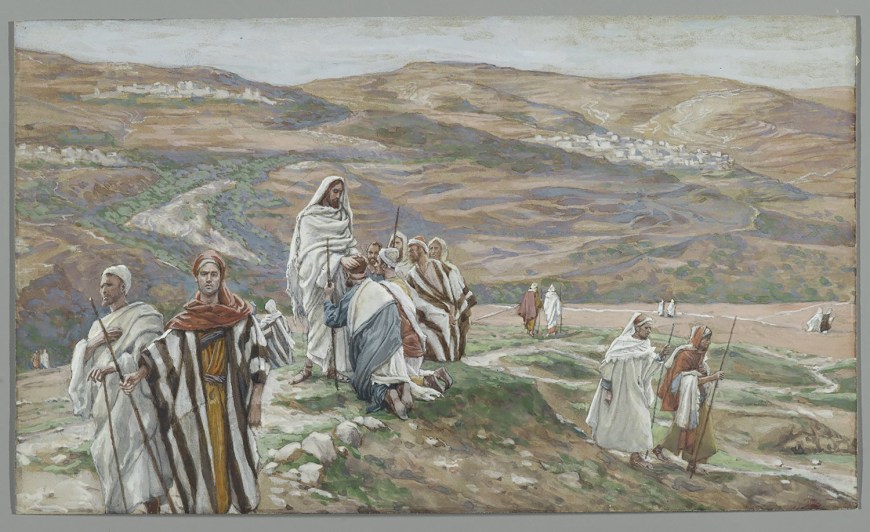
For Eighth Sunday after Trinity, the Gospel reading is another of the nine readings from the Gospel of Matthew, in this case Matthew 7:15-21, which includes Jesus’ teaching concerning false prophets, wolves in sheep’s clothing and a lesson concerning the kingdom of heaven. The Collect for the day is another from the Gelasian Sacramentary with changes made for the 1662 B.C.P. The readings are discussed and illustrated in Episode Four in our video series, Trinitytide: The Teaching Season. The audio-only version in MP3 format is available from the Podcast Archive page. There are two Podcast Homilies for the occasion, respectively, linked from the Podcast Homilies and Podcast Homilies-Morning Prayer pages. The Morning Prayer version is largely based on the Psalm reading, Psalm 119:33-48, one of the segments of the longest Psalm.

In my readings in preparation for the weekly Blog posting, I have observed many articles and commentaries that offer misleading commentary on worship using the 1928 Book of Common Prayer. Some writers suggest that those unfamiliar with liturgical worship do not know what to do. Since the full text of the service is included in the 1928 Book of Common Prayer found in the back of the next pew forward, this seems like deliberate misdirection. What is missing is the understanding that Anglican liturgical worship (and that of other liturgy-based denomination) is its consistent focus on “worship” vs. praise, human emotions (as in “feeling good” about self and surroundings. A common criticism is that the priest stands facing the altar and not the people. Again, this is misdirection. In fact, a printed service text, based largely on actual quotations or paraphrasing of Scripture, helps keep those in the congregation focused on worship that is directed toward God, represented by the Altar, liturgically representing East no matter what the actual compass direction.

Finally, I again remind readers/viewers, especially anyone confused by media and scholarly commentators, to “turn it off” and “tune it out.” The peace of mind that can come from the strategy is valuable. You may find that you can live without the daily newspaper (assuming there still is one), television and other version of the “commentariat.” Make your own “favorites” list on computers, laptops and “smart” phones and ignore the “noise” so common today in our electronic-based world.

As always, thank you for your continued interest and support.

Seventh Sunday after Trinity

For Seventh Sunday after Trinity the Collect was derived from the Gelasian Sacramentary plus Archbishop Cranmer’s paraphrase of James 2:17a. The epistle reading is another lesson in Christian virtues and the wages of son from the pen of the Apostle Paul (Romans 6:19-23). The Gospel lesson, Mark 8:1-9, is the first of only two citations from St. Mark’s Gospel in Trinitytide, the second happening on the Twelfth Sunday after Trinity. It is St. Mark’s account of the miraculous feeding of the 4,000, otherwise known as the miracle of the loaves and fishes. These reading are discussed and illustrated in Episode Four in our video series, Trinitytide: The Teaching Season. The Podcast Homily for Trinity 7 The audio-only version in MP3 format is linked from the Podcast Archive page. A related homily for Trinity 7, based on the Morning Prayer Psalm reading for the day, Psalms 133, 134 and 138, is linked from the Podcast Homilies-Morning Prayer page.

As noted in previous posts regarding Trinitytide, the events discussed are focused on the teachings of Jesus Christ, reflected in the heavy reliance upon the Gospel of Luke, from which there are 12 readings. For Trinity 7, the reading from the Gospel of Mark is owed to the fact that it is unique to St. Mark’s account.

As always, thank you for your interest and support. Glory be to God for all things! Amen!
Trinity Season technical errors & problem

Now that we are already at Sixth Sunday after Trinity I have discovered that the Trinity season graphic and the links for all episodes in the series have not been working. Apparently, the changes made to remove the Eastertide image and insert the Trinitytide image did not take effect when I posted a new Fr. Ron’s Blog entry for Trinity. Apologies for the inconvenience. Apparently the links from the Digital Library page has been working correctly.

Apologies for the inconvenience. New postings for the season of Trinitytide will be posted during the week of 7/12.

Glory be to God for all things! Amen!
Trinity Sunday

For Trinity Sunday I offer viewers a First Hour prayer from the AIC Bookstore Publication, Hear Us, O Lord: Daily Prayers for the Laity. It is the second of six prayers for the First Hour office (the first of six “hours” offered daily at 6 AM, 9 AM, Noon, 3 P.M., 5 PM and just before bedtime (the latter commonly known as the Compline office). I adapted the prayer from the Eastern Orthodox Holy Communion liturgy of St. Basil the Great, which dates from the 5th or 6th Century. The book is available through my Amazon Author Central page. More information about the book is found on the AIC Bookstore page.

WE thank thee, O Holy Trinity, for this new day. Enlighten the eyes of our understanding, open our ears to receive thy words and teach us thy commandments. Help us to do thy will, to confess thee from our hearts, to extol thine all-holy Name, of the Father, and of the Son and of the Holy Spirit, now and ever and unto ages of ages.

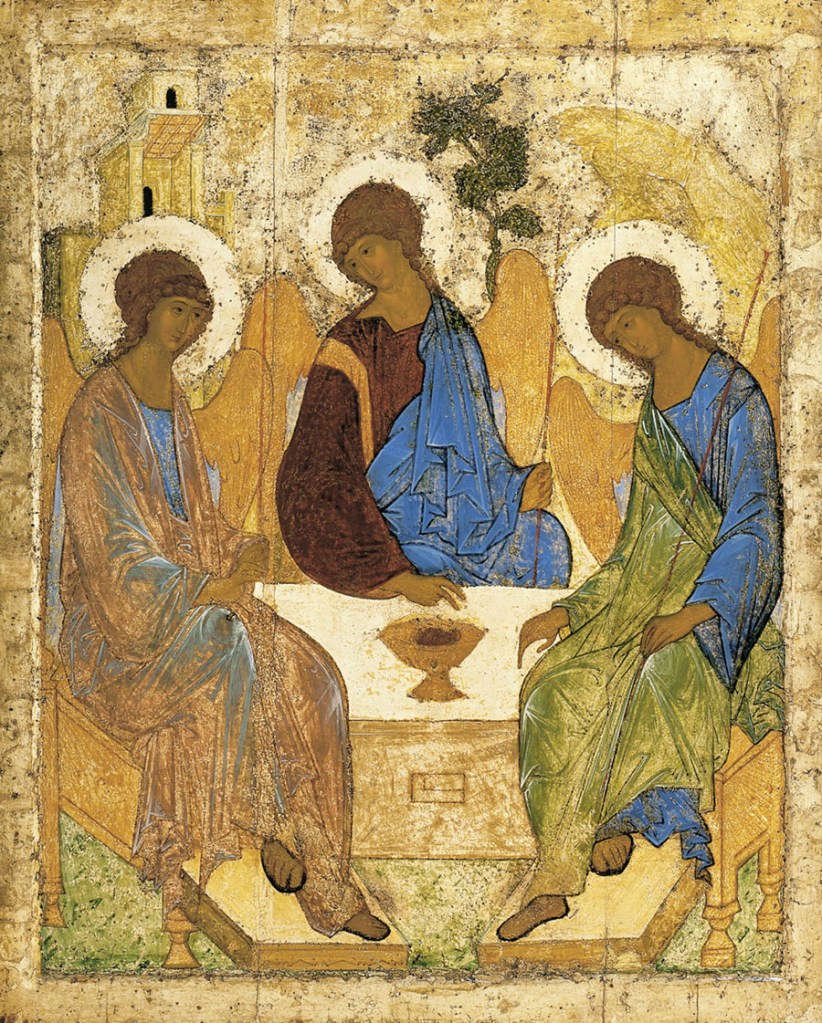
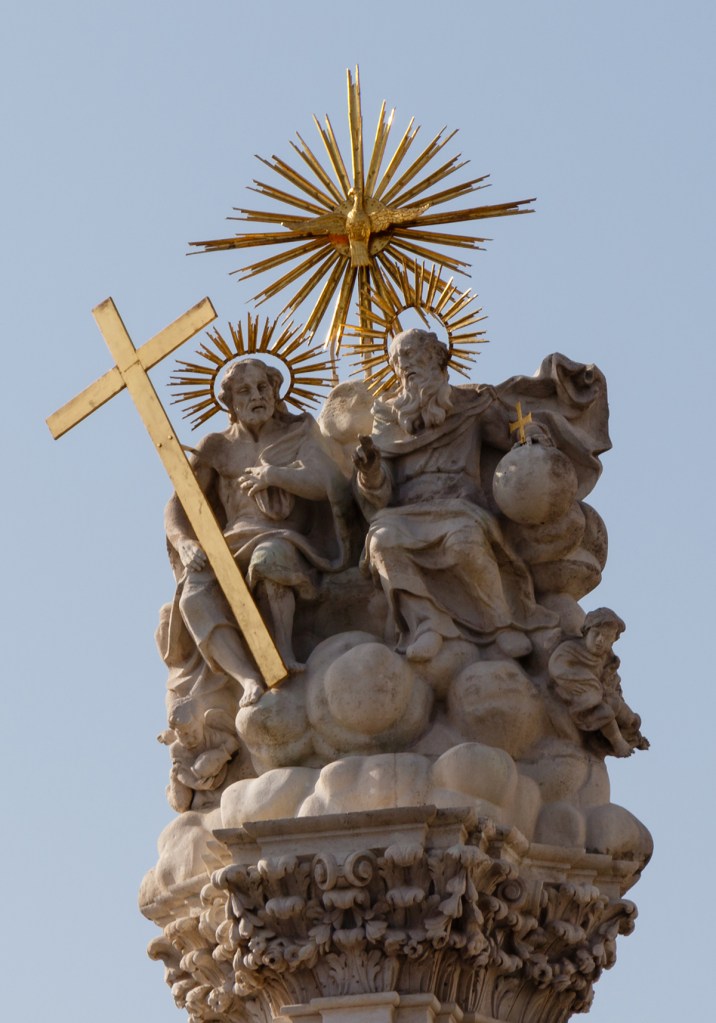
Below are two examples of how the Holy Trinity has been represented in Christian art across the centuries.

The Holy Trinity, icon in tempera and gilt on panel, Andrei Rublev, circa 1420 A.D., Tretyakov Gallery, Moscow, Russia. The image was painted for the iconostasis, Holy Trinity Cathedral, Trinity-St. Sergeyev Monastery, Sergeiv-Posad, Russia. Rublev avoided the prohibition against images of God the Father by basing the image on Genesis 18:1-8, the appearance of three men to Abraham under the oak at Mamre.
The Holy Trinity, statue, Holy Trinity column, central square near Buda Castle & St. Matthias Church, Budapest, Hungary, designed by Cerasola Vera and carved by Bernay Ferretti, 1706 A.D. © Kev Gregory/Shutterstock.com

As always, thank you for your interest and support. Glory be to God for all things! Amen!
Whitsunday 2026 A.D.

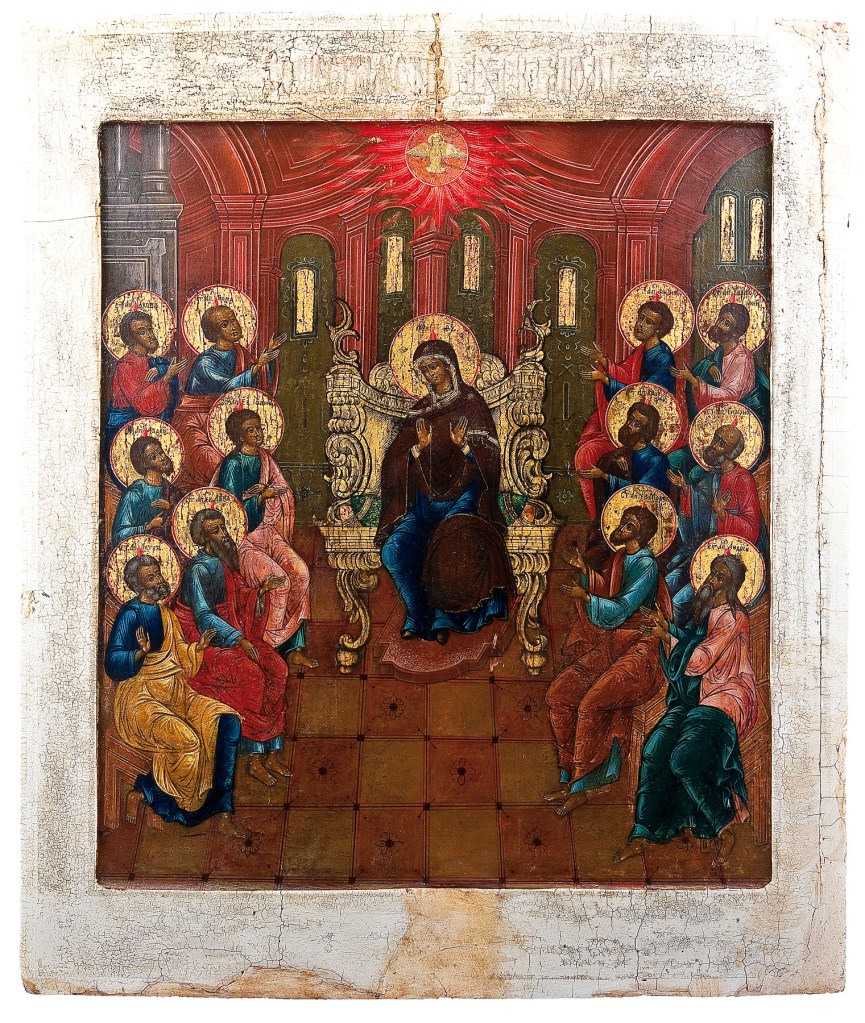
Sunday, May 24th, 2026 A.D., on the Anglican Church Calendar is Whitsunday, which in other denominations is more commonly known as Pentecost, a celebration of the Descent of the Holy Spirit (Holy Ghost in the King James Version). As noted in previous posts in A.D.2026, the Descent is commonly depicted with the Holy Spirit depicted in the form of a dove, as in the Gospel accounts of the Baptism of Christ (Matthew 3:13-17; Mark 1:9-11; Luke 3:21-22; John 1:29-34) and Acts of the Apostles (2:1-11).

The Descent of the Holy Spirit on the Apostles, gilt and silver on wood icon, probably 18th C., Russia. Holy Spirit depicted as a Dove and flames of fire. From a private collection. Wikimedia Commons.

In the 1928 Book of Common Prayer, there are two Collects for Whitsunday. The first is an adaptation by Archbishop Cranmer from the Gregorian Sacramentary (10th C.), based on the reading used for the Sunday morning Communion service for Whitsunday at St. Peter’s Basilica. In the Collect reference is made to the Spirit offering comfort to “thy faithful people.” The Collect makes clear that it is the presence of the Holy Spirit in the faithful which makes it possible for mankind to achieve “a right judgment in all things.” The second Collect is unique to the 1928 Book of Common Prayer. The identity of the author is unknown. Prayer book scholar Massey Shepherd speculated that it may have been added in order that more of the faithful would hear such doctrine on the Sunday morning celebration of Holy Communion on one of the three most important Sundays on the Church calendar, the other two being Christmas morning and Easter. It contains a plea that by the indwelling of the Spirit the faithful “may be enlightened and strengthened for thy service.” The second Collect is intended for use in the first service when there is more than one service offered on Whitsunday.

The Collects and the two sets of epistle and “for the epistle” reading from St. Luke’s account of the Descent of the Spirit (Acts 2:1-11) plus the Gospel readings for both services are discussed and illustrated in Episode One in our Seasonal Video series, Trinitytide: the Teaching Season, linked from the Digital Library page. The reading from 1 Corinthians 12:4-14 includes important instruction from St. Paul on the nature of the Church and the importance of spiritual gifts. The video series begins with readings for Whitsunday and for weekdays Whitsun Week and closes with the Sunday next before Advent, as well as the complicated rules for moving readings from Epiphany season when there are more than twenty-four Sundays after Trinity. The audio only (MP3) version is linked from the Podcast Archive page. My Podcast Homily for Whitsunday is linked from the Podcast Homilies page. A related Podcast Homily for Whitsunday, based on Psalm 68, the Psalm reading for Morning Prayer on Whitsunday, is linked from the Podcast Homilies-Morning Prayer page.

As always, thank you for your interest and support. Glory be to God for all things! Amen!
Ascension Day & Sunday after Ascension

In the Anglican worship tradition, Ascension is officially celebrated on the Thursday following Fifth Sunday after Easter and, because so many cannot attend a mid-week service, themes related to the Ascension are repeated on Sunday after Ascension (the Sixth Sunday after Easter). The Collect for Ascension Day is based on the Gregorian Sacramentary and the Missal texts at Sarum (Salisbury). Theological concepts observed on Ascension Day were incorporated into the Nicene Creed in 325 A.D. The original text and the changes made in 381 A.D. are discussed and illustrated in the AIC Video Series, The Nicene Creed, linked from the Digital Library page. The Epistle reading, Acts 1:1-11, includes St. Paul’s record of post-Resurrection appearances by Christ and His being taken up into heaven. The Gospel reading, Luke 24:49-53, is the evangelist’s own record of the actual event of the Ascension to the Father.

The Ascension, illumination in tempera and gold on parchment, Rabbula Gospels, 586 A.D., region of present-day Syria. Laurentian Museum, Florence, Italy. Public Domain.

For Sunday after Ascension, the Collect was derived from a Vespers office of the new Church of England that is itself derived from the deathbed song of the Venerable Bede. The Epistle reading, 1 Peter 4:7-11, another example of New Testament wisdom features throughout Eastertide, includes St. Peter’s teachings on the proper use of one’s gifts from God. In the Gospel lesson, the sixth and last in Eastertide from the pen of St. John, John 15:26-16:4a, St. John quotes more from Jesus on preparation for the coming of the Holy Spirit, or The Comforter. The Collect and readings are discussed and illustrated in Episode Three in the AIC Seasonal Video series, Eastertide: From Resurrection to Ascension, linked from the Digital Library page. The audio-only Podcast version of Episode Three is linked from the Podcast Archive page. My Podcast Homily for Sunday after Ascension is linked from the Podcast Homilies page. A related Podcast Homily, focused on the Psalm reading for Morning Prayer on Sunday after Ascension, Psalm 8 & Psalm 108:1-5, is linked from the Podcast Homilies-Morning Prayer page.

Sunday after Ascension brings the season of Eastertide to a close. The remainder of the Anglican Church Year is focused on readings and other material focused on Trinity Sunday and Trinitytide, the longest season on the Anglican Church calendar. The AIC Seasonal Video series, Trinitytide: the Teaching Season, is presented in nine episodes, also linked from the Digital Library page with Podcast/audio only versions linked from the Podcast Archive page.

I have not decided on a plan for Fr. Ron’s Blog during Trinitytide. Since the weekly postings for Trinity were completely rebuilt in A.D. 2021, the weekly Blog will probably revert to more topical postings without any specific plan in mind. As always, thank you for your interest and support. Viewers might be interested to know that the greatest number of visits to our site is coming from Asia. To our Asian friends, another thank you. Glory be to God for all things! Amen!
Fifth Sunday after Easter

For Fifth Sunday after Easter, commonly known as Rogation Sunday, the Collect is another which was adapted from the Gelasian Sacramentary used in the Roman Catholic tradition. This short prayer acknowledges the LORD as the source of “all things that are good,” which we may think are our own, come through His “merciful guiding.” The Epistle is another reading from the Epistle of St. James offering more practical New Testament wisdom: become “doers” of the Word and “not hearers only.” James describes the benefits of restraint, or “bridling” of the tongue. Almost four centuries later one of the greatest saints of the Eastern Church, John Chrysostom, Bishop of Antioch and then Constantinople, suggested that practicing control of one’s tongue could be considered a worthy sacrifice during the season of Lent. The Gospel reading is again from John 16, this time verses 16-33, in which Jesus grants mankind permission to pray directly to the Father and promises that He will likewise pray for the same to His Father. The reading includes another concept of time of which Jesus spoke in His final days, in this case, “hour,” which are discussed in Episode 43 and Episode 44 in the AIC Video series, New Testament: Gospels, linked from the Digital Library page. In just a few days, the Disciples would discover exactly what Jesus meant in saying “that in me ye might have peace. In the world ye shall have tribulation.” This dialogue appears only in the Gospel of John. There are no examples that I know of in Christian art which depict this event. The timeline in The Orthodox Study Bible: New Testament implies, by association with other events on the last days of Christ, that the location was somewhere in Jerusalem on Maundy Thursday. The dialogue is discussed, without illustration, in the AIC Bookstore Publication, The Gospel of John: Annotated & Illustrated. The volume is available through my Amazon Author Central page. Full details about the book are found on the AIC Bookstore page.

The Collect, Epistle and Gospel readings for Fifth Sunday after Easter are discussed in Episode Three in our video series, Eastertide: From Resurrection to Ascension, linked from the Digital Library page. The audio-only version, in MP3 format, is linked from the Podcast Archive page. My Podcast Homily for Fifth Sunday after Easter is linked from the Podcast Homilies page. A related Podcast Homily for Fifth Sunday after Easter, based on Psalm 118, the appointed Psalm for Morning Prayer, is linked from the Podcast Homilies-Morning Prayer page.

Next week, my Blog post will be made on Ascension Day, May 14th, and will include commentary on readings for Ascension Day and Sunday after Ascension.

As always, thank you for your interest and support for keeping this site available, on-demand, 24/7. Glory be to God for all things! Amen!

Fourth Sunday after Easter

For Fourth Sunday after Easter the Collect selected by Archbishop Cranmer for the 1549 Book of Common Prayer was adapted from the Gelasian Sacramentary, which dates to the second half of the 8th C. The Gelasian Sacramentary remained popular in the English Church before the separation from Rome. The Epistle reading, James 1:17-21, is a favorite example of what is commonly known as “New Testament wisdom” writings. The concept of “New Testament wisdom” is discussed in the AIC Bookstore Publication, Christian Spirituality: An Anglican Perspective, in the context of the wisdom writings of two pairs of saints, St. Peter & Paul, St. James and St. Jude. The book was featured in my Blog post for December 5th, A.D. 2025 (linked from the Archive column at right). It is available through my Amazon Author Central page, with more complete detail available on the AIC Bookstore page.

The Descent of the Holy Spirit, Rabbula Gospels, 586 A.D., Laurentian Library, Florence, Italy. Perspective correction applied. Public Domain.

In the Gospel reading, John 16:5-11, St. John quotes Jesus’ teaching concerning the Holy Spirit, called the “spirit of truth,” who would guide the Apostles “to all truth. For the illustration I have chosen one of the oldest images representing the Holy Spirit as a dove, from the Rabbula Gospels (586 A.D.). The Collect, Epistle and Gospel readings are discussed and illustrated in Episode Three in our Bible Study/New Testament series, Eastertide: From Resurrection to Ascension. The audio only version of Episode Three in MP3 format is linked from the Podcast Archive page. My Podcast Homily for Fourth Sunday after Easter is linked from the Podcast Homilies page. A related Podcast Homily, based on Psalm 116, which is the Psalm reading in Morning Prayer for Fourth Sunday after Easter, is linked from the Podcast Homilies-Morning Prayer page. In later posts during Eastertide/Ascension and also for Trinity Sunday, there will be other examples of imagery related to the Holy Spirit, many of which include the Blessed Virgin Mary as the central figure among the Apostles and saints.

As always, thank you for your interest and support. Glory be to God for all things! Amen!