Unlike the Collects for the first two Sundays in Advent, the Collect for Third Sunday in Advent is not an original composition by Archbishop Thomas Cranmer for the 1549 Book of Common Prayer. Just in case readers might not have seen it, here is the Archbishop’s unusually short original composition.peosu
LORD, we beseech thee, give ear to our prayers,
and by thy gracious visitation lighten the darkness
of our heart, by our Lord Jesus Christ.
For the 1662 Book of Common Prayer, published after the restoration of the monarchy, a new Collect was produced with a clearer focus on the primary themes of Advent. It places greatly emphasis on words derived from the appointed Epistle reading and the second major theme of Cranmer’s first two Collects for Advent, that is, the promised Second Coming in Christ in judgment. In a nod toward the innovations of Archbishop Cranmer, the revisers introduced a theme from his responses to the first nine Commandments in the Decalogue in the 1549 B.C.P. Holy Communion liturgy: “incline our hearts…” and the response to the Tenth Commandment: “write all these thy laws in our hearts…” Prayer Book scholar Massey Shepherd notes that the preamble includes a rare for the B.C.P. example of direct address to the Lord Jesus Christ and that the “ministers and stewards of thy mysteries” refers to the clergy and bishops of the Church in the role of custodians of the heritage handed down from the Apostles.
O LORD Jesus Christ, who at thy first coming didst send thy messenger to prepare thy way before thee;
Grant that the ministers and stewards of thy mysteries may likewise so prepare and make ready thy way,
by turning the hearts of the disobedient to the wisdom of the just, that at thy second coming to judge the
world we may be found an acceptable people in thy sight, who livest and reignest with the Father and the
Holy Spirit ever,* one God, world without end. Amen.
The Epistle reading, 1 Corinthians 4:1-5, repeats the phrase “mysteries” from the Collect. It includes St. Paul defense of himself against accusations from some members of the congregation at Corinth. St. Paul also mentions “mysteries” in Romans 16:25.
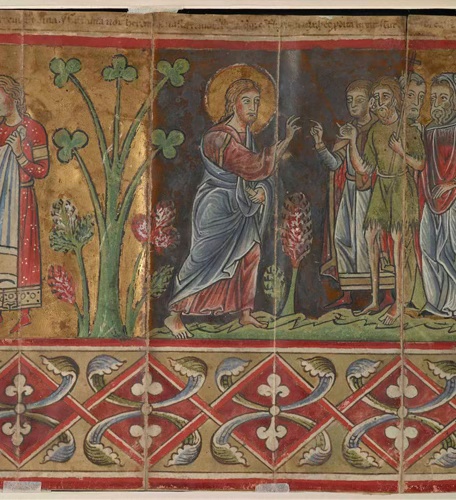
The Gospel reading, Matthew 11:2-10, goes backward in time to about 28 A.D., being St. Matthew’s account of Jesus’ earliest references to John the Baptist. Followers of John want to know “Are you the Coming One or do we look for another?” (Matthew 1:3). Jesus refers to John in the context of the prophecy of Malachi 3:1. One of the major themes of St. Matthew’s Gospel is that Christ is the fulfillment of Old Testament prophecy.
Other AIC Resources on the topics in the Blog post are: The Collect, Epistle and Gospel readings for Third Sunday in Advent, commonly known as Gaudete Sunday, from the Latin gaudere (rejoice), are discussed and illustrated in Episode Two of our Christian Education Video series, Advent: A Season of Penitence and Preparation. My Podcast Homily on the theme, Rejoice in the Love of God, is linked here and from the Podcast Homilies page. Archbishop Cranmer’s understanding of the concept of taking the Commandents and the teachings of the Church Universal into the heart is explored further in our Bookstore Publication, Christian Spirituality: an Anglican Perspective, pp. 8-13, and the Gospel reading for Third Sunday in Advent is discussed and illustrated in The Gospel of Matthew: Annotated & Illustrated, both available through my Amazon Author Central page.
Additional AIC Resources for days during the week following Third Sunday in Advent include the first four of seven episodes in our Seasonal Video series, The Great “O” Antiphons, based on a 12th C. hymn, with one episode for each of the days from Dec. 18th through Dec. 24th.
December 18th – O Sapientia
December 19th – O Adonai
December 20th – O Radix Jesse
December 21st – O Clavis David
As ever, thank you for your interest and support. The AIC web site remains a reliable resource for teaching and study materials based on traditional understanding of Christian doctrine. Glory be to God for all things! Amen!
 Anglican Internet Church