For the Sixth Sunday in Lent, officially called Sunday next before Easter but commonly called Palm Sunday, Archbishop Cranmer modified a collect from the Gregorian Sacramentary (10th C.) by adding the phrase “partakers of his resurrection” to the last line. The 1928 Book of Common Prayer instructs that the Collect is to be said daily following collect appointed for each day during the week (Monday before Easter, Tuesday before Easter, Wednesday before Easter, Thursday before Easter (Maundy Thursday), Good Friday, and Easter Even). The Epistle reading, Philippians 2:5-11, includes the instruction that “at the name of Jesus every knee should bow.” The Gospel reading, Matthew 27:1-54, is the evangelist’s long account of the trial of Jesus and His crucifixion and death upon the Cross and the earthquake which followed it, according to the oral tradition known by the Greek word, kerygma. The image is a watercolor by James Tissot depicting events in the reading from St. Matthew’s Gospel. In the 1928 Book of Common Prayer, the actual entry into Jerusalem on Palm Sunday is read on First Sunday in Lent, also based upon St. Matthew’s Gospel, Matthew 21:1-11.
The events described in the Gospel reading are discussed and illustrated in Episode Three in AIC Christian Education Video series, Lent: the Season of Penitence, is linked from the Digital Library page. The audio-only version for Palm Sunday is linked from the Podcast Archive page. The Podcast Homily for Palm Sunday is linked from the Podcast Homilies page. A related podcast homily, based upon the Morning Prayer Psalm reading for the day, Psalm 22, is linked from the Podcast Homilies-Morning Prayer page. The word kerygma is discussed in the AIC Bookstore Publication, Layman’s Lexicon on page. ????. The book. which was featured in my blog post for October 18, A.D. 2025 in conjunction with the entry for Seventeenth Sunday after Trinity (linked from the Archive column), is available through my Amazon Author Central page. Additional information about the book is found on the AIC Bookstore page.
This week’s focus from the AIC Bookstore is The Writing Prophets of the Old Testament, another volume published in the 8.5″ x 8.5″ format.
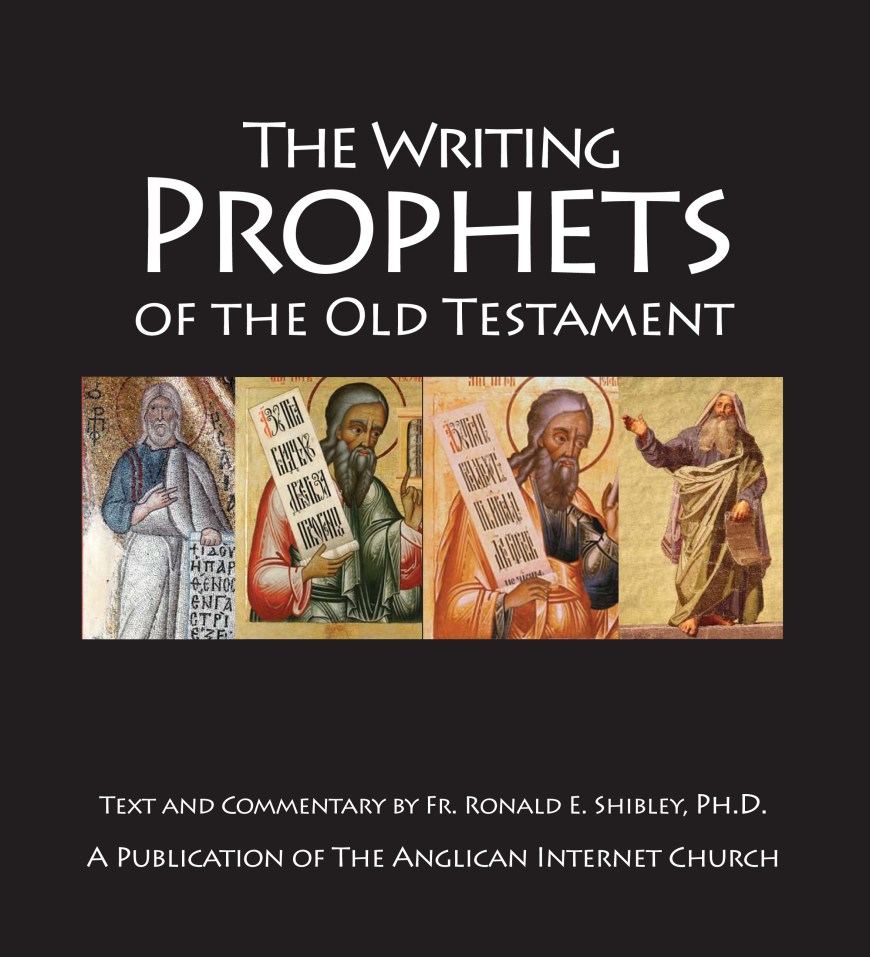
The volume, written for a lay audience of readers, is focused on the Major and Minor Prophets of the Old Testament, supported by documents from both the Eastern and Western Church understandings. It includes five parts of the Septuagint Old Testament not included in the King James Version (Prayer of Azariah; Song of the Three Children; Susanna; Bel & the Dragon; and Daniel and Habakkuk in the Lion’s Den. Sixty-three illustrations from the Third through the Twentieth Century. Includes special text boxes (What is a Prophet?; Isaiah in Christian Liturgies; Jeremiah in Christian Liturgies; Ezekiel in Christian Worship, Scripture & Teaching; Daniel in Christian Worship; Theophanies: Images of Christ and God the Father; Joel in Scripture & Christian Literature; Amos in the Anglican Prayer Book; Micah on Right Worship; Zechariah in Scripture and Christian Literature; Malachi in Christian Liturgy; Old Testament/New Testament Parallels. 144 pages. $35.00. The book is available exclusively through my Amazon Author Central page. More information about the book is included on the AIC Bookstore page.
As always, thank you for your interest and support. Glory be to God for all things! Amen!
 Anglican Internet Church