Unlike the Epistle and Gospel reading for Sixth Sunday after Trinity, the Gospel reading for Seventh Sunday after Trinity (Mark 8:1-9) was a favorite subject for Christian artists, clergy, theologians and illustrators. The reading is Mark’s account of the second miraculous feeding of a multitude, commonly known as the Feeding of the 4,000. The location was somewhere along the eastern shore of the Sea of Galilee in the region of the Decapolis (Ten Cities in Greek) that is southeast of Bethsaida (near where the Jordan River flows into the Sea of Galilee) and north of the region of Gergasa (the setting of the encounter with the Gadarene Demonic which Mark described in Mark 5:1-20). In the verses just before this week’s reading, Mark records Jesus healing the deaf man with a speech impediment (Mark 7:31-37, the famous incident in which Jesus put his fingers in the man’s ears, spat and touched the man’s tongue) and, in the verses just afterward, he records an encounter with disbelieving Pharisees demanding a “sign from heaven.” In that account Jesus scolds the Pharisees for their obsession with signs and wonders and denial of His divine origin and identity.
Mark’s account is the second and final reading from his Gospel during Trinitytide. The third and final example does not occur until the Twelfth Sunday after Trinity (Mark 7:31-37, mentioned above). Mark’s account gives readers no names of the Disciples he quotes in verses 4 and 5 and describes a compassionate Jesus concerned for the many who had been following him for three days and who had “nothing to eat.” (verse 2). The account includes three examples of Hebrew and early Christian numerology: 3 (# of days following Jesus in verse 2), 4 (# of men present in thousands in verse 9) and 7 (# of loaves of bread, # of large baskets holding the remaining bread in verses 6 & 8). The illustration is from the Codex Egberti, the first illustrated Gospel to contain scenes in the Life of Christ. Trier is located on the banks of the Moselle River in the Rhineland-Palatine state of Germany near its western border with the tiny state of Luxembourg. It is near the heart of the empire of Holy Roman Emperor Charlemagne, who was crowned at Rome on Christmas Day, 800 A.D. (more in the blog postings about Alcuin and Charlemagne, posted on March 16th, and Fourth Sunday after Trinity). The example is small because the AIC does not have it in high enough resolution for a full page view.
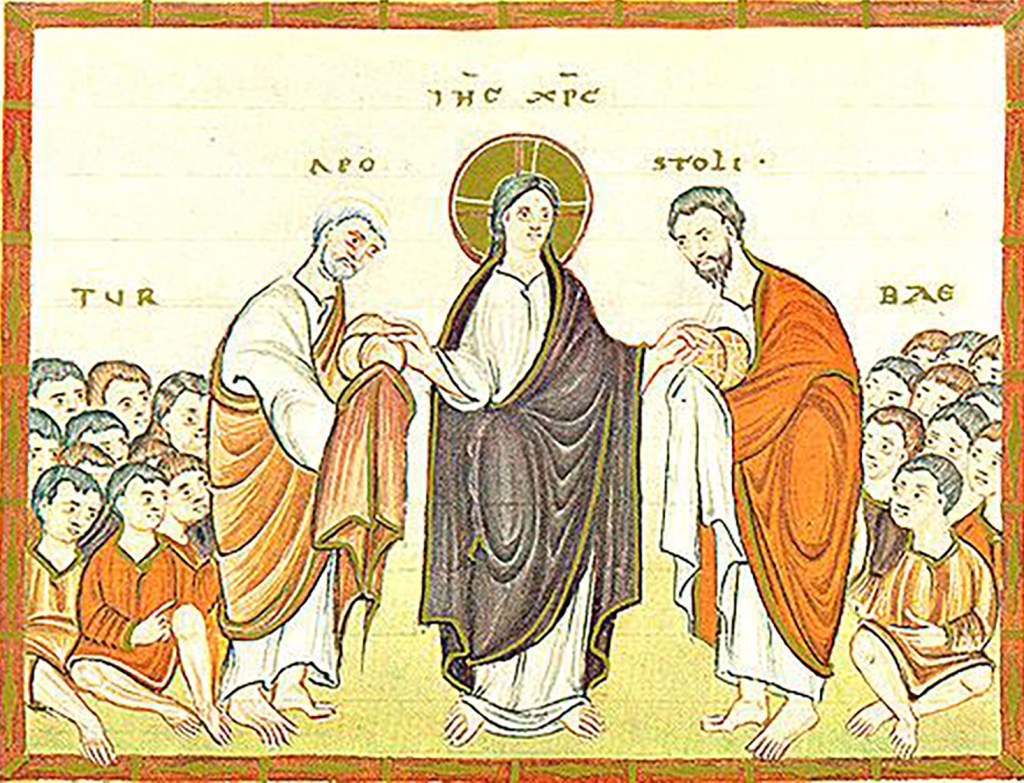
Early Christians, especially those in the Byzantine tradition, interpreted the disciples’ skeptical question in verse 4 (“How can one satisfy these people with bread here in the wilderness?”) as a reference to a messianic prophecy and its fulfillment in Psalm 78: 20b and 21b: “Shall God prepare a table in the wilderness?” and “can he give bread also? The answers were given in Psalm 79:24 and 25: “…he commanded the clouds above * and opened the doors of heaven. He rained down manna also upon them for to eat, * and gave them food from heaven.”
Last week I shared with you my personal favorite image of Paul. Since again this week, the Epistle reading is from the writings of Paul, I offer a different portrait of the “Apostle to the Gentiles,” In this oil on panel painted by a Dutch artist, we see an image of Paul that is softer, both in color and tone, and, perhaps, suggestive of a more thoughtful, contemplative Paul than last week’s rather fierce image by Bartholomeo Mantagna.

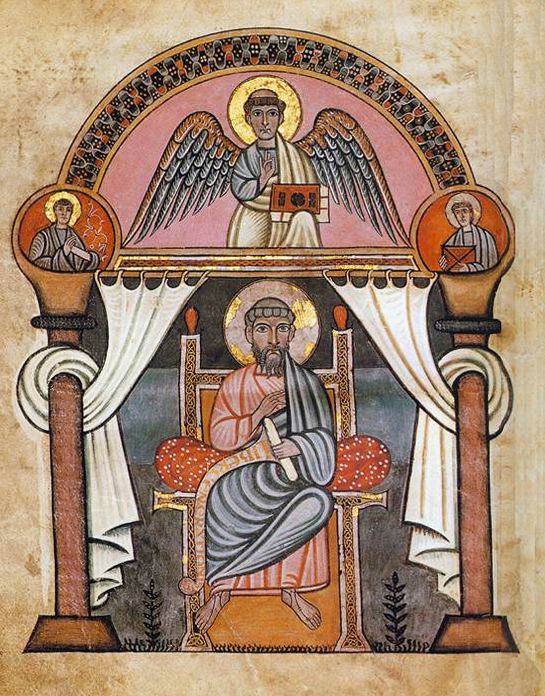
For more about St. Paul and St. Mark, watch the AIC Christian Education Video series, The Lives of the Saints, First Series, episodes 5 & 7 respectively. both linked from the Digital Library page. The readings are discussed in the Podcast Homily for Seventh Sunday after Trinity, linked from the Podcast Homilies page, and in Episode 4 in the video series Trinitytide: the Teaching Season, linked from the Digital Library page. You can find many more illustrations of St. Mark in our publication, The Gospel of Mark: In Scripture, Art & Christian Tradition, available through my Amazon Author Central page.
As always, thank you for your interest and support for this site, which has been bringing traditional interpretations and understandings to the web sincc our first live Internet broadcast of Sunday morning Holy Communion in the summer of A.D. 2010. We get offers from many vendors for a different format, but this current one, focused on our WATCH-LISTEN-READ formula still manages to find an audience.
Glory be to God for all things! Amen!

 Anglican Internet Church