The Collect, Epistle and Gospel readings for Septuagesima Sunday are discussed and illustrated in Episode One in the AIC Christian Education Video series, Gesima: the Pre-Lenten Season. The episode includes explanations of the name, the possible dates and many of the myths about the literal meaning of each name. The season’s usage, and non-usage, in other Christian traditions, especially the Roman Catholic, is also explained. The audio only version of Episode One is linked from the Podcast Archive page. My Podcast Homily for Septuagesima Sunday is linked from the Podcast Homilies page. A second Podcast Homily for Septuagesima Sunday, this one based on the Psalm reading in Morning Prayer, Psalm 18:21-35, is linked from the Podcast Homilies-Morning Prayer page. The abbreviated name “Gesima,” a short transitional season, is derived from a Latin word meaning day or days. The start of “Gesima” season is moveable, with variations based upon the date of Easter. The earliest possible date is January 18th and the latest possible date is February 22nd. In A.D. 2026 the first Sunday in “Gesima” season is February 1st.
The Collect for the Septuagesima Sunday is a composition from the 1549 Book of Common Prayer by Archbishop Thomas Cranmer, based on the Gregorian Sacramentary (10th C.) and also strongly influenced by the late 8th-early 9th C. Vulgate Bible translation by Alcuin of York. Alcuin of York was spiritual advisor to Holy Roman Emperor Charlemagne and the imperial family, Abbot of the Abbey of St. Martin of Tours, and author of the Collect for Purity in the Anglican Holy Communion liturgy. The complicated relationship between Alcuin and Charlemagne, and the results of their joint effect upon the development and spread of Christianity in Western Europe was the subject of my Blog post for 3/16/2024. The entry is linked from the Archive column (under March 2024) at right.
The Epistle reading, 1 Corinthians 9:24-27, is the 4th of four lessons by St. Paul’s focused on the theme of the Christian Virtues. The concept of “virtue/virtues” in the Christian Tradition and its development in both the Western and Eastern Church is explored in the AIC Bookstore Publication, Layman’s Lexicon, which was featured in the blog post on 10/18/2025 for Seventeenth Sunday after Trinity (linked from the October 2025 entry in the Archive column at right).
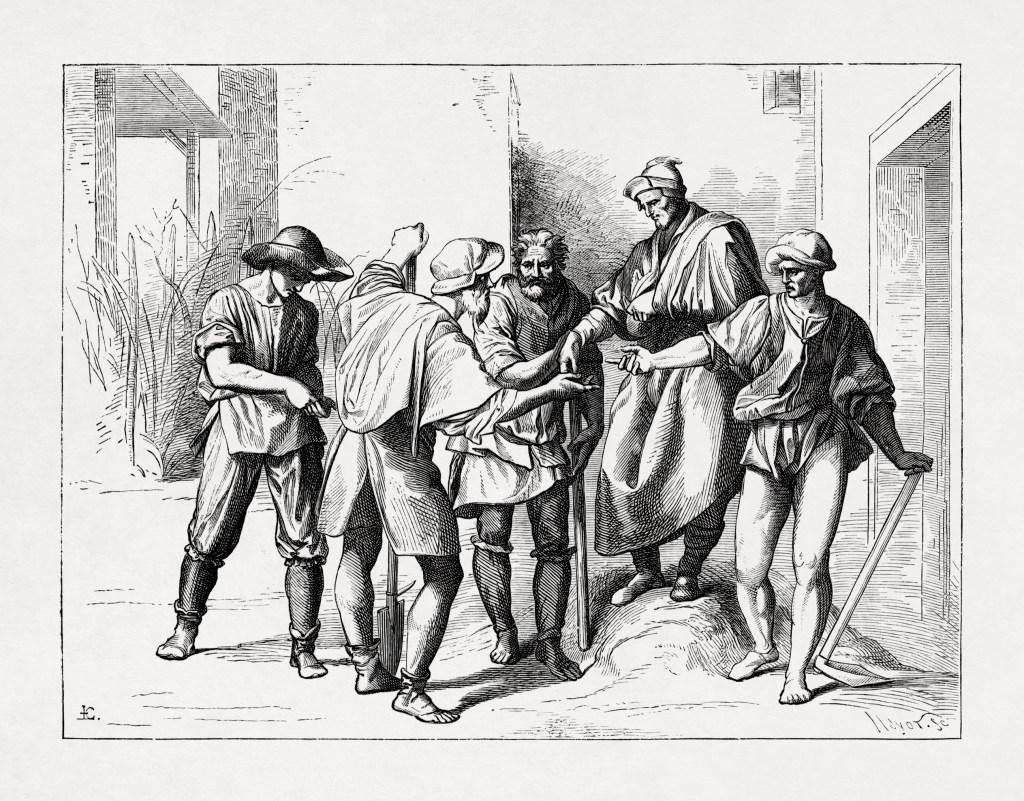
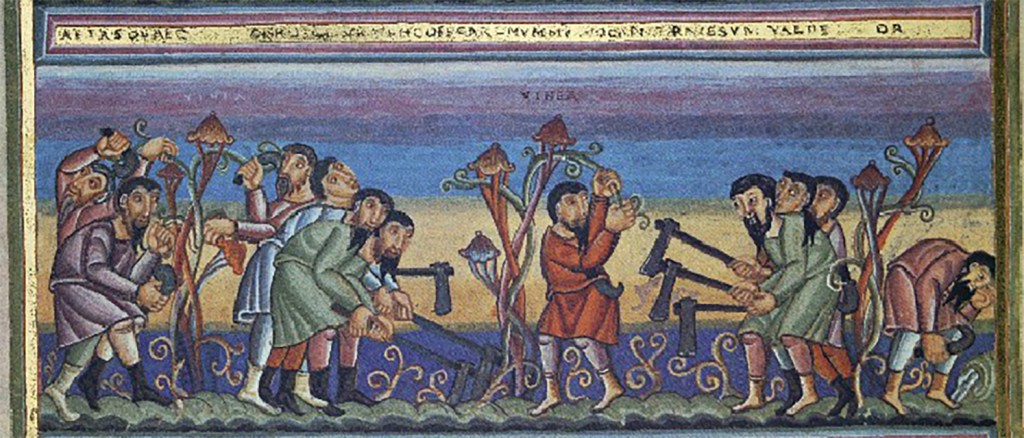
The Gospel reading, Matthew 20:1-6, the fourth so far in A.D. 2026 from the Gospel of Matthew, is the Evangelist’s account of the Parable of the Laborers in the Vineyard. The image below is a 16th C. depiction of the event. An 11th C. depiction of the lesson, with color and more detail, from the Codex Aureus of Echternach, was used in my Blog posts for Feb. 18th, 2025 and Jan. 18th, 2019, both linked from the Archives column at right. The Codex Aureus of Echternach version also appears in the AIC Bible Study Video series, The New Testament: Gospels in Episode Six, using a copy from the Yorck Project: 10,000 Masterworks. The Yorck Project offered quite literally 10,000 images from around the world in both the civil and religious world. The project’s several authors released the images in their DVD into the Public Domain.
This week’s AIC Bookstore Publication is The Gospel of Matthew: Annotated & Illustrated, one of five volumes in our Christian Education: New Testament series. The book is one of twelve printed in the large page format (8.5″ x 8.5″). The format allows for larger images from historic Christian art, wider margins and larger type faces for body text. Three other volumes in the large page format were the subject of my Blog posts in 2025 for 11/15, 11/22 and 11/27. All three are linked from the Archives column.
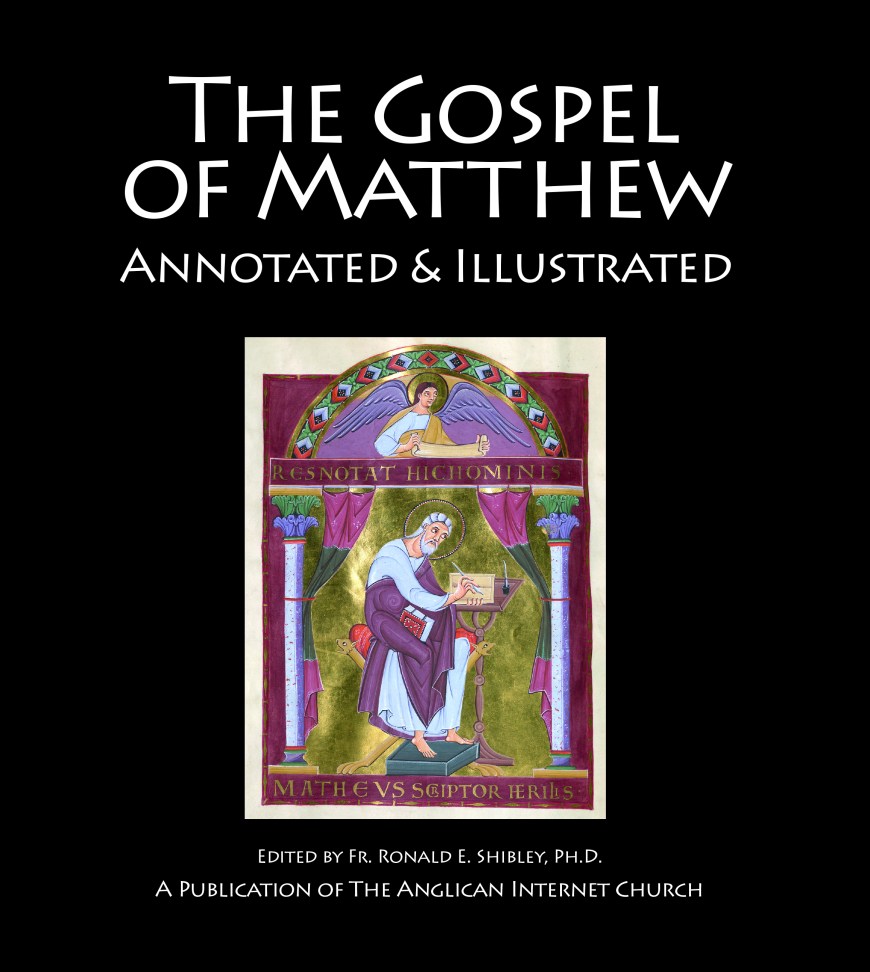
The book includes the entire text, with commentary, of the Gospel of Matthew, set in the text of the New Kings James Version. There are thirteen “special text boxes,” including The Art of Illumination of Scripture; A Guide to Reading the Gospel of Matthew; The Holy Spirit in the Gospel of Matthew; Angels in the Gospel of Matthew; Parables in the Gospel of Matthew; The Christian Virtues and Their Opposites; and Samara and Samaritans in the Gospel of Matthew. The book’s 117 illustrations are from the 6th through the early 20th C. 278 pages, including full Bibliography, detailed list of Sources of Illustrations and summary information about other AIC Bookstore Publications. $65.oo. The book is available exclusively through our Virtual Bookstore (which is Fr. Ron’s Author Central page on Amazon.com). Portions of the text of St. Matthew’s Nativity, Resurrection and Post-Resurrection narratives also appear in our two Seasonal publications, Christmas: The Nativity of Our Lord in Scripture, Art & Christian Tradition and Easter: the Resurrection of Our Lord in Scripture, Art & Christian Tradition. Both volumes are also printed in the 8.5″ x 8.5″ format.
During January A.D. 2026 I have continued searching historic archives for additional examples of Christian art depicting scenes which are the subject of the Gospel lessons later in the year. I have also been busy updating and sorting our catalogue of nearly 3,000 images, all with their own detailed entries in an Excel spreadsheet. In the spreadsheet they are categorized first by subject. Each entry includes the source, background, whether Public Domain or copyright protected (with author or source indicated), and where each is filed in the AIC’s records. Even more detailed information about each entry is also listed, where available, in seventeen notebooks labelled “Picture Sources.” I am especially grateful to the helpful staff at the British Library for the continued digitization of the Library’s vast collection. The British Library is still recovering from an assault on its resources in 2024 A.D., which resulted in the destruction of or damage to many valuable cross-references, and previously-digitized material. Many resources used in AIC Bookstore Publications are no longer available to the public. Many sources require expensive re-photographing. The AIC remains committed to keeping these valuable resources available, on-demand, in one or more of the WATCH-LISTEN-READ formats and, except for the Bookstore Publications, free of charge.
As always, thank you for your interest and support. Glory be to God for all things! Amen!
 Anglican Internet Church