Second Sunday in Lent & AIC Bookstore 16

Apologies to viewers for the late posting of the logo and links for the start of Lent. I was traveling without my computer and could not complete the changes until my return. The Welcome/Home page now includes both the seasonal image and the three episode links.
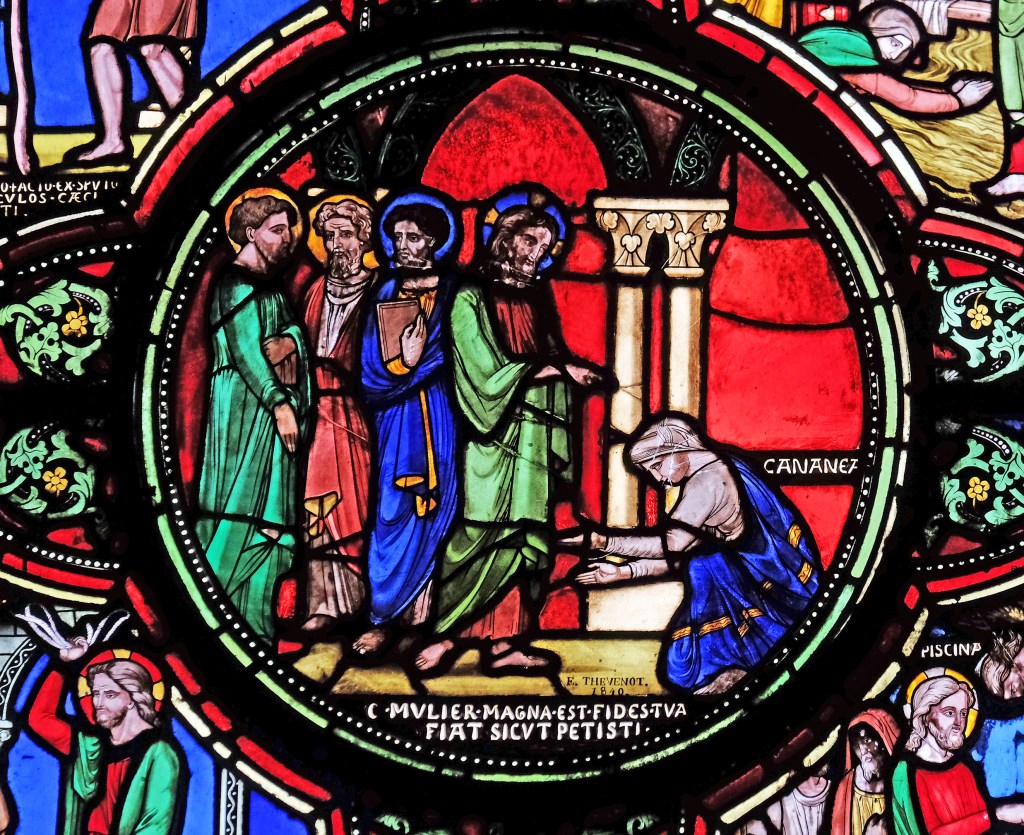
Jesus & the Canaanite Woman, stained glass window in the Munich style, mid-19th C., St. Germain-l ‘Auxerrois Church, a Roman Catholic Church near the Louvre, Paris, France. The window was designed by renowned French stained glass artist, Etienne Thevenot (1797-1862). © Zatletic|Dreamstime.com.

For Second Sunday in Lent Archbishop Cranmer adapted a Collect from the Gregorian Sacramentary (10th C.) on the theme of mankind’s inherent lack of power to do save itself combined with a plea for protection from adversity and from evil thoughts. The Epistle reading, 1 Thessalonians 4:1-8, contains more of St. Paul’s teachings on the Christian virtues, especially on mastering passions. The Gospel reading, Matthew 15:21-28, the Evangelist’s account of Jesus’ encounter with the “Woman of Canaan.” In Episode Two of the AIC Christian Education Video series, Lent: the Season of Penitence, I discuss the differences between this account by St. Mark in which she is called the “Syro-Phoenician Woman.” In both versions, the woman calls Jesus by the titles “Lord” and “Son of David.” The audio-only version of Episode Two is linked from the Podcast Archive page. My Podcast Homily for Second Sunday in Lent based on the Holy Communion readings, is linked from the Podcast Homilies page. A second Podcast Homily for Second Sunday in Lent, based on the Psalm reading in Morning Prayer (Psalms 30 and 32), is linked from the Podcast Homilies-Morning Prayer page.
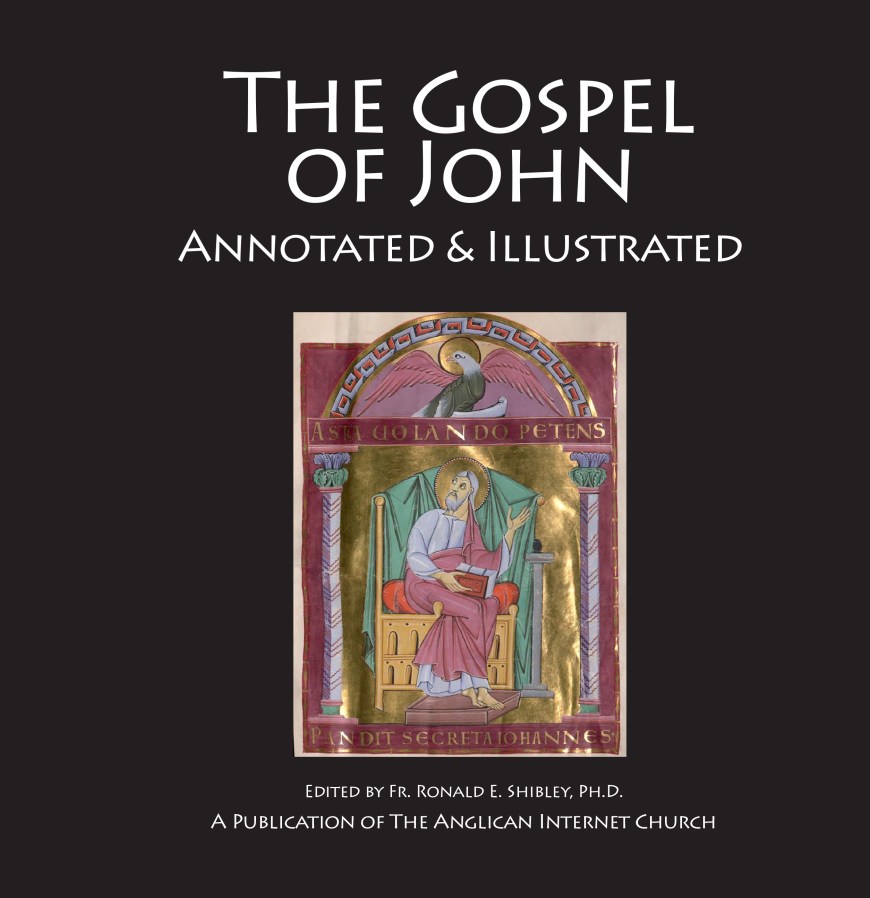
John Writing His Gospel, illumination in tempera and gold on parchment, produced at Reichenau Monastery, Reichenau, Germany, circa 1007-1012, Pericope Book of Henry II, Ms. Clm 4452, Folio 3v, Bayerische Landesbibliothek, Munich, Germany. CC-by-SA 4.0. Henry II was the last of the Ottonian Holy Emperors who were successors to the first Emperor, Charlemagne, crowned at Rome on Christmas Day, 800 A.D., as the first Holy Roman Emperor since the sacking of Rome in the second half of the 5th C.

This week’s sampling from the 22 books among the AIC Bookstore Publications is The Gospel of John: Annotated & Illustrated. This volume was actually the first book of the Gospels which was published in the 8.5″ x 8.5″ format. It includes 86 images from a 5th mosaic to a 20th C. stained glass window. Images include many “illuminations” in gold or silver and egg tempera on parchment originally intended for the exclusive use of bishops and emperors. The entire text of St. John’s unique gospel is printed, with section-by-section commentary, using the New King James Version text. The text includes sixteen “special text boxes”: The Art of Illumination of Scripture; A Guide to Reading the Gospel of John; Angels in the Gospel of John; The Seven “Signs” in the Gospel of John; Numerology in the Gospel of John; Concepts of Time in the Gospel of John; “Jews” in the Gospel of John; “Abide” in the Gospel of John; “I AM” in the Gospel of John; Emotions of Jesus in the Gospel of John; “The Son of Man” in the Gospel of John; The New Commandment: “Love” in the Gospel of John; “Peace” in the Gospel of John; Names of the Holy Spirit in the Gospel of John; The Sacrament of Confession/Penance in the Gospel of John; and John Writing His Gospel (Constantinople, 1285 A.D.). 186 pages. $55.00. The book is available exclusively through Fr. Ron’s Amazon Author Central page, which we call the Virtual Bookstore. Additional information about all the AIC Bookstore Publications can be found on the AIC Bookstore page.

As always, thank you for your interest and support. We remain committed to keeping the valuable examples of Christian art across the centuries available on demand, 24/7 through this site’s postings, videos, podcasts and books. You are invited to subscribe to these periodic posts on topics of seasonal or special interest by clicking the “Follow Anglican Internet Church” logo in the right hand column. Glory be to God for all things! Amen!
First Sunday in Lent

This week marks the start of the season of Lent, the penitential season leading up to Easter. The Collect, Epistle & Gospel readings for Ash Wednesday and First Sunday in Lent, respectively, are discussed and illustrated in Episode One and Episode Two of the AIC Seasonal Video Series, Lent: The Season of Penitence. The audio-only versions of Episode One and Episode Two are linked from the Podcast Archive page. The Podcast Homily for Ash Wednesday and the Podcast Homily for First Sunday in Lent are linked from the Podcast Homilies page. A separate Podcast Homily, based upon the Psalm reading for Morning Prayer on First Sunday in Lent, Psalm 3 and Psalm 62, is linked from the Podcast Homilies-Morning Prayer page. Ash Wednesday, the day for the Imposition of Ashes, has marked the start of Lent in the Western Church since the end of the 6th/start of 7th C. Pope Gregory the Great created Ash Wednesday as his answer to the strong Eastern Christian criticism from the Byzantine Patriarch and others that Lent did not actually last forty days in Western Church worship.

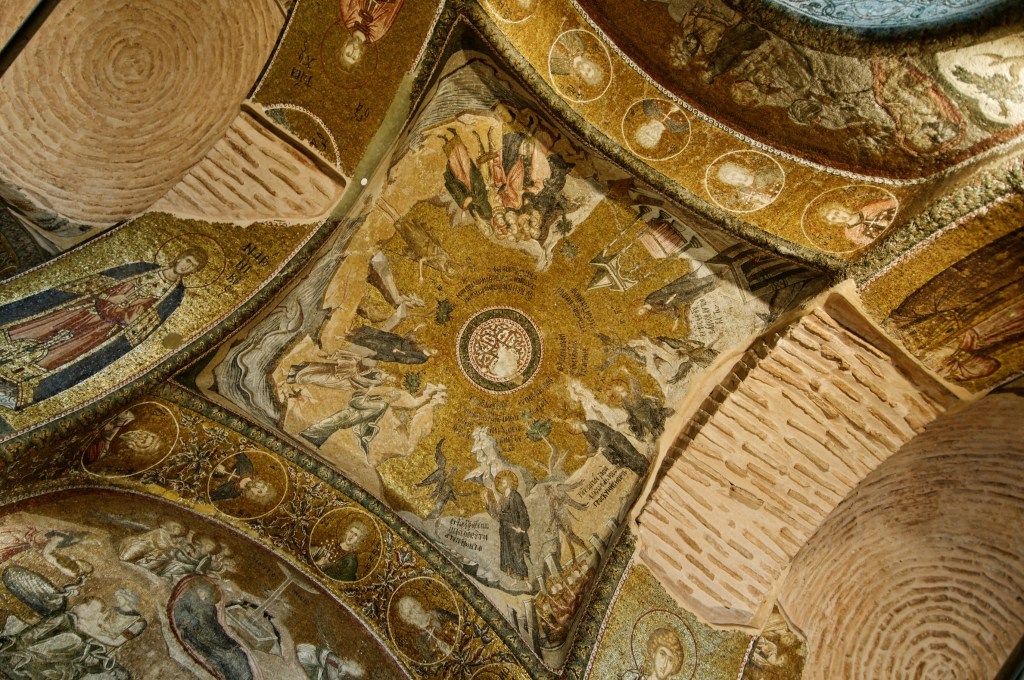
The Collect for First Sunday in Lent is an original composition by Archbishop Thomas Cranmer for the 1549 Book of Common Prayer, based upon Ephesians 4:22-24, focused on three topics: fasting, righteousness & holiness. These adaptations of the writings of St. Paul reflect the strong influence of the Pauline canon upon the worship, study and prayer practices of the Anglican Church. The choice of 2 Corinthians 6 as the Epistle reading also reflects Archbishop Cranmer’s emphasis on the Christian virtues as understood and aggressively taught by St. Paul. The Gospel reading for First Sunday in Lent, Matthew 4:1-11, is the first of four readings from the Gospel of Matthew in Lent, being an account of the Temptations of Christ. The image I have chosen is a mosaic from the ceiling in the north end of the Outer Narthex (or Exonarthex) at Chora Church, formerly Constantinople, now Istanbul, Turkey, depicting John the Baptist as witness to the Temptations. The partially-viewed segment at left is the supper edge of the mosaic of the Nativity of Christ on the east wall of the Exonarthex. The partial image at upper right depicts the Dream of Joseph and the Return of the Holy Family. The mosaics were created between 1315 and 1321 during the reign of Byzantine Emperor Isaac Comnenus using funds contributed by Theodore Metocrites, who is depicted adjacent to a Christ Pantokrator image near the door into the Inner Narthex (or Esonarthex). The image is one of about four dozen images from Chora Church downloaded earlier this year, bringing our archive of images to almost 3,000. The Church is located on the European side of the Straits of the Bosporus. It is now a museum/mosaic in which Christian worship is no longer conducted.

The Temptations of Christ, 1st Qtr., 14th C., Chora Church. © Serban Enache|Dreamstime.com.

Next week I will pick up with another Bookstore Preview, in this case featuring The Gospel of John: Annotated & Illustrated. As always, thank you for your interest and support. Glory be to God for all things! Amen!
Quinquagesima Sunday & AIC Bookstore 15

For Quinguagesima Sunday, Archbishop Cranmer created a new Collect based on 1 Corinthians 13:11, which is part of the Epistle reading for the day. He used the English understanding of the Greek agape as “Charity” rather than the modern understanding as “Love.” He closed with the admonition that those without these virtues will be “counted dead before thee.” The Epistle reading, 1 Corinthians 13:1-13, in the King James Version also translates agape as “charity.” The Gospel reading, Luke 18:31-43 is the evangelist’s account of Jesus healing the “Blind Man of Jericho.” In St. Mark’s account he is known as “Blind Bartimaeus” and is given a family history. My favorite depiction in Christian art, seen below, is from the 10th C. Ottonian era’s Gospels of Otto III. It is Illustration No. 53 in the AIC Bookstore Publication, The Gospel of Mark: Annotated & Illustrated, which was the subject of the Blog post for Sexagesima Sunday, linked from the Archive column at right. For unknown technical reasons the image would not upload for this Blog post.

Site visitors will find discussion and illustrations for Quinquagesima Sunday in Episode Two of the AIC video series, Gesima: the Sundays of Pre-Lent. The MP3 audio-only version is linked from the Podcast Homilies page. My Podcast Homily for Quinguagesima Sunday is linked from the Podcast Archive page. A related Podcast Homily based on the Psalm reading for Quiquagesima Sunday, Psalms 19 & 23, is linked from the Podcast Homilies-Morning Prayer page. The Gospel of Mark: Annotated & Illustrated and The Gospel of Luke: Annotated & Illustrated (see below for more information) are available through the AIC’s Virtual Bookstore, which is my Amazon Author Central page.

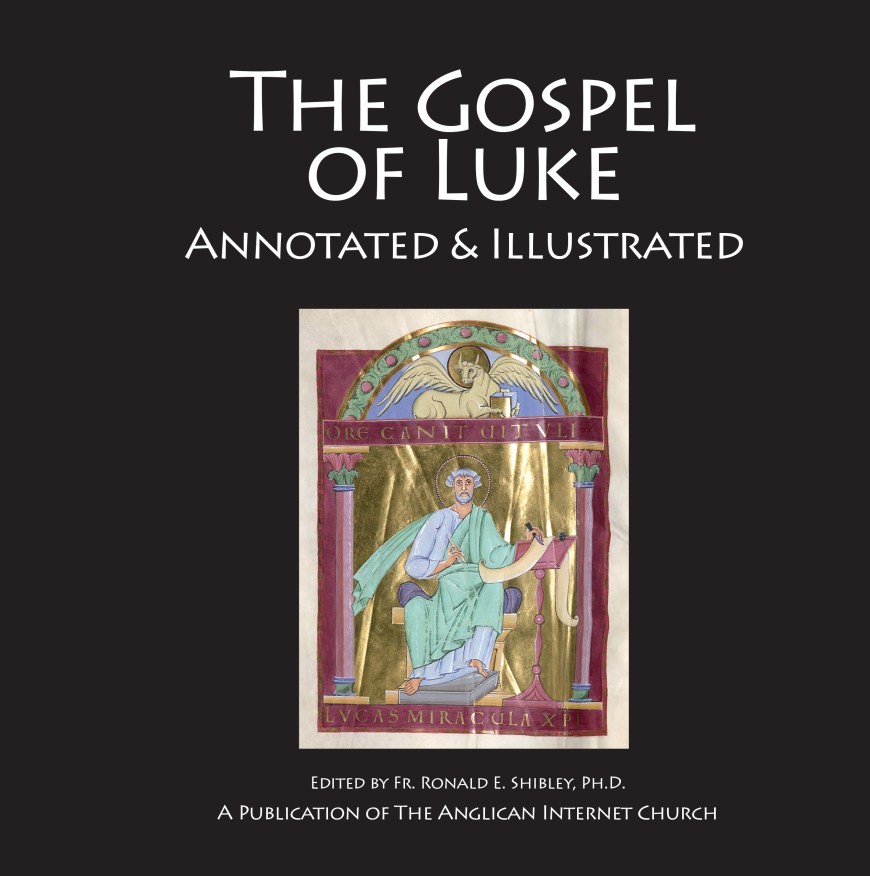
St. Luke Writing, illumination in tempera and gold on parchment, produced at Reichenau Monastery, Reichenau, Germany, circa 1007-1012, Pericope Book of Henry II, Ms. Clm. 4452, Folio 5v, Bayerische Staatsbibliothek, Munich, Germany. CC-by-SA 4.0. Perspective correction applied. Henry II was the last of the Ottonian successors to Holy Roman Emperor Charlemagne.

For this 15th posting of details of the 22 AIC Bookstore Publications, the focus on The Gospel of Luke: Annotated & Illustrated. The volume offers 21st C. readers views of 86 illustrations from the 5th to the 20th C., including mosaics, frescoes, paintings, watercolors, stained glass windows, and illuminations produced originally only for the use of kings, bishops and clergy. The entire text of the Gospel of Luke, using the New King James Version, is included with commentary. The volume includes fourteen special text boxes: The Art of Illumination of Scripture; A Guide to Reading the Gospel of Luke; Angels in the Gospel of Luke; The Temptations of Christ: Reality or Fiction?; The Holy Spirit in the Gospel of Luke; The Prayer Habits of Jesus Christ; “The Son of Man” in the Gospel of Luke; Discernment; Ambrose of Milan on the Raising of the Daughter of Jairus; Theophanies in Scripture; Isaiah on Lucifer/Satan; Samaria and Samaritans in the Gospel of Luke; Unique Parables in the Gospel of Luke; and The Gospel of Luke in the Anglican Worship Cycle. One hundred and eleven illustrations. 276 pages. 8.5″ x 8.5.” $65.00. Available only through our Virtual Bookstore, which is my Amazon Author Central page.

As always, thank you for your interest and support. Glory be to God for all things! Amen!
Sexagesima Sunday & AIC Bookstore 14

The Collect, Epistle and Gospel readings for Sexagesima Sunday are discussed and illustrated in Episode Two in the AIC Seasonal Video series, Gesima: the Sundays of Pre-Lent. The audio-only version in MP3 format of Episode Two is linked from the Podcast Archive page. My Podcast Homily for Sexagesima Sunday is linked from the Podcast Homilies page. A separate homily for Sexagesima Sunday-Morning Prayer, based on Psalm 33, the appointed Psalm for Sexagesima Sunday, is linked from the Podcast Homilies-Morning Prayer page. Sexagesima Sunday is the second of three of the pre-Lenten period.

The Collect for the occasion is another original composition by Archbishop Cranmer for the 1549 B.C.P., based on the Gregorian Sacramentary (10th C.), honoring the 590-604 A.D. Roman Catholic Pope who introduced Ash Wednesday to the Christian calendar. The primary theme is God Almighty as the only true defender of the faithful. The Epistle reading, 2 Corinthians 11:19-31, is a variation on St. Paul’s theme of the importance of the Christian virtues, in this case “diligence.” St. Paul also relates a litany of the forms of persecution he suffered for his advocacy in the spread of the Gospels.

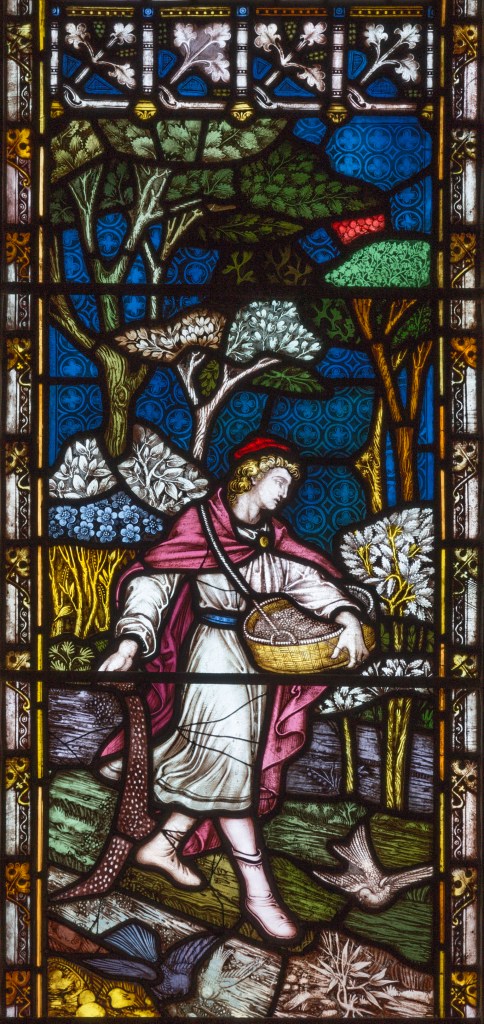
The Sower, stained glass window, St. Mary Abbot’s Church, Kensington High St., London, England, probably 3rd Qtr., 19th C. © Jozef Sedmak|Dreamstime.com

The Gospel reading, Luke 8:4-15, the second from St. Luke’s Gospel so far in A.D. 2026, is the Parable of the Sower. Other versions on the same subject are found in Mark 4:1-9, 13-20 and Matthew 13:1-9; 18-23. In St. Luke’s version the Parable and its explanation are part of a single narrative. The reference in Luke 8:10 to seeing, hearing and understanding in both the Old and New Testament contexts is also addressed in the full-page special text box on Page 36 of the AIC Bookstore Publication: The Gospel of Mark: Annotated & Illustrated. See more below.

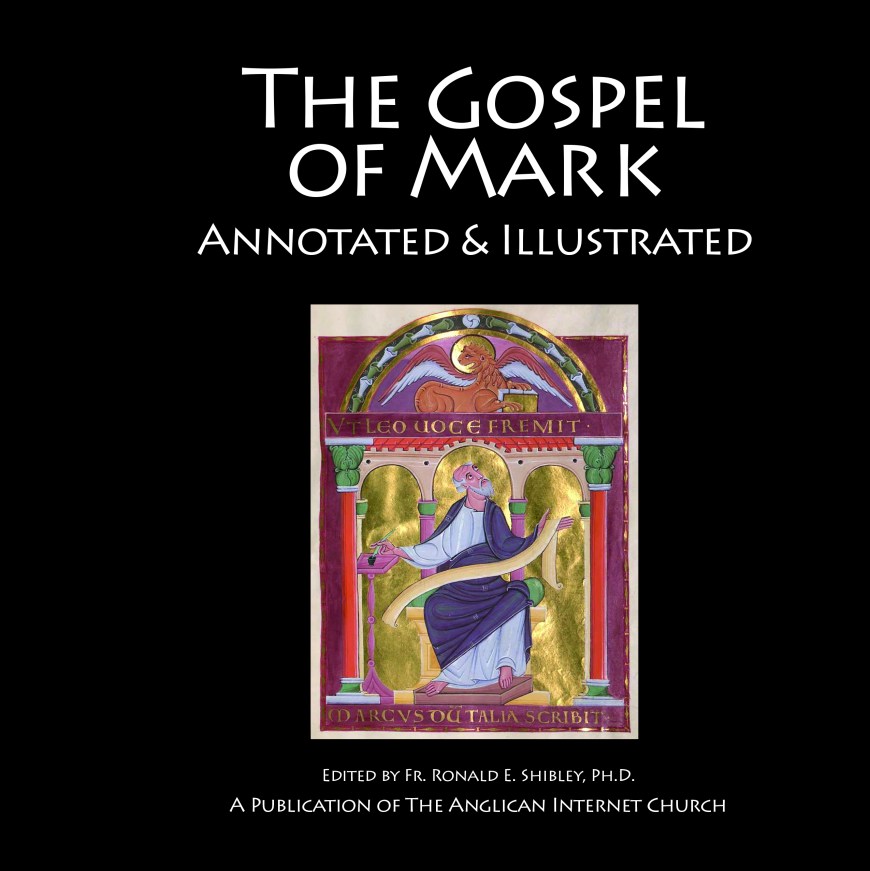
The cover illustration is a miniature illumination in egg tempera and gold on parchment, The Pericope Book of Henry II, produced at Reichenau Monastery, Reichenau, Germany, 1007-1012, under the supervision of the monk Liuthar. Ms. Clm 4452, Folio 4r, Bayerisches Staatsbibliothek, Munich, Germany. CC-by-SA 4.0. Perspective correction applied. Henry II was the last of the Ottonian successors to Holy Roman Emperor Charlemagne.

For this Sexagesima Sunday blog post, the focus among the 22 AIC Bookstore Publications is another in the New Testament: Gospels series, The Gospel of Mark: Annotated & Illustrated. The AIC edition of the Gospel of Mark includes an illumination of the reading for the upcoming Quinquagesima Sunday, St. Matthew’s account of the Healing of the Blind Man of Jericho (illus. # 53). The book includes 86 illustrations from the 6th to the 20th C., including a spectacular pair of illuminations of the Three Women at the Empty Tomb and The Angel at the Empty Tomb, placed on opposite pages as they were in the original book. There are ten special text boxes: The Art of Illumination of Scripture; Guide to Reading the Gospel of Mark; Angels in the Gospel of Mark; The Holy Spirit in the Gospel of Mark; “The Son of Man” in the Gospel of Mark; “Heart” & “Understanding” in Scripture; The Twelve: Disciples or Apostles?’ “Ears to Hear” in the Old and New Testaments; The Christian Virtues and Their Opposites; Concepts of Time in the Gospel of Mark. 190 pages. $49.00. The volume is available through our Virtual Bookstore (my Amazon Author Central page).

Later this week or early next week there will be special Blog post on another AIC Bookstore Publication: Easter: the Resurrection of Our Lord in Scripture, Art & Christian Tradition (discussed in my 11/22/2025 Blog post (linked from the Archive column at right). I hope to establish a promotion through the Blaze system used by our site host, WordPress.com.

As always, thank you for your interest and support.