Easter Even

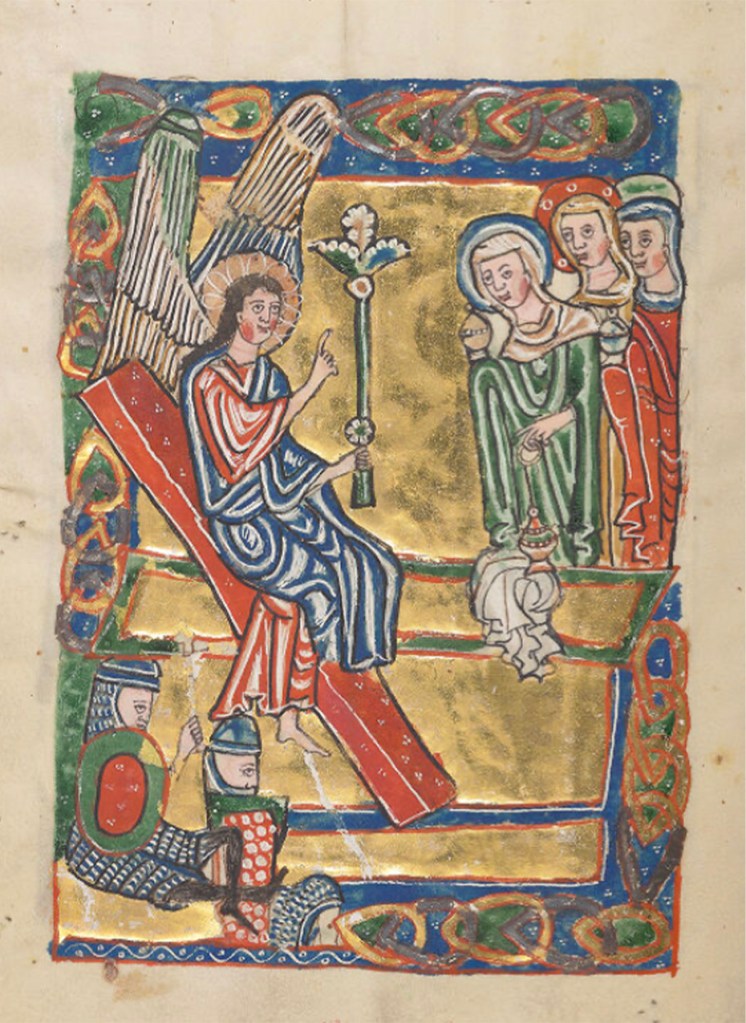
For Easter Even, which is the Saturday before Easter, the appointed Gospel reading, Matthew 27:57-66, includes the evangelist’s account of Joseph of Arimathea in the burial of Jesus, the presence of two of the three Marys (Mary Magdalene and “the other Mary), at the tomb and the order of Pilate, at the urging of the “chief priests and Pharisees,” to guard the tomb (against Jesus’ prophecy of rising in three days. In the AIC Bookstore’s publication, Easter: the Resurrection of Our Lord in Scripture, Art & Christian Tradition, Chapter Three includes many images of the Harrowing of Hades and Chapter Four includes images relating to Jesus’ prophecies of Resurrection three days. The volume is available through my Amazon Author Central page. Additional information is found on the AIC Bookstore page.

The Harrowing of Hell, illumination in colors and gold leaf on parchment, German Homilary, circa 1320, W.148, Folio 21r, Walters Art Museum, Baltimore, MD. CC0 license.

As always, thank you for your interest and support. Glory be to God for all things! Amen!
Good Friday

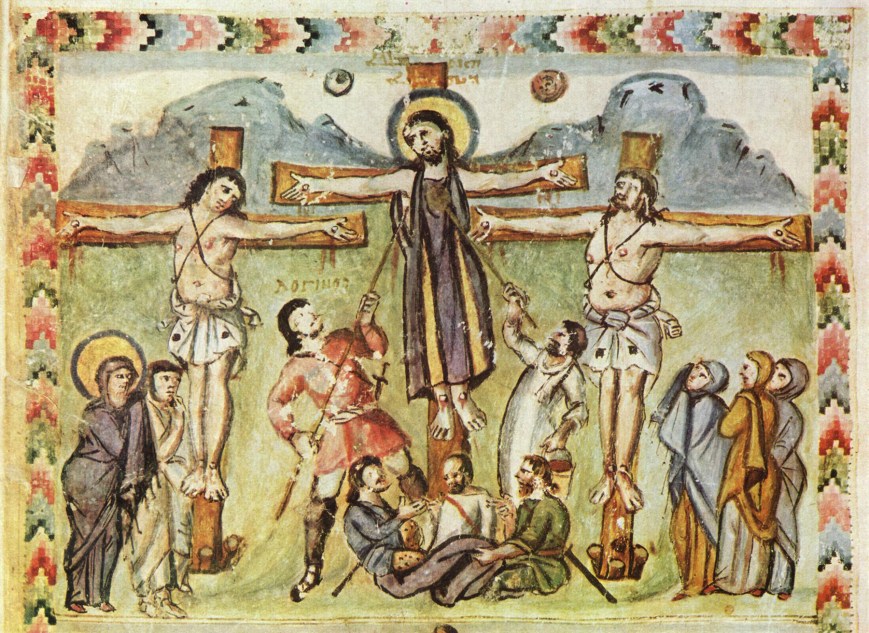
For Good Friday, the 1928 Book of Common Prayer (American edition, 1943) the Gospel reading is John 19:1-37, which is the source of many important details concerning the Crucifixion and events in the hours and day that followed. For this occasion, I offer viewers the oldest surviving image of the Crucifixion.

The Crucifixion, illumination in tempera and gold on parchment, Rabula Gospels, Syria, 586 A.D. The document is held at Biblioteca Laurenziana, Florence, Italy. The Yorck Project: 10,000 Masterworks. Public domain.

Other AIC resources for Good Friday include both video and audio-only versions of In the Cross of Christ I Glory, which I used at my former parish between Noon and Ninth Hour (3:00 P.M.). Episodes are also linked from the Digital Library and Podcast Archive pages. The readings were derived from a post-World War II office for Good Friday to which I added many quotations and prayers from the early Fathers of the Church Universal, including both Eastern Church and Roman Catholic saints and prominent figures.

For Good Friday (117 slides; nearly four dozen illustrations from the 6th to the 19th C.)

Part 1 – Opening Remarks, First to Fourth Word
Part 2 – Fifth to Seventh Word, plus Closing Remarks

The audio-only version (MP3 format) of this presentation is linked from the Podcast Archive page.

As always, thank you for your interest and support. Glory be to God for all things! Amen!
Thursday before Easter

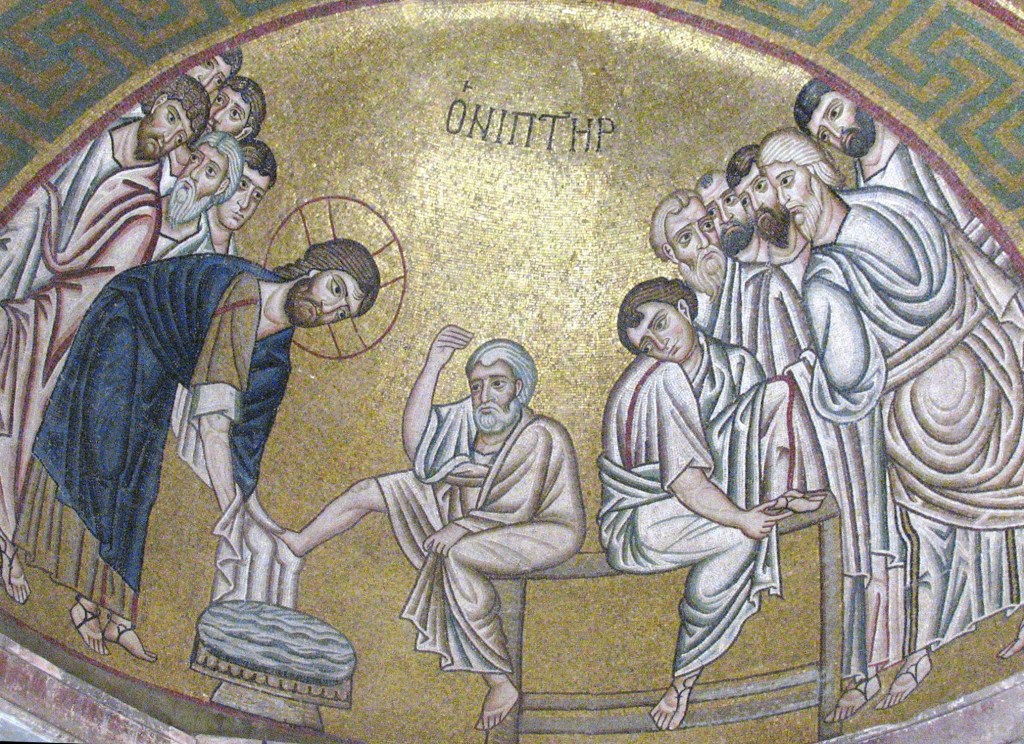
For Thursday before Easter, commonly known as Maundy Thursday the 1928 Book of Common Prayer (American Edition, 1943) provides two choices for the Gospel reading: Luke 23, which continues from the reading for Wednesday before Easter, and John 13:1-15, which is St. John’s unique (both in content and style) account of Jesus’ model for the humble act of footwashing. There are few examples of how this event was depicted in Christian. Among the best of them is this mosaic at the Monastery of Hosios Loukas, Boeotia, Greece, circa 10th C.

Christ Washes the Apostles’ Feet, with St. Peter at center, mosaic, Monastery of Hosios Loukas, Boeotia, Greece, 10th C. Photo by Edbb. CC-by-SA 3.0. Perspective correction applied to the original image.

I used this image as Illustration No. 66 in The Gospel of John: Annotated & Illustrated, which is available exclusively through my Amazon Author Central page. Additional information about the book is found on the AIC Bookstore page. In the book, a second image of footwashing, from the Codex Bruchsal, made for use at Speyer Cathedral, Speyer, Germany around 1220 A.D. is Illustration No. 67. The volume was highlighted in my Blog post for 2/17/26 in association with celebration of First Sunday in Lent. The post is linked from the Archives column at right.

Glory be to God for all things! Amen!
Wednesday before Easter

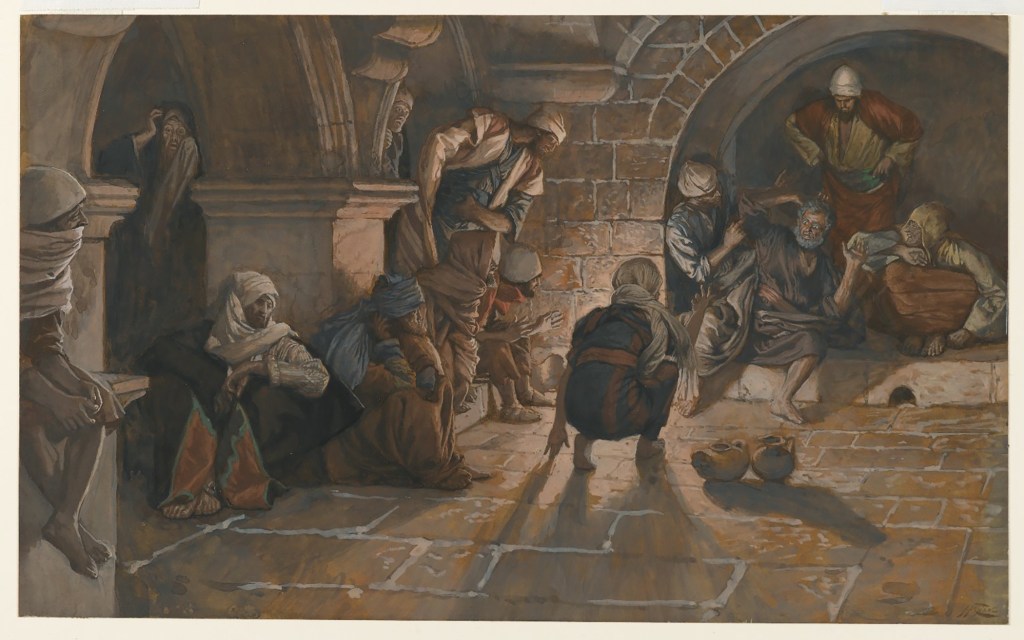
The Gospel reading for Wednesday in Holy Week is the entirety of Luke 22. Among the topics is the evangelist’s account of Christ’s prophecy of the betrayal of St, Peter (Luke 22:31-34) and its fulfillment (Luke 22:54-62). I have chosen a Western Church visual interpretation, in this case one of several watercolors by James Tissot. Tissot conducted extensive research in the Holy Land, focusing on clothing, architectural detail, visiting the locations where the events described took place. The Brooklyn Museum purchased the entire collection in the late 19th C. and later entered the images into the public domain. This particular image is: 00.159.246_PS2.jpg.

The Second Denial of St. Peter, opaque watercolor over graphite on gray wove paper, James Tissot, circa 1886-1894, Brooklyn Museum. Public domain.