Twenty-second Sunday after Trinity

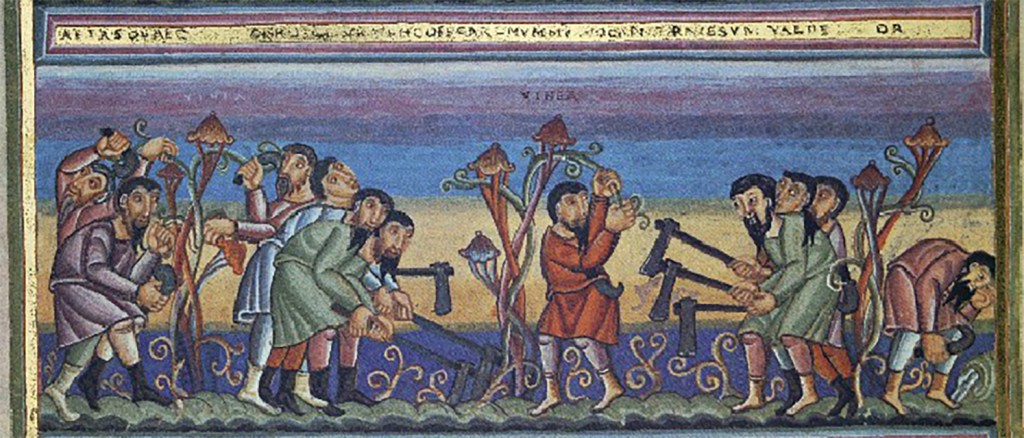
For the Twenty-second Sunday after Trinity the Collect was adapted by Archbishop Thomas Cranmer for the 1549 Book of Common Prayer from a late edition of the Gregorian Sacramentary. The Gregorian Sacramentary was named in honor of Roman Catholic Pope Gregory the Great, who presided at Rome from 590 to 6o4 A.D. Based on 10th C. document at the Vatican Library, it is one of the three great sacramentaries of the Roman Catholic tradition (Gregorian, Gelasian & Leonine). Scholars argue that the content of the work reflects the influence of Charlemagne, implying a contribution by Alcuin of York, who was the Emperor’s spiritual advisor and teacher. For more on the relationship between Charlemagne and Alcuin, see the blog posting for March 16, A.D. 2024. The design of the volume reflects the style of the sacramentaries produced in Germany during the period of the Ottonian successors to the throne of Charlesmagne. The collect is one of three used in Trinity season in which there are prayers for the Church Universal. The other two are the Collects for the Fifth and the Sixteenth Sundays after Trinity. A similar Collect, also based on the Gregorian Sacramentary, is read on the Fifth Sunday after Epiphany, a Sunday which can be transferred to Trinitytide in years with more than twenty-four Sundays after Trinity. The Fifth Sunday after Epiphany and the complex rules through which select Sundays in Epiphany can be transferred to Trinitytide is discussed in Episode Three of our video series, Epiphany: the Manifestation of Christ to the Gentiles.

LORD, we beseech thee to keep thy household the Church in continual godliness;
that through thy protection it may be free from all adversities,
and devoutly given to serve thee in good works,
to the glory of thy Name through Jesus Christ our Lord. Amen.

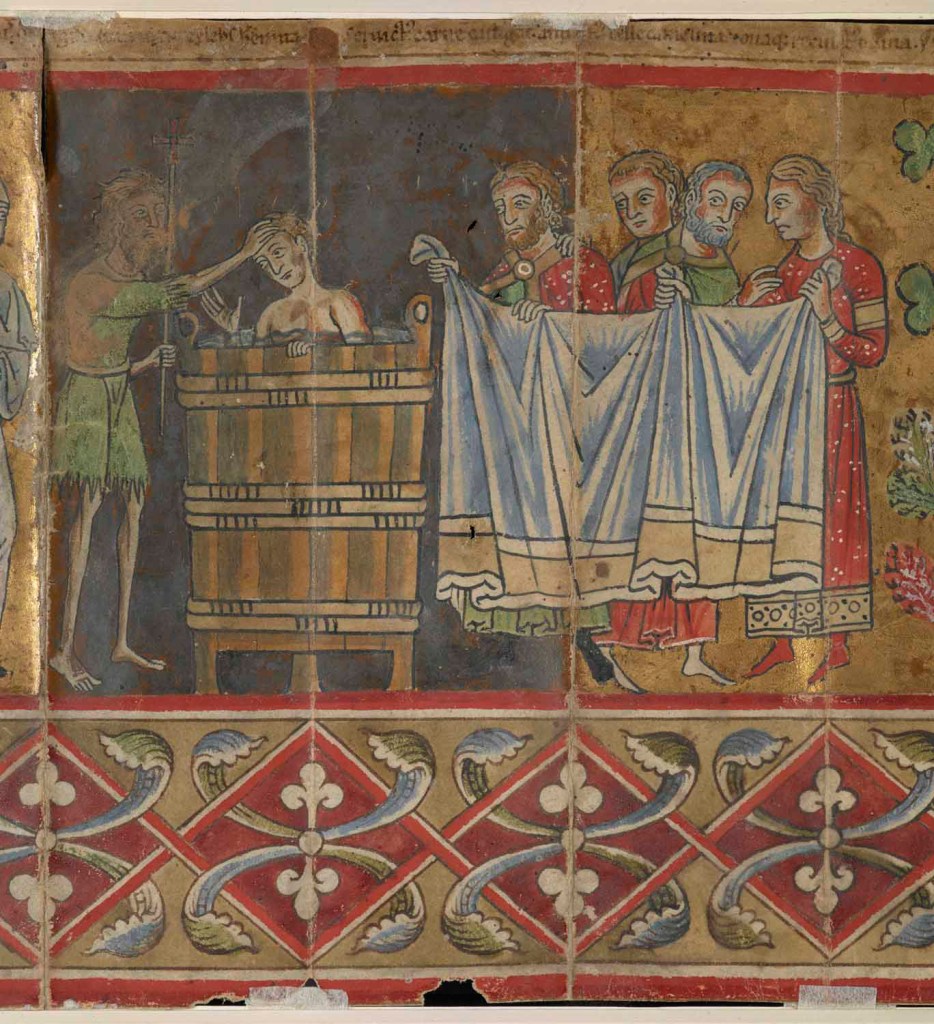
The Epistle reading for Twenty-second Sunday after Trinity, Philippians 1:3-11, advances to the next epistle in the canonical list of the epistles of St. Paul. In the older Latin plan of readings, the selection began with verse 5. Verses 3 and 4 were added in the 1662 Book of Common Prayer. St. Luke described Philippi as the “foremost city” in the Greek region of Macedonia (Acts 16:12). . A modern Greek Orthodox baptistery at Philippi, traditionally described as being on the remains of the site visited at the time of St. Paul’s baptism of Lydia (Acts 16:11-15), appears in Illustration No. 57 in the AIC Bookstore Publication, The Acts of the Apostles: Annotated & Illustrated, available through my Amazon Author Central page. Additional details and pricing are found on the AIC Bookstore page. When St. Paul writes about “fellowship” in the Gospel, he relies upon the Greek koinonia [Strong’s Greek word # 2842, related to # 2844), which has the same meaning as “thy household the Church” in the Collect. St. Paul refers twice (verses 6 and 10) to a “day of Jesus Christ/day of Christ), when means the promised Second Coming, from the Greek parousia [Strong’s Greek word # 3952]. The Apostle to the Gentiles assures the Philippians of “the fruits of righteousness” that come only from Jesus Christ. I discuss the meaning of “fellowship” (verse 5), “discernment” (verse 9) and “righteous/righteousness” (verse 119) and nearly 350 other commonly used words and terms, in Layman’s Lexicon: A Handbook of Scriptural, Theological & Liturgical Terms, also available using through my Amazon Author Central page. The entire reading is part of St. Paul’s prayer for the congregation at Philippi.

The Parable of the Unforgiving Servant, oil on canvas, 1649 A.D., Claude Vignon, Musee des Beaux Arts, Tours, France.
Wikimedia Commons

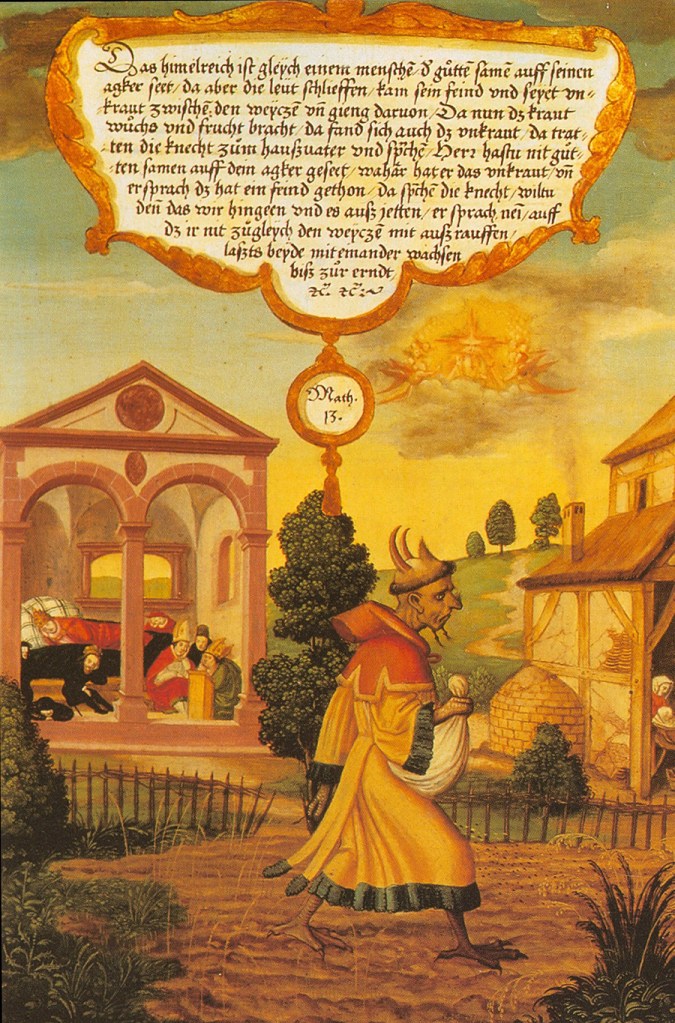
The Gospel reading, Matthew 18:21-35, is the seventh of nine readings in Trinitytide from the Gospel of Matthew. The reading includes two parts. Prayer Book scholar Massey Shepherd noted that verses 21 and 22, including Peter’s question and Jesus’ answer, were added to the traditional Latin pericope (meaning a collection of quotes from Scripture used in a liturgy) for the 1662 Book of Common Prayer. The addition placed the reading in the broader context of the forgiveness which Jesus announced in the Second Petition of the Lord’s Prayer. Following the two-verse dialogue on forgiveness is the Parable of the Unforgiving Servant (also commonly known as the Parable of the Ten Thousand Talents), revealing a king who practiced forgiveness of one of his servants, which servant then failed to heed the lesson and failed to forgive one of his own servants. In the final verse (verse 35), St. Matthew returned to the theme of St. Peter’s question in verse 1 with Jesus’ final pronouncement: “So my heavenly father also will do to you if each of you, from his heart, does not forgive his brother his trespasses.” The historical style image above was used as Illustration No. 105 in The Gospel of Matthew: Annotated & Illustrated, available through my Amazon Author Central page. F.Y.I.: the AIC sells these publications solely through Amazon so that we do not have to stock any inventory or report retail sales since the seller is Amazon and not the AIC. All author royalties from the sale of these publications are contributed to the AIC.

My Podcast Homily for the Communion service on the Twenty-second Sunday after Trinity is available in MP3 format. Another Podcast Homily, this one paired to the readings for Morning Prayer, is linked from the Podcast Homilies-Morning Prayer page. The Collect, Epistle and Gospel readings for Twenty-second Sunday after Trinity are one of the subjects in Episode Eight in our Christian Education Video series, Trinitytide: the Teaching Season. Interesting images of the remains of basilicas, mosaics and a map of Philippi are available in the Philippi entry at Wikipedia.

Next week I will begin adjusting the Home/Welcome page of this site by modifying links to entries for Trinity season, which this year has 25 days after Trinity. The changes will include links to materials related to Advent season. Advent, a season of penitence and preparation (for Christmas), which heralds the start of a new Church Year on the Anglican Calendar. Advent always begins on the Sunday closest to the Feast of St. Andrew (Nov. 30). In A.D. 2024, the First Sunday in Advent is December 1st.

As always, thank you for your interest and support.

Twenty-first Sunday after Trinity

For the Twenty-first Sunday after Trinity the Collect is another adaptation by Archbishop Cranmer from the Gelasian Sacramentary (Rome, circa 750 A.D.) for the 1549 Book of Common Prayer. It is also the last Gelasian Sacramentary collect for the season. The collect includes an iconic phrase, “pardon and peace,” in which pardon was substituted for the medieval Latin phrase “indulgence.” The word “indulgence” was, in Cranmer’s view, too closely allied to the Roman Catholic practice of selling indulgences to those with appropriate financial resources. The word “quiet” in the final phrase replaced the Latin “secure.” Quiet in mind implies unshakeable faith in the face of adversity, a concept which remains essential in the anti-Christian political and cultural environment of the 21st C. The Collect is often used by non-ordained Church leadership as a closing prayer in Morning Prayer, since it offers the hope of forgiveness without the official sanction of Absolution which only an ordained clergyman can dispense.

GRANT, we beseech thee, merciful Lord, to thy faithful people pardon and peace,
that they may be cleansed from all their sins, and serve thee with a quiet mind;
through Jesus Christ our Lord. Amen.

The Epistle reading, Ephesians 6:10-20, advances one chapter in St. Paul’s epistles from the reading for Twentieth Sunday after Trinity. The lesson includes some of the most important and boldest statements of the traditional teachings of the Apostle Paul concerning, in the broadest sense, the concept of “Spiritual Warfare.” The verses include several iconic martial phrases used in the context of the battle against “the wiles of the devil” (verse 11) and the “spiritual hosts of wickenedness in the heavenly places” (verse 12). These include “the whole armour of God” (twice, verses 11 and 13), “the breastplate of righteousness” (verse 14), “the shield of faith” (verse 16), “the helmet of salvation” (verse 17) and “the sword of the Spirit which is the word of God” (verse 18). Less military-sounding defenses include “the gospel of peace” (verse 15) in the concept of appropriate footware for spiritual conflict. “Principalities and powers” in verse twelve refers to the traditional understanding of the ranks or orders of angels and heavenly powers. I discuss this interpretation in Ninth Day (Jan 2nd) in our video series, The Twelve Day of Christmas and also in our Bookstore Publication, Angels: In Scripture, Prayer and Christian Tradition, available through my Amazon Author Central page. Paul refers to the importance of prayer and to his own boldness in defense of Christian doctrine in the closing verses (verse 18, 19 & 20).

Paul, miniature illumination in colors and gold on parchment inside the letter “P,” placed before the start of 2 Corinthians, Gloss on the Pauline Epistles, Peter Lombard, France, 4th Qtr. 12th C.-1st Qtr., 13th C., Ms. Royal 4 E IX, Folio 64, British Library, London, England. Perspective correction applied.

The Peter Lombard illumination was used as Illustration No. 74 in The Act of the Apostles: Annotated & Illustrated, available using the link to my Amazon Author Central page. Although the image was used in association with the 2nd letter to the Corinthians, it is used here owing to St. Paul’s fierce facial expression. My personal favorite image of a militant St. Paul was used in the blog post for Seventh Sunday after Trinity, linked from July 2024 entry in the right hand column.

The Gospel reading, John 4:46-54, is the fifth of six readings from the Gospel of John during the period between Whitsunday and Sunday Next before Advent. The subject of the reading is the second “sign” of Jesus’ divinity cited in the Gospel of John, being John’s record of Jesus’ remote healing of a nobleman’s son. According to John’s account, only Jesus, the Nobleman and His Disciples were present in Cana of Galilee, which was also the site of the first miracle recorded by John in Chapter Two. The Nobleman’s son was ill at Capernaum. This record by John near the start of Jesus’ public ministry, traditionally understood to have been in 27 A.D., is unusual in two important ways. In his unique style, John sets the mood of the scene with an account of Jesus having left Judea and gone into the Galilee. In verse 48, John records Jesus, knowing the Nobleman’s thoughts, declaring: “Unless you people see signs and wonders, you will by no means believe.” In verse 49a, the worried man begs Jesus to come with him and heal his sick son in Capernaum, to which plea Jesus responds: “Go your way; your son lives.” John confidently states in the same verse that the Nobleman “believed the word that Jesus spoke.” In the remaing verses, John records the details of how the man learned that his son recovered “at the same hour” which Jesus spoke (7th hour, or 1 PM). John records that not only did the man believe but his household also (verse 51). The historical sytle image below, from the Bowyer Bible, was used as Illustration No. 33 in The Gospel of John: Annotated & Illustrated, available through my Amazon Author Central page. It also appears in Slides 1215-1233 in Episode Thirty-six, the first of four episodes focused on the miracles (or “signs” from the Greek Semeion) of Jesus in our Bible Study video series, The New Testament.

Healing the Nobleman’s Son, etching/engraving, Jan Luyken, 1840, Bowyer Bible, Bolton Library, Bolton, Lancashire, England. From PHOTO by Harry Kossuth; TEXT by Phillip Medhurst. From the 2018 A.D. digital edition, Early Scenes in the Life of Christ, Harry Kossuth (photographs) and Phillip Medhurst (text).

The Collect, Epistle and Gospel readings for Twenty-first Sunday after Trinity are discussed and illustrated in Episode Eight in our video series, Trinitytide: the Teaching Season.

As always, thank you for your interest and support.

Twentieth Sunday after Trinity

For Twentieth Sunday after Trinity the Collect is another of Archbishop Cranmer’s adaptations from the Gelasian Sacramentary (Paris, c. 750 A.D.). In this case the original Cranmer collect has been modified twice, first for the 1662 Book of Common Prayer in which the Latin phrase “being propitiated” was replaced with “of thy bountiful goodness,” and, in 1789 A.D., in the first American Book of Common Prayer, the collect getting a new ending (“which thou commandest”). The word “cheerfully,” which replaced “with free hearts,” means willingly. For this change and more on the many changes made in the 1662 Book of Common Prayer, consult Massey Shepherd, Jr.’s landmark volume, The Oxford American Prayer Book Commentary, available online for download in pdf format. Shepherd comments upon the history and other details of each Collect, Epistle and Gospel reading.

O ALMIGHTY and most merciful God, of thy bountiful goodness keep us, we beseech thee,
from all things that may hurt us; that we, being ready both in body and soul,
may cheerfully accomplish those things which thou commandest; through Jesus Christ our Lord. Amen.

The Epistle reading, Ephesians 5:15-21, is from the next chapter in the canonical order of the Pauline epistles, once again to the congregation at Ephesus which the “Apostle to the Gentiles” established on his Second Missionary Journey. These seven verses offer St. Paul’s advice to Christians to let themselves be “filled with the Holy Spirit,” rather than being “drunk with wine” and include one his most memorable phrases describing the joy of the Christian faith: “speaking to yourselves in psalms and hymns and spiritual songs.” In the same vein, one of the greatest saints of the early Church, Athanasius of Alexandria, wrote in the 4th C. that “the art of singing effects harmony in the soul.” Many Anglican organizations include an appointed Psalm reading and Old Testament lesson placed just before the Epistle reading in Holy Communion. The participatory, that is, verse and response, reading of the Psalm should be part of every Anglican service and not just the Morning and Evening Prayer services.

St. Matthew, illumination in colors and gold on parchment, produced in Ireland or England, circa 800 A.D., The Book of Kells, Trinity College, Dublin, Ireland. The image reflects the traditional interpretation of the vision in Ezekiel 1:4-12, with Matthew shown as Man/Angel. The volume is one of the finest examples of Christian art in the Western Church tradition.
Parable of the Great Supper, etching/engraving, Jan Luyken, Bowyer Bible, published 1840, Bolton Library, Bolton, England. This image depicting verses 11-13, with image by Phillip Medhurst and text by Harry Kossuth, is from a 2018 digital edition of their Early Scenes in the Life of Christ.

The Gospel reading, Matthew 22:1-14, records another event in the week before the arrest, trial and crucifixion of Christ, being St. Matthew’s record of the Parable of the Wedding Feast, also known as the Parable of the Great Supper. The event, also recorded in Luke 14:15-24 took place just two days before Maundy Thursday. This is the sixth of eight readings from St. Matthew’s Gospel in the Whitsunday/Trinitytide cycle. There have been many explanations of the meaning of the phrases “highways,” which are searched for those who are worthy. Jesus provided an explanation in the final verse. Perhaps lost in the modern world is the tradition that the host provided the Wedding Garment which the guest in question was not wearing. The guest was confronted by the “king,” who pronounced “Bind him hand and foot, and take him away, and cast him into outer darkness; there shall be weeping, and gnashing of teeth.” Jesus closed the address with a warning, putting these words into the mouth of the offended king: “For many are called, but few are chosen.” (verse 14). The image of St. Matthew from the Book of Kells was used in Episode Eight in the AIC Christian Education Video series, Trinitytide: the Teaching Season. Another image by Jan Luyken from the Bowyer Bible, illustrating the opening verses in the Gospel reading, appeared as Illustration No. 80 in the AIC Bookstore Publication, The Gospel of Luke: Annotated & Illustrated. The book is available in paperback at my Amazon Author Central page.

As noted many times in earlier posts, the AIC web site offers teaching materials in all three categories as part of our WATCH | LISTEN | READ initiative. Curiously, the subject of individual learning preferences, that is, whether one prefers the written or spoken word or a visual version came up during a conversation with a nurse during my doctor’s visit this month. The offering of all three media is made possible by donations and by the book royalties for AIC Bookstore Publications which are contributed to the AIC. To enhance ease of use, all three media are linked from tabs at the top and bottom of all pages on this site. Please note that, depending upon the subject matter, videos are linked from either the Digital Library page (for the seasonal and topical videos) and the Bible Study/New Testament pages (for the Gospel and Revelation series).

One final note. Be of good cheer and do not let the bias of the corporate world and the media affect your confidence in, and reliance upon, traditional Church teachings. Your best defense against their c0mbined assault on Christianity — remembering that the Church has been under attack since the 1st C.– is to attend a local church where you can, receive Holy Communion regularly, and, when neither is possible, read Morning Prayer and Evening Prayer in the 1928 Book of Common Prayer or the daily “Hours” offices (First, Third, Sixth, Ninth hours plus Vespers and Compline), available in our publication, Hear Us, O Lord: Daily Prayers for the Laity.

As always, thank you for your interest and support. Glory be to God for all things! Amen!
Nineteenth Sunday after Trinity

The Collect for Nineteenth Sunday after Trinity is another adaption by Archbishop Cranmer from the Gelasian Sacramentary for use in the 1549 Book of Common Prayer. It is also another which was amended for the 1662 Book of Common Prayer in which the reference to the Holy Spirit was added. The change made the Collect more consistent with the theme of both the Epistle and Gospel and of the season of Trinitytide. The phrase “direct and rule our hearts” was very popular among the early Saints in the Eastern Church tradition. The doctrine of the equality of the Holy Spirit with God the Father and God the Son was made part of the original Nicene Creed at the Council of Constantinople (or Second Ecumenical Council), 381 A.D. The Council was influenced by the writings of Gregory Nazianzen, who was the presiding Bishop, Gregory of Nyssa and his late brother, Basil of Caesarea. The work of that Council is discussed in detail, with illustrations, in the AIC Christian Education Video series, The Nicene Creed, presented in eight episodes (with the changes made in 381 A.D. in Episode Seven). The contributions of the two Gregories and of Basil of Caesarea are also discussed and illustrated in our video series, The Lives of the Saints, Second Series. Gregory of Nyssa (Feast Day: Jan. 10th) is celebrated in Episode Six; Gregory Nazianzen (Feast Day: Jan. 25th, with some jurisdictions including him with two others in May), in Episode Eight; and Basil of Caesarea (Feast Day: Jun. 14th) in Episode Seventeen. Basil’s most famous essay, On the Holy Spirit, is available in paperback from St. Vladimir’s Seminary Press (ISBN: 978913836-74-3), as Volume 5 in its Popular Patristics Series.

O GOD, forasmuch as without thee we are not able to please thee;
Mercifully grant that thy Holy Spirit may in all things direct and rule our hearts;
through Jesus Christ our Lord. Amen.

St. Paul, illumination in colors and gold on parchment, Siegberg Lectionary, produced at the Benedictine Abbey of St. Michael, Siegberg, Germany, 2nd Qtr., 12th C. Ms. Harley 2889, Folio 2, British Library, London, England. St. Paul shown holding a scroll rather than the traditional use of a symbol of the manner of death.

The Epistle reading for Nineteenth Sunday after Trinity again follows the pattern of the Gelasian Sacramentary (See the blog posts for Trinity 16 and Trinity 17). The sequence was interrupted by the reading from 1st Corinthians for Trinity 18. The Epistle reading, Ephesians 4:17-32, is another long quotation from St. Paul’s Epistle to the congregation he founded in Asia Minor on his Second Missionary Journey. Ephesus was known as the “first city of Asia” when the Third Ecumenical Council met there in 431 A.D. and granted the Blessed Virgin Mary the title, Theotokos, or Mother of God in modern English. As usual, St. Paul was not shy in expressing his views. He speaks emphatically of the “new” man, who, following Christian teachings from the Gospels, is distinct from the “old” man of the Gentile world.

St. Paul also wrote about the need to master one’s passion, by which he means not just sexual lust but passion for material things, including money. The epistle formed much of the scriptural foundation for the lists of Christian virtue. These virtues were previously confined to oral tradition. They appeared first in written form in the Eastern and Western Church traditions in the 6th, 7th and 8th C. St. Paul ends his counsel to the Ephesians with advice on the subject of forgiveness. Forgiven is also major theme of the Gospel reading. The illustration of St. Paul from the Siegberg Lectionary was also used in several AIC Christian Education Video Series, Advent: The Season of Penitence & Preparation, Episode One; The Great “O” Antiphons, Dec. 22nd, Fifth Antiphon (O Oriens); The Twelve Days of Christmas, Third Day-Peace-Dec. 27); Epiphany: the Manifestation of Christ to the Gentiles, Episode Three; and Trinitytide: the Teaching Season, Episode Seven. For more about the architectual remains left by the Christian population at Ephesus, now Selcuk, Izmir Province, Turkey, including the Tomb of St. John, watch the AIC Bible Study Video series, Revelation: An Idealist Interpretation, Episode Five.

The Gospel reading for Nineteenth Sunday after Trinity, Matthew 9:1-8, is the fifth of nine readings from St. Matthew’s Gospel in Trinitytide. A very short reading, or “pericope” (scholarly terminology meaning Scripture verses read in a liturgy), includes two of St. Matthew’s major themes: the birth and life of Jesus as fulfillment of Old Testament prophecy and events in both His Nativity and life as demonstrations of His divinity. The reading includes some unique details, including the only example of someone who is healed by Jesus being lowered into the scene through the roof, in this case of a house in the region of Capernaum, or “his own city” in verse 1, near the western shore of the Sea of Galilee. The time of the event is early in Jesus’ public ministry, likely in 27 A.D. The audience for the event includes Jesus’ Disciples (not named in the text), the paralytic man and his friends, and “Scribes,” meaning men associated with the Pharisees and with the governance of the Temple. Unlike other accounts of miraculous healings, there are no dramatic examples of the actual healing. Instead, the focus is on the meaning of the event. In this case, Jesus gives credit for the healing to the “faith” of the man’s friends, who have gone to considerable trouble and effort to lower the man into the presence of Jesus.

In St. Matthew’s account, Jesus demonstrates His divinity in knowing the thoughts of both the paralyzed man’s friends, “he saw their faith” (v. 2b) and said to the paralyzed man: “Son, be of good cheer; your sins are forgiven you.” When “some of the scribes” in their minds accuse Jesus of blasphemy, Jesus said, “Why do you think evil in your hearts? For which is easier, to say, ‘Your sins are forgiven you,’ or to say ‘Arise and walk?’ “But that you may know that the Son of Man has power on earth to forgive sins.” (verses 4b, 5 & 6a). When they did not answer, Jesus said: “Arise, take up your bed, and go to your house.” (verse 6b). St. Matthew records in one of his characteristic summaries that the man arose and departed for his home and that the multitudes “marveled and glorified God, who had given such power to men.” (verses 7 & 8). The phrase “Glorifying God” is the key phrase for Eleventh Day – January 4th in the AIC Christian Education Video series, The Twelve Days of Christmas, in which there are key words or phrases for all the days from Dec. 25th to Jan. 5th (Epiphany Eve).

Healing the Paralytic Man at Capernaum, tinted drawing on parchment, one of four Gospel scenes on a single page, Holkam Bible Picture Book, produced at or near London, 1327-1335, Ms. Additional 47682, Folio 24v, British Library, London, England. Commissioned by an unknown Dominican friar, the book was acquired by English collector Thomas Coke in 1816. Formerly known as the Holkam Ms. 66, it was purchased by the British Library, 1952. The image is based on Mark 2:1-12 and St. Luke 5:17-26. The complete book includes 231 miniatures, generally two per page illustrating scenes from Genesis through the Gospel accounts of the Ascension. The captions are in Anglo-Norman French with some English words. Description © British Library Board.

The image from the Holkam Bible Picture Book also appears as Illustration No. 25 in the AIC Bookstore Publication, The Gospel of Mark: Annotated & Illustrated. As with all our books, the volume is available using the link to my Amazon Author Central page.

In my research for this Blog post, I realized that the video and soundtrack for Episode Five and Episode Six in our series, The War on Christianity were never completed. I have started work on finishing the script and slide with the goal of completing the work during January A.D. 2025.

One final note: the blog post for Eighteenth Sunday after Trinity did not include any reference to the Archangel Michael, whose Feast Day, September 29th, coincided with Eighteenth Sunday after Trinity. Images and text regarding St. Michael are the subject of two AIC Christian Education Video series, The Lives of the Saint, Second Series, Episode Twenty-three, and the traditional understanding of the origin, number (or orders or ranks) and nature of angels in The Twelve Days of Christmas, Ninth Day (Jan. 2nd).

As always, thank you for your interest and support. Glory be to God for all things! Amen!

Eighteenth Sunday after Trinity

The Collect for the Eighteenth Sunday after Trinity is another adaptation by Archbishop Cranmer from the 1549 Book of Common Prayer, which the Archbishop adapted from the Gelasian Sacramentary. As noted in earlier posts, the Gelasian Sacramentary is named after Pope Gelasius (ruled at Rome, 492-496), but the document did not appear until the mid-8th C. at Paris, France. The Gelasian document was widely used in the English Church before the separation from Rome during the reign of Henry XVIII. In Western Europe, the Gregorian Sacramentary, which is derived from an an early 9th C. initiative by Holy Roman Emperor Charlemagne, influenced by his spiritual advisor, the Blessed Alcuin of York. A fuller version of the Gregorian Sacramentary was completed around the 10th C. I saved the Gelasian image below from the Wikipedia Commons version of The Yorck Project, commonly called 10,000 Masterworks, which was distributed on a DVD and entered into the public domain in 2002 A.D. The original document measures 10.2″ high and 13.1″ wide. In order to improve the resolution for this usage. I reduced its size and raised the resolution to 300 dpi..

The preamble to the Collect was reworded for the 1662 Book of Common Prayer. It includes the iconic phrase, “the temptations of the world, the flesh and the devil.” The same words also appear as part of the third phrase of the deliverance requests in The Litany, or General Supplication, published in 1544 A.D., the first English language liturgy of the Church 0f England.

LORD, we beseech thee, grant thy people grace to withstand the temptations of the world, the flesh and the devil;
and with pure hearts and minds to follow thee, the only God, through Jesus Christ our Lord. Amen.

The Epistle reading, 1st Corinthians 1:4-9, is one of the shortest readings in the Book of Common Prayer. On this occasion, the canonical order of the Pauline epistles is interrupted, leaping backward from Ephesians 4 on the Seventeenth Sunday after Trinity to a point earlier in the epistle than the first reading from 1st Corinthians 10:1-13 (Ninth Sunday after Trinity) and other readings on the Tenth and Eleventh Sundays after Trinity. The epistle includes closing reference to “the day of our Lord,” an allusion to Jesus coming again.

The Gospel reading, Matthew 22:34-46, includes two important dialogues, the first also recorded in Mark 12:28-37 and the second in Luke 20:41-44. The event is thought to have happened on Tuesday, 30 A.D., three days before Good Friday. The background of the two dialogues is the continuing rivalry between the Sadducees and the Pharisees. In verse 35, one of their number, a lawyer, asks Jesus, “Master, which is the great commandment?” Some context is needed to understand fully the question. Both the Sadducees and the Pharisees had their own answer to the question, with the Pharisees having calculated that there were 613 commandments in Hebrew Scripture and not just the ten in the Decalogue. In this context, the “lawyer” in verse 35 thought that any answer would offend someone. A cardinal rule for all modern-era lawyers is that a lawyer should never ask a question unless he or she already know the answer. In the reading, Jesus replied, as He often did (most famously in His dialogue with Satan in Matthew 4), with verses from Scripture. Here the verses are Deuteronomy 6:5 and Leviticus 19:18. His answer, in verses 37-40, was incorporated into the Anglican Holy Communion liturgy in the 1714 and the 1764 versions. It is commonly known as the Summary of the Law. The Summary of the Law was incorporated into the Holy Communion liturgy in the first American prayer book, published in 1789 A.D.

Jesus continued to befuddle His inquisitors with a second citation of Scripture regarding David. He quoted Psalm 110:1, the most-quoted verse in all the Psalms. As Matthew recorded in the closing verse, no one thereafter asked Him any more questions. In Christian art, the Gospel reading is generally depicted by a graphic displaying the words quoted by Jesus. For this blog post, I offer you a graphic which I adapted from a Christ Pantokrator mosaic (literally: Ruler of the Universe) from the Basilica of St. Ambrose, Milan, Italy. Because this Byzantine-style mosaic is very high above the floor level any photographs are distorted by sightlines diminishing toward top center. In the mosaic, Jesus is seated on a throne with the Archangels Michael (left) and Gabriel (right) and several saints. I used this image in the AIC Bookstore Publications, The Gospel of Mark: Annotated & Illustrated (Illus. # 66), Angels: In Scripture, Art & Christian Tradition (Illus. # 13) and Christmas: In Scripture, Art & Christian Tradition (Illus. No. 58). All books are available through my Amazon Author Central page. The image was also used in several AIC Video series, including The Great “O” Antiphons, Episode Two – O Adonai; The Twelve Days of Christmas, 2nd Day – Dec. 26th, 11th Day – Jan. 4th & 12th Day – Jan. 5th; In the Cross of Christ I Glory, 3rd Word, 6th Word, 7th Word; Eastertide, Episode 1; The War on Christianity, Episode 6; Trinitytide: the Teaching Season, Episode 7; and New Testament: Gospels, Episode 2.

Christ Enthroned, mosaic, 13th C. Basilica of St. Ambrose of Milan, Milan, Italy. Image copyright Can Stock Photo, Inc./Tupugato. The original basilica was built in the 6th C., with additions made in the 11th C. Perspective correction, image cropping and image rotation applied. The original image is displayed below. Traditionally, the image is also known in the Western Church as Christ in Majesty and Christ Pantokrator (literally, Ruler of the Universe) in the Eastern Church tradition.

I hope viewers find these resources inspiring and comforting, especially in the current anti-Christian age. We aim to make documents from the 2000 year history of the Church more easily accessible across the spectrum of print, audio or video media.

As always, thank you for your interest and support.

Seventeenth Sunday after Trinity A.D. 2024

For the Seventeenth Sunday after Trinity the Collect is a composition by Archbishop Thomas Cranmer based upon the Gregorian Sacramentary, named in honor of Pope Gregory the Great, who led the Roman Catholic Church from 590 A.D. until his death in 604 A.D. Illuminations depicting Gregory, acknowledging his profound influence on the liturgy of the Church, often show him with the Holy Spirit whispering into his ear. Note that the word “prevent” has a different meaning than the modern usage. In the 16th-17th C it meant “stand before.”

LORD, we pray thee that thy grace may always prevent and follow us,
and make us continually to be given to all good works; through Jesus Christ our Lord. Amen.

In the Epistle reading, Ephesians 4:1-6, St. Paul also emphases the presence of the Holy Spirit in the faithful in his message concerning the unity of the faith. The reading includes two ic0nic phrases important to St. Paul’s theology: “one faith, one baptism, one God and Father of all” and “the unity of the Spirit in the bond of peace.” The recipient of the letter, the church at Ephesus, was another congregation visited by St. Paul on his second missionary journey (described in Acts 18). According to tradition, St. John served for a time as the functional equivalent of a bishop at Ephesus, where he had taken the Blessed Virgin after the Crucixion. The House of Mary at Ephesus, traditionally said to be the house St. John built for Mary, remains a popular tourist site and is a designated holy place for Roman Catholics. It was visited by three Popes: Paul VI (1967), John Paul II (1979) and Benedict XVI (Nov 2006 during his historic visit to Istanbul (formerly Constantinople) which included celebration of Holy Communion with the Eastern Orthodox Ecumenical Patriarch, Bartholomew II.

The Gospel reading, Luke 14:1-11, is the twelfth and last reading from St. Luke during Trinitytide: the Teaching Season (in which calculation I include the Sunday next before Advent). All the remaining Gospel readings are from the Gospel of Matthew and the Gospel of John. The reading includes two separate but related scenes. The first scene simply sets the stage for the second and illustrates the strained relationship between Jesus and the Pharisees. Both scenes, the Healing of the Man with Dropsy and the Parable of the Chief Seats, are unique to the Gospel of Luke. Dropsy, technically known as edema, is a disease which results in extreme fluid retention, usually in the legs and feet. In the mosaic below, the swelling is shown in young man’s lower torso. The mosaic is in the upper walls of the Apse, Monreale Cathedral (Cattedrale di Santa Maria Nuovo de Monreale in Italian). The cathedral was dedicated to the Nativity of the Blessed Virgin Mary in 1182 A.D., eight years after the structure was begun in the reign of the Norman King of Sicily, William II. The full legend above the image is in Latin (only the final three words are visible in the image): “Jesus in domo cujusdam principis fariseorum sanat hydropicum die sabbati” (literally: “Jesus heals the man with dropsy in the house of the leader of the Pharisees on the Sabbath day”). The mosiac, presented in red, white, silver, blue is set into a gold background, with Jesus’ followers at left with two Pharisees and members of the household at right. Look closely at the fine detail in the background buildings and, especially, at the suggestion of flow of the robes of the figures in the foreground. The silver-haired figure, whose face is only partially visible at the left of the image, is consistent with traditional imagery of St. Peter. The halo around Jesus’ head includes the traditional Eastern Church symbology of Christ, always shown with two vertical and two horizontal lines. The “X” above Jesus’ head is a traditional symbol identifying Christ. Every part of the mosaic is made from varying sizes of glass tile. For more details about this ancient method, typical of Byzantine Christian art, see the Fr. Ron’s Blog post, Deesis Mosaic-Hagia Sophia & Other Images, dated April 6, A.D. 2024 (linked from the Archive column at right). In that post I include enlarged sections which reveal more about the “how” of creating mosaics. My Podcast Homily for Seventeenth Sunday after Trinity is linked from the Podcast Homilies page. The readings are discussed in the AIC Christian Education Video series, Trinitytide: the Teaching Season in Episode Seven.

Christ Healing a Man with Dropsy, Byzantine-style mosaic, north wall, apse, Monreale Cathedral, Palermo, Sicily, late 12th-early 13th C. Photo, June 2010, by Sibeaster. Public Domain.

Finally, I offer you one piece of advice for survival in our anti-Christian world of the 21st C. Instead of allowing such thoughts to negatively influence your daily life follow this mantra “Turn it off and tune it out.” The mantra is easy to apply not only to media but also to enterprises which, directly or indirectly, are hostile to the Christian faith. To fill the void, use web resources to create your own list of trusted resources in video, print and electronic and bookmark them for ease of daily use.

As always, thank you for your interest and support. Glory be to God for all things! Amen.

Sixteenth Sunday after Trinity

The Sixteenth Sunday after Trinity, celebrated on September 15th in A.D. 2024, marks the first reading from Ephesians during Trinitytide: the Teaching Season. The Collect for the day is another composition by Archbishop Thomas Cranmer made for the 1549 Book of C0mmon Prayer. It is another which was drawn from the “Gelasian” Sacramentary, named after the 5th C. pope although the volume was not published until circa 750. As you have undoubtedly noticed, the Gelasian liturgy, the second oldest in the Roman Catholic tradition, was highly-favored in the English Church both before and after the Church of England separated from the Church of Rome. The word “Church” was substituted for the original “congregation” in the 1662 Book of Common Prayer.

O LORD, we beseech thee, let thy continual pity cleanse and defend thy Church;
and, because it cannot continue in safety without thy succour,
preserve it evermore by thy help and goodness; through Jesus Christ our Lord. Amen.

The Epistle reading, Ephesians 3:13-21, as noted above, is the first in Trinitytide from St. Paul’s Epistle to the Ephesians, a congregation he established in Asia Minor on his Second Missionary journey. This selection includes St. Paul’s colorful and vivid language which later became popular parts of Christian prayer. These verses are the source of the Christian understanding of the Church as the earthly body of the faithful (as reflected in the previously mentioned insertion of “Church” in place of “congregation”) and the necessity of the Holy Spirit “in” the “inner man” and Christ “dwelling” in the heart (v. 16b-19a). He also uses another term which became part of Christian belief: fulness. I discuss the meaning of “heart” (used 826 times in the King James Version) in the AIC Bookstore Publication, Layman’s Lexicon: a Handbook of Scriptural, Liturgical & Theological Terms, available through my Amazon Author Central page.

The Gospel reading, Luke 7:11-17, the eleventh reading from Luke’s Gospel in Trinitytide: the Teaching Season, is Luke’s account of Jesus “raising” the son of the Widow of Nain, an event which took place around 28 A.D. in western Judea in the second year of Jesus’ public ministry. Fortunately for Christians, the event was featured often in illuminated Gospels, pericope books and other media. For this post I offer three examples from the AIC’s image archive. The first two, in the spiritual style, are Byzantine/Ottonian illuminations from the late 10th and early 11th C. and the third is an example in the historical style in the form of a last quarter 19th. C. watercolor. All three examples were used in one or more episodes Episode Twenty and Episode Twenty-five in the AIC Bible Study Video series, The New Testament, and in Episode Seven in our Christian Education Video series, Trinitytide: the Teaching Season. The spectacularly detailed image from the Gospels of Otto III was used as Illustration No. 56 in the AIC Bookstore Publication, The Gospel of Luke: Annotated & Illustrated, available through my Amazon Author Central page.

Raising the Son of the Widow of Nain, illumination in tempera and gold on parchment, Gospels of Otto III, circa 998 A.D., Clm 4453, Image 60, Bayerische Staatsbibliothek, Munich, Germany. CC by-NC-SA-4.0

This first example was produced at Reichenau Monastery, Lake Constance, Reichenau, Germany, for Holy Roman Emperor Otto III, whose mother was a Byzantine princess. Using that family connection, artists from Constantinople were brought to Reichenau to aid the already-experienced local artists in producing illustrated Bibles and other liturgical books in the Byzantine style of illumination. During the Ottonian era of Holy Roman Emperors, successors to Charlemagne, coronated at Rome, Christmas Day, 800 A.D., developed their own distinctive style, often labelled after the monk Liuthar, the chief of the artists who began in the Scriptorium at Reichenau around 1000 A.D. The art they produced there remains unequalled in the range of detail, including facial expressions, the use of gold as a background, elaborate foliage and flora patterns as borners (see the example above), and scenes often framed between classical architectural features, such as the columns shown above.

The second example is from the Hitda Codex, an illuminated liturgical book produced for Hitda, the Abbess of Meschede, Germany, circa 1020 A.D. The Codex is the only surviving example of Christian art produced at or near Cologne, the center of the empire created by Charlemagne, a Frankish monarch whose kingdom stretched from the southern half of presentday Denmark into most of Spain, a large part of northern Italy and eastward into the edge of the Balkans. Charlemagne was crowned Holy Roman Emperor at Rome on Christmas Day, 800 A.D., becoming the first Christian emperor in the West since the Vandals sacked Rome in 455 A.D. In earlier posts, I have explained the important part which Charlemagne and his spiritual advisor, the Blessed Alcuin of York, played in the spread of Christianity into western Europe.

Raising the Son of the Widow of Nain, illumination in colors and gold on parchment, Hitda Codex, produced for Hitda, Abbess of Meschede, Germany, circa 1020 A.D., Hs. 1640, Universitats- und Landesbibliothek Darmstadt, Darmstadt, Germany. CC0 license.

The third and final example is another watercolor created in the historical style by James Tissot, part of his Life of Christ series produced between 1886 and 1896 and now part of the collection of the Brooklyn Museum. In the watercolor, Tissot’s mastery of architectural detail, costume and a wide range of facial expressions is evident, as is his capture of the details of the central scene in St. Luke’s account.

Raising the Son of the Widow of Nain, opaque watercolor over graphite on gray wove paper, James Tissot, 1886-1896, Brooklyn Museum, Brooklyn, NY.

As always, I thank you for your interest and support. Especial thanks is owed to those who have signed on as followers of this Blog. The AIC’s online presence is intended to make these and other amazing examples of Christian more widely available in a variety of media. Most of our material is available free of charge. Author royalties from all the AIC Bookstore Publications are donated to the AIC. I encourage readers/viewers to visit the host sites for all these images, where these and many more are available in the public domain. They are owed a great debt of gratitude for preserving, archiving and, especially, digitizing the original art and making it available for research and education.

Glory be to God for all things! Amen!

Fifteenth Sunday after Trinity

The Collect for Fifteenth Sunday after Trinity is another which Archbishop Cranmer derived from the Gelasian Sacramentary. For the 1549 Book of Common Prayer, the first Anglican prayer book, the Archbishop left out a phrase from the Gelasian collect: “from all things hurtful.” The omission was corrected in the 1662 Book of Common Prayer. The Collect places great emphasis on the merciful nature of God and, correspondingly, the frailty of man, His creation. Church historian Massey Shepherd thought it echoed the theme of the Collect for Fourth Sunday after Epiphany, which was based on a collect from the Gregorian Sacramentary in which the “frailty” of mankind is also mentioned.

KEEP, we beseech thee, O Lord, thy Church with thy perpetual mercy;
and, because the frailty of man without thee cannot but fall,
keep us ever by thy help from all things hurtful,
and lead us to all things profitable to our salvation;
through Jesus Christ our Lord. Amen.

The Collect for Fifteenth Sunday after Trinity is discussed in Episode Six in the AIC Christian Education Video series, Trinitytide: the Teaching Season and the related Collect for Fourth Sunday after Epiphany in Episode Three in Epiphany: the Manifestation of Christ to the Gentiles, both also linked (in the order of the Church Calendar) from the Digital Libary page.

This week’s Epistle reading is again from St. Paul’s letter to the Galatians, a congregation in the central region of Asia Minor east of present-day Istanbul. The name is thought to derive from the ancient Gauls who migrated from Europe into Asia Minor in the 1st C. St. Paul’s missionary activity in the region is described in Acts 16 and 18. The region includes the cities of Antioch (not be be confused with Antioch in present-day Syria), Iconium, Lystra and Derbe. I traced out the route taken by St. Paul on his second missionary journey overlaid on a late 19th C. American Bible Society map of the Mediterranean region as Illustration No. 56 in the AIC Bookstore Publication, The Acts of the Apostles: Annotated & Illustrated, available through my Amazon Author Central page. St. Paul addresses the dispute between the Judaizers who advocated circumcision as a requirement for Christians and the emerging Christian understanding that circumcision’s symbolic function had been replaced by the Christian rite of baptism. In the epistle, St. Paul calls the Church the “Israel of God” (Galatians 16:16).

The Gospel reading, the second of nine readings from the Gospel of Matthew in Trinitytide: the Teaching Season, is Matthew 6:24-34, one of two Gospel accounts of Jesus’ sermon on the conflict between God and Mammon, the other being Luke 6:13. St. Matthew’s account is often described as the long form account of this part of the Sermon on the Mount. It provided inspiration for several of the greatest early Church commentators on the Gospels, including Gregory of Nyssa (brother of Basil of Caesarea) and John Chrysostom (literally, John the Golden Mouth) in the 4th C. and, in the Western Church tradition, late 19th and early 20thth C. artists illustrating Bible themes in books and paintings.

The key word from the reading is Mammon, which is derived from an Aramaic word, mamonas, generally interpreted to mean wealth, or “riches.” Gregory of Nyssa interpreted the name as referring to the Devil, or Beelezub. The more literal-minded preacher, John Chrysostom, interpreted mammon as a personification of the vice of Greed. Greed was one of the “seven deadly sins” in the Western Church tradition since the reign of Gregory the Great as Bishop of Rome in the 4th C. For more on the concepts of virtues and sin(s), see the entries for each in Layman’s Lexicon: a Handbook of Scriptural, Theological & Liturgical Terms. Like The Acts of the Apostles volume mentioned above, the book is available through my Amazon Author Central page. The Podcast Homily for Fifteenth Sunday after Trinity is linked from the Podcast Homilies page.

For this Blog posting I offer you two images concerning Mammon. The first is an engraving from a 582 page book on the Devil and other aspects of “demonology” published in France in 1818 by Jacque Collin de Plancy (his longer name is used in the image’s credit line). The source did not identify the “L.B.” initials or the “Jazzault” signature under the image which came from a later edition published in 1863, 45 years after the first edition. You can read more about J. C. de Plancy on Wikipedia, which lists of all his published and unpublished work. Mammon is shown seated on a locked wooden box clutching his possessionsn. The 1863 volume found a much wider audience than the first edition, which probably pleased the artist, who died in 1881.

Mammon, engraving, Jacque August Simon Collin de Pancy, Dictionnaire Infernal, Paris, France, 1863. Public Domain.

In the second image Mammon is shown as a god-figure gripping a bag of money while being worshipped by a young woman, painted in 1909 by Evelyn de Morgan (1855-1919), an English painter associated with the pre-Raphaelite Brotherhood school and whose style featured highly-symbolic imagery.

The Worship of Mammon, oil on canvas, Evelyn De Morgan, 1909, The De Morgan Center, London, England. Public Domain.

The lesson to be learned from the Gospel reading is the danger of becoming obsessed with possessions/wealth/status/money or other earthly “treasures.” While it is often said that “money is the root of all evil,” in truth it is anyone’s obsession with it and not the object itself that is the problem. One of the great early Christian thinkers, St. Clement of Alexandria, countered the claim that it is money that is evil with an essay often labelled in modern times as “Who Is the Rich Man Who Shall Be Saved?” (the link reveals the full text). St. Clement suggests methods and manners for putting wealth into service of the Christian faith, vs. giving it all away (a solution often practices in the 1st, 2nd & 3rd C.) and then being unable to help anyone.

As always, thank you for your interest and support. Glory be to God for all things! Amen!

Fourteenth Sunday after Trinity

With the Fourteenth Sunday after Trinity we are past the midpoint in Trinitytide: the Teaching Season, the longest season on the Anglican Church Calendar..

The Collect for the day is yet another variation by Archbishop Cranmer from the 1549 Book of Common Prayer based on the Gelasian Sacramentary in the Roman Catholic tradition. As in earlier Collects, this one was modified for the 1662 Book of Common Prayer. The key phrase is “faith, hope and charity” in the King James Version and “faith, hope and love” in the New King James Version. The quotation comes from 1st Corinthians 13:1-13, St. Paul’s extended essay on the virtue of love. Nearly all modern translations use the NKJV pattern. The root word is the Latin caritas, reflecting the English academic preference for Latin rather than Greek. The Greek word with the same meaning is agape; however, in the Greek language tradition there are many words which describe different aspects of love; examples: love of fellow man; love of money.

The Epistle reading is again from St. Paul’s letter to the Galatians (Galatians 5:16-24), which is another lesson on Law vs. Spirit and the human emotional struggle with “passions.” St, Paul compares actions which are “fruits of the spirit” (nine actions) to their opposite, “works of the flesh” (seventeen actions). These verses are not easily illustrated and, since there have been several images of St. Paul in earlier posts, I will not include another here.

The Gospel reading is the tenth of twelve readings for the season from the pen of St. Luke, Luke 17:11-19, another account unique to the Gospel of Luke, in this case of Jesus’ healing (technically, “cleansing”) of ten lepers at Capernaum. The time is likely around the Spring of 30 A.D. in the third year of Jesus’ public ministry. For this week’s Fr. Ron’s Blog entry I offer you two images, representing two different styles of Scriptural illumination. The first, from the Codex Aureus of Echternach, was prepared in the Byzantine/Spiritual-minded style and includes a word or label which offer viewers a key to understanding St. Luke’s account. The artists present an interpretation of St. Luke’s account in two scenes. The actual healing, or “cleansing,”is presented in the left-hand image, in which all ten men are present. In the right-hand image the artists interpret the return of the one who gave thanks to Jesus (described in verses 15 and 16). I could not enlarge the image without distortion of the very important notation which is painted into the right-hand scene just in front of Jesus’ left hand and directly above the kneeling man who is prostrate at the feet of Jesus. The label is “Samaritan.” In the image, the artists answer Jesus’ question in verse 17: “Were there not ten cleansed? But where are the other nine!” The last of the other nine are shown fading out to the right of the image.

There are two very illuminating details about this account. First, Jesus did not take credit for the healing/cleansing, saying instead to the one who returned and gave thanks: “Your faith has made you well.” Second, as in the Parable of the Good Samaritan (described & illustrated for Thirteenth Sunday after Trinity), it is notable that the one who returned was not one of the Chosen People (expected to do the right thing) but, as the label notes: “Samaritan.” As noted in last week’s Blog posting, I explore the long and troubled relationship between the Hebrew nation and the Samaritans in the text box, Samaria and the Samaritans in the Gospel, found on page 119 in our bookstore publication, The Gospel of Luke: Annotated & Illustrated (available using the link to my Amazon Author Central page and also found at the bottom of the Welcome page of this site and also on the AIC Bookstore page, which offers details about all the AIC Bookstore Publications. Royalties generated by your purchases of these books helps the AIC maintain this site, our Podbean host site and acquire additional images for use in blog posts and other books.

The Cleansing of Ten Lepers, Ottonian-era illumination in tempera and gold on parchment, Codex Aureus of Echternach, produced at Echternach, Luxembourg, circa 1030-1050 A.D., the lower tier of three illustrations on a single page; Hs. 156142, Folio 54r, Germanische Nationalmuseum, Nuremburg, Germany. Public Domain.
Healing of the Lepers at Capernaum, opaque watercolor over graphite over gray wove paper, James Tissot, 1886-1894, Digital File 00.159.89_PS1, Brooklyn Museum, Brooklyn, NY. Public Domain. The original filled the 6″ x 9 5/8″ size of the paper all the way to its edges. He signed the image in the lower left corner.

The second image is a watercolor in the historical style painted by French artist James Tissot (born Jacques Tissot, Nantes, France, 1836; died, Chenency-Boilon, France, 1902). The watercolor is part of a collection of Scenes in the Life of Christ which Tissot prepared between 1886 and 1896. The collection was acquired from the artist by the Brooklyn Museum in 1900, adding to its existing collection of art by James Tissot. Other works by Tissot were acquired by the Museum in 1939. The Life of Christ images were photographed by the Museum in 2008 A.D. and later made available for download in digital form. During his preparation for these images Tissot travelled extensively in the Holy Land and nearby regions. Tissot researched both the physical/geographical details but also the manner of dress thought to have been popular in the 1st C., recording his discoveries in the form of sketches of people and places, many of which were used in the watercolors. His work is featured extensively in the AIC Bookstore Publication series on Gospels of Matthew, Mark, Luke and John and The Acts of the Apostles. They also are featured in many of our Bible Study and Christian Education Video series. This second image is Illustration No. 87 in The Gospel of Luke: Annotated & Illustrated.

As always, thank you for your interest and support. I invite you to visit the other pages on the site for study materials in print, audio and video formats. Glory be to God for all things! Amen!
Thirteenth Sunday after Trinity

Thirteenth Sunday after Trinity is the half-way point in the celebration of the Church’s “Teaching Season.” The themes for the day are familiar and, fortunately for 21st C. Christians, there are many choices of illustrations by artists from the 6th to the late 19th C. In the AIC archives there are sixteen images of the Gospel reading (including examples from the same artist illustrating different scenes in St. Luke’s account.

The Collect for Thirteenth Sunday after Trinity is yet another by Archbishop Cranmer which he adapted from the Gelasian Sacramentary. Like many of the collects in Trinitytide, the final verse was modified for the 1662 Book of Common Prayer. The Latin word “Laud,” which means praise, is central to the collect. The final line mentions the “merits and mediation” of Jesus Christ, through whom God’s blessings are received by those who believe.

ALMIGHTY and merciful God, of whose only gift it cometh that thy faithful
people do unto thee true and laudable service; Grant, we beseech thee, that we may so faithfully serve thee in this life,
that we fail not finally to attain thy heavenly promises; through the merits and mediation of Jesus Christ our Lord. Amen.

The Epistle reading, the first in Trinitytide from Paul’s letter to the Galatians (Galatians 3:16-22), is St. Paul’s history lesson on the relationship of man to God, tracing it from the promise to Abraham through the delivery of the Commandments to Moses and, finally, to Jesus Christ as the mediator of the promises to mankind (“that the promise by faith of Jesus Christ might be given to them that believe.”

The Gospel reading (Luke 10:23-37), the seventh reading from St. Luke in Trinitytide, is another unique parable, the Parable of the Good Samaritan. My personal favorite among the selection of Christian art mentioned above is an illumination from the Rossano Gospels, produced in northern Italy in the 6th C. following the Byzantine Empire’s re-conquest of Italy. The Rossano Gospels are among the 0ldest of the codexes produced on purple-dyed parchment. The illustration is an example of what I call the “spiritual-minded” illustrations, a style very popular in the Byzantine and Greek Orthodox traditions. In this example the Good Samaritan is depicted as a Christ-figure in the scene showing the payment of the innkeeper’s bill. An angel, depicted in white at center stands over the central scene. The image was captured by the Yorck Project (10,000 Meisterwerke der Malerei, commonly known in English as 10,000 Masterworks) distributed on a DVD and entered into the public domain. The project was one of the first attempts to digitize art, religious and non-religious, from around the world and is now available online.

The Parable of the Good Samaritan, illumination in colors and gold on purple-dyed parchment, Rossano Gospels (Codex Purpureus Rossanensis), 6th C., Archepiscopal Treasury, Cathedral of Rossano, Calabria, Italy. Public Domain.

I discuss the complex and troubled relationship between Samaria and the Jews in the AIC Bookstore Publication, The Gospel of Luke: Annotated & Illustrated in a full page text box, “Samaria and Samaritans in the Gospels,” complete with a map of the H0ly Land in the 1st C. A.D., on page 119. The book is available through my Amazon Author Central page. More information is available through a link on the Virtual Bookstore section at the bottom of the Welcome page and on the AIC Bookstore page.

An excellent example of the “historical style” is the stained glass window at the Basilica of Our Lady of the Assumption, Clermont-Ferrand, France, which presents a more simple but straightforward interpretation of Luke’s account. The Good Samaritan is aiding the distressed man in the foreground, with the other characters in St. Luke’s account passing by and away in the background.

The Good Samaritan, stained glass window, Church of St. Eutrope (also labelled as Basilica of Our Lady of the Assumption), Claremont-Ferrand, France, 1868. Photograph by Romary. CC by-SA 3.0.

In the post- Charlemagne era in Western Europe, the tradition of illustrating Bibles with scenes from the Gospels reached a high point with the series of Ottonian emperors, including Otto the Great, Otto III and Henry II. The Ottonians brought to Reichenau, Germany, illustrators from Constantinople to teach Byzantine techniques to an already-impressive body of artists working at Reichenau Monastery on Lake Constance. One of the results was a beautiful illumination in tempera and gold on parchment made for Emperor Otto III. Below is the full-page illustration in which all the buildings, animals and people mentioned in St. Luke’s Gospel are shown on a gold background, with many imaginative assumed details of the assault. Viewers should take note of the range of facial expressions of the individual characters. The artist labelled this page the “Parable of the Compassionate Samaritan,” a title more accurate than the common usage in the Western Church. The image was used as Illustration 73 in the AIC Bookstore Publication, The Gospel of Luke: Annotated & Illustrated, which is available using through my Amazon Author Central page. It is one of 13 images from the Gospels of Otto III (see more in the caption) I used in that volume alone. The scene is discussed in Episode Six in our Christian Education Video series, Trinitytide: the Teaching Season, linked from the Digital Library page. The Podcast Homily for the same Sunday is linked from the Podcast Homilies page.

The Compassionate Samaritan, illumination in tempera and gold on parchment, Gospels of Otto III, Reichenau Monastery, Reichenau, Germany (on Lake Constance), circa 998, Clm 4453, Digital Image 70, Bayerische Staatsbibliothek, Munich, Germany. CC by NC-SA-4.0.

Other notable images in the “historical style” were prepared by Aime’ Morot (oil on canvas for the Petit Palais, Avignon, France, 1880); an opaque watercolor over graphite on gray wove paper, part of a series describing events in the Life of Christ, drawn and painted between 1886 and 1894, now in the collection of the Brooklyn Museum, Brooklyn, NY (and which can be downloaded from the Museum’s web site); a 15th C. tempera and gold on panel Byzantine-style icon by Russian artist Andre Rublev; and an oil on canvas by Cornelis van Haarlem. Some of these, and other examples not named here, can be seen on the Parable of the Good Samaritan page at Wikipedia Commons. All these are quite superior to the cartoonish examples of “Good Samaritan” images also linked from the Wikipedia site.

I hope you find these example of Christian art to be spiritually inspiring. All Christians should be thankful for the careful attention to preservation of these amazing works and to the digitization which has made these extraordinary works more widely available. The AIC remains committed to wide dissemination of these images, and in other formats, as part of our WATCH (videos) – LISTEN (podcasts) – READ (books) initiative which makes teaching materials available in whatever format one prefers and links them from the appropriate pages on this site.

As always, I thank you for your interest and support and hope you continue to find it useful and instructive. Glory be to God for all things! Amen!