Corkie and I got back from our first trip in the Volvo XC90 AWD late yesterday. This morning I put together a short Podcast Homily for the First Sunday After Easter based on the prayer book readings from 1 John 5:4-12 and John 20:19-23. LIsten to the Podcast
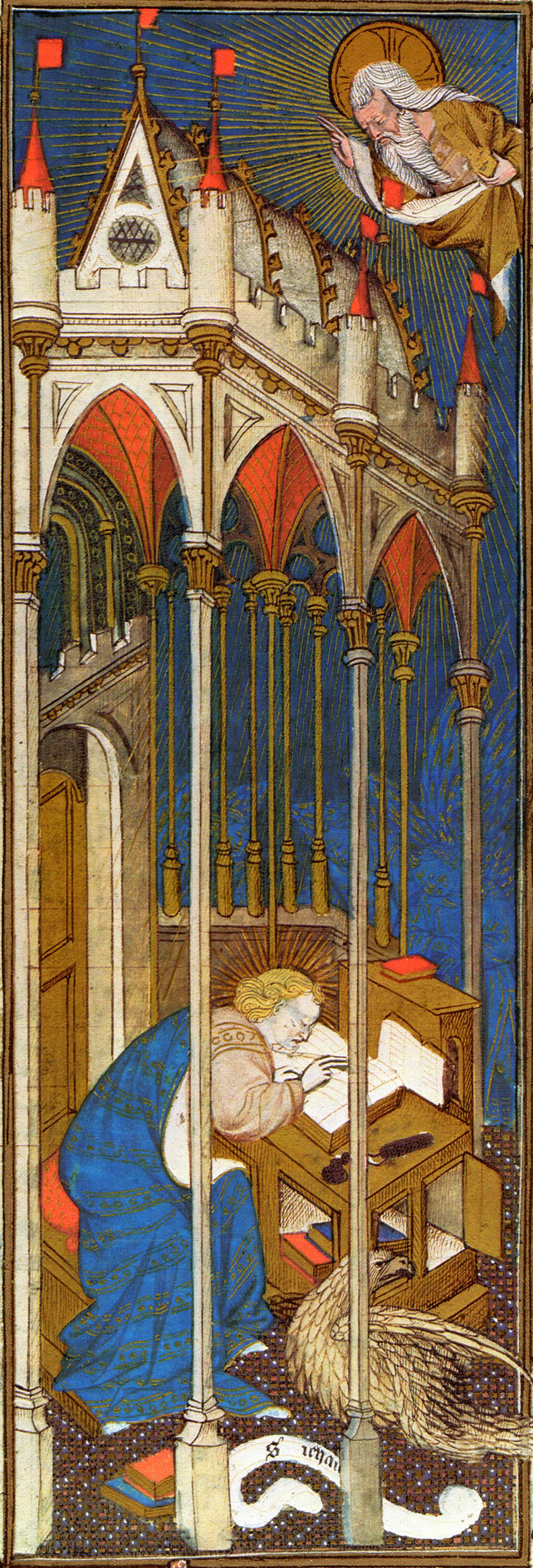 These two readings are both highly-spiritual, in which St. John shares his first hand experience as a Disciple and his own passionate understanding of the importance of the Christian virtue of Love (from the Greek, agape) and the equality of the Holy Spirit with the Father and the Son (or the Word in the Gospel of St. John). In his epistle he once again indulgences in a preference for stressing the importance of the symbolic number 3. Three stands for the Father, Son and Holy Spirit as well as for the three baptism-like symbols in his narrative: the spirit, the water and the blood. As he did in his Gospel account, he speaks of the Holy Spirit as witness of the Truth, meaning the Christian belief that Jesus Christ is the Son of God and that through Him only can salvation be obtained. In his Gospel, he frequently uses the comparison between Truth and Falsehood. For those moderns who give advice on the need for inclusiveness, St. John offers unwanted stress upon the certainty that there is only one path to the Father:
And this is the record, that God hath given to us eternal life, and this life is in his Son. He that hath the Son hath life; and he that hath not the Son of God hath not life.
How much clearer can an Epistle be?
The Gospel account is unique in many ways. It offers details of the appearance in the Upper Room, safely locked against possilbe intrusion by hostile Jews, including the granting to the faithful of the Peace of God, access by His breath to the Holy Spirit, and later, after the end of the reading, the comments of a skeptical Thomas, as well as providing the Scriptural basis for the Sacrament of Confession/Penance. As I note in the Podcast Homily, the granting of the sacrament providing Absolution and Remission of sins is yet another example of God’s unqualified love, Agape, for His Creation.


 Anglican Internet Church