Second Sunday after Christmas & Epiphany

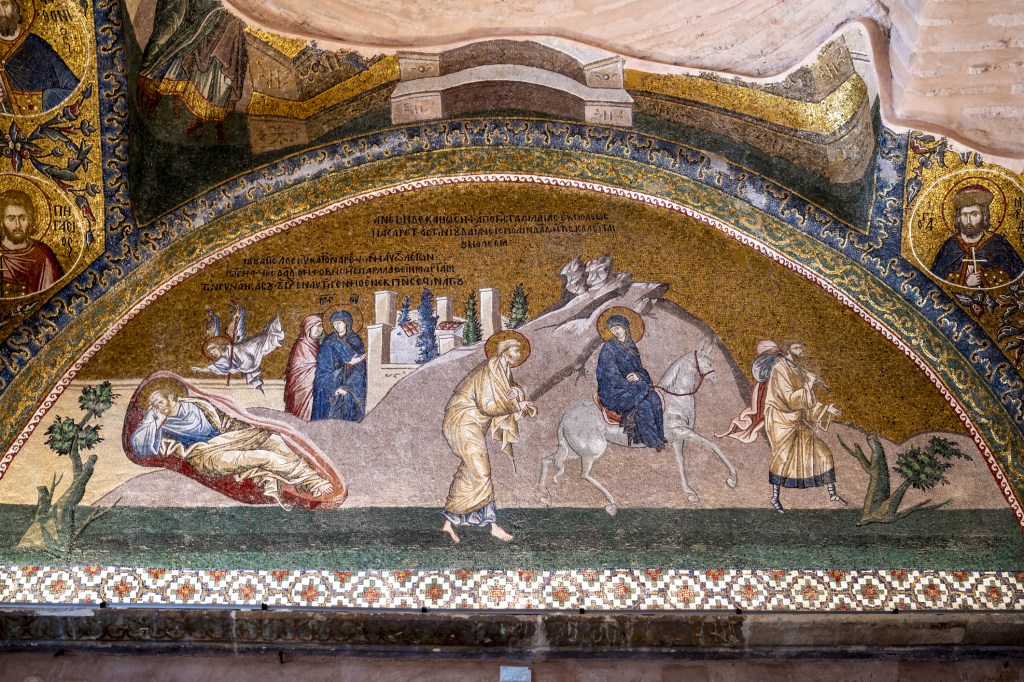
Second Sunday after Christmas is only celebrated when Jan. 2, 3, 4 or 5 happen on a Sunday. A.D. 2026 is one of those years. aThe Collect for the day was written by Archbishop Cranmer based on the 2nd Collect for Christmas Day in the Gregorian Sacramentary, a 10th C. tribute to one of the great Roman Catholic popes. The “for the Epistle” reading is Isaiah 61:1-3, which Jesus quotes in Luke 4:18, 19 in reference to the “Spirit of the Lord.” The Gospel lesson. Matthew 2:19-23, St. Matthew’s record of the Holy Family’s Flight to Egypt and Return, both of which were the result to a dream of Joseph. Jan. 4th is also the Eleventh Day of Christmas in the AIC video series, The Twelve Days of Christmas.

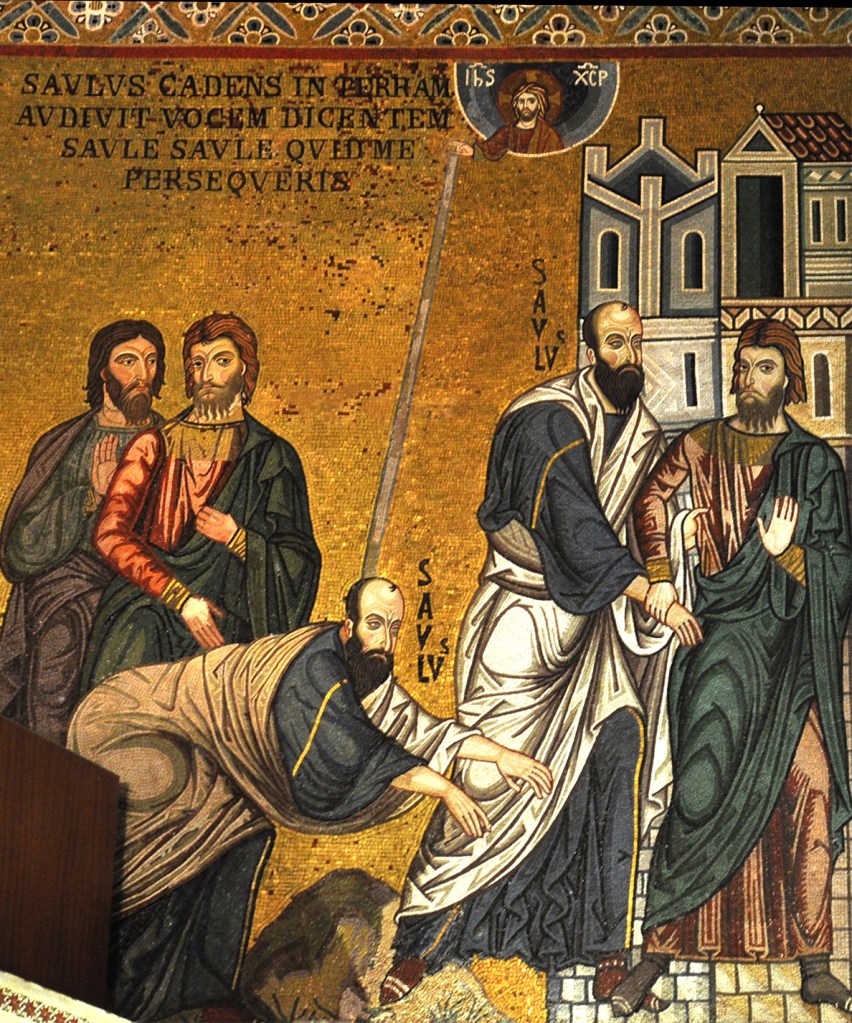
Joseph Dreaming/Holy Family Returns, Byzantine mosaic, Outer Narthex, Chora Church, Constantinople, now Istanbul, 14th C. Copyright Bapaume | Dreamtime.com

Epiphany season, one of the fixed feasts on the Anglican Church Calendar, officially begins on Jan. 6th. In A.D. 2026, Epiphany falls on a Tuesday. The name for the season is derived from the Greek word Epiphaneia, which means to manifest, or, more poetically, to “shine forth.” For the first Anglican Book of Common Prayer, published in 1549 A.D., Archbishop Thomas Cranmer wrote a new Collect for Epiphany (day). It was derived from the 10th C. version of the Gregorian Sacramentary. Epiphany was once known as “Little Christmas,” probably because Epiphany Eve (Jan. 5th) marks the end of the Christmas season. In the AIC’s video presentation for Christmas, The Twelve Days of Christmas, I use a graphic to present Christmas Day and Epiphany (Day) as “bookends.”

Epiphany and all the Sundays after Epiphany are each concerned with an example of the “manifestation” of Christ to the Gentile world. I discuss and illustrate the complex history of the season and also the readings for Epiphany Day in Episode One in our video series, Epiphany: The Manifestation of Christ to the Gentiles. The Sundays after Epiphany, which can be as many as six and as few as one, are discussed in Episode Two and Episode Three in the same series. In A.D. 2026, there are only three Sundays after Epiphany. The podcast audio version of Episode One is available on the Podcast Archive page. My Podcast Homily for Epiphany (the Day) is linked from the Podcast Homilies page. You can also listen to the Podcast Homily for Morning Prayer, based on the Psalm readings for Epiphany (day), Psalm 46 and Psalm 100, hosted on the Podcast Homilies-Morning Prayer page. The three Sundays after Epiphany will be the subject of the next three blog posts.

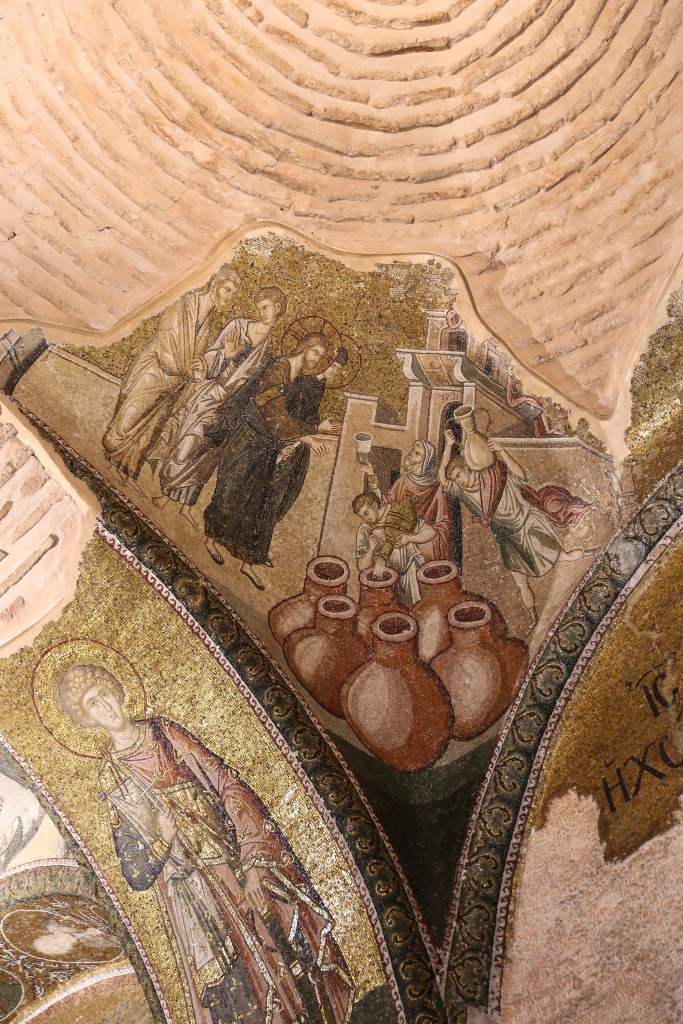
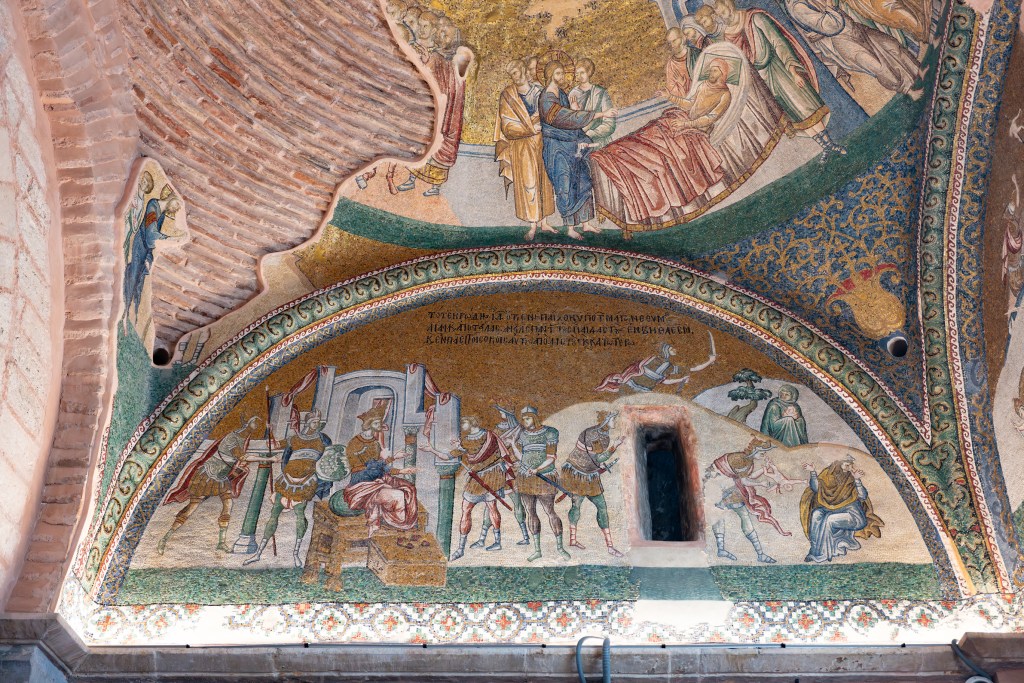
Massacre of the Innocents, Byzantine mosaic, south wall, Outer Narthex, Chora Church, Constantinople, now Istanbul, Turkey, early 14th C. The scene above the arch is a portion of Christ Healing a Paralytic Man at Capernaum (Matthew 9:1-8) Copyright Evren Kalinbacak | Dreamstime.com.

The Epistle reading for Epiphany (day) is Ephesians 3:1-12, St. Paul’s essay on the “mystery” of the Christ who is revealed to the world. The Gospel reading, Matthew 2:1-12, is Matthew’s account of the Visit of the Wise Men. In our video series, The Twelve Days of Christmas, the episode for Fourth Day of Christmas, Dec. 28th, with the theme word “Compassion,” highlights the Murder of the Holy Innocents, Herod’s violent reaction to the news of the possible birth of a Saviour.

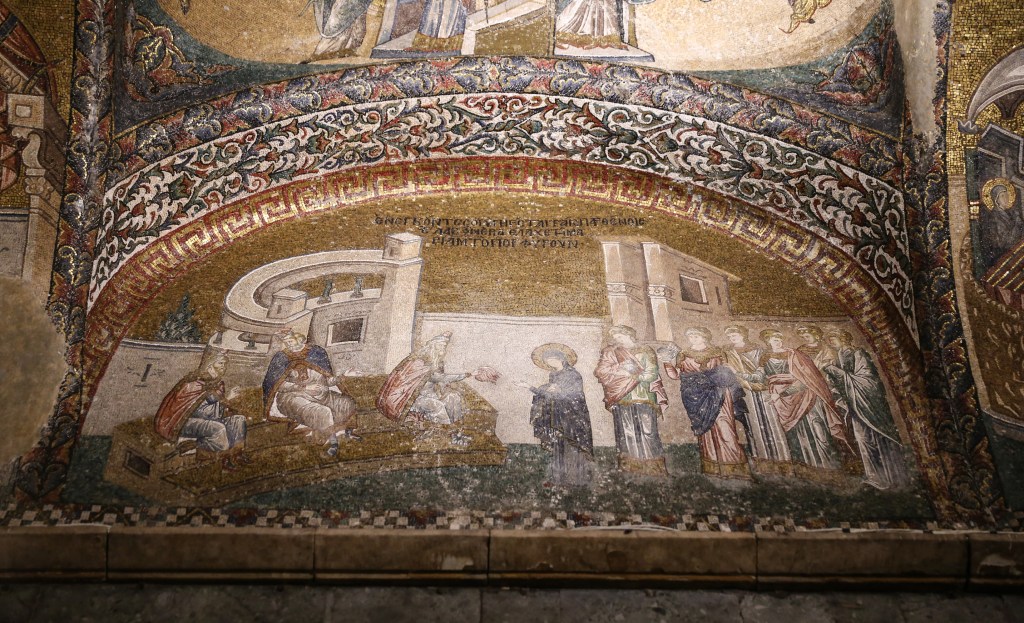
The actual visit of the Wise Men, or Magi, is depicted in another late-Byzantine mosaic, also in the Outer Narthex (or exonarthex), in this case at the rear of the Outer Narthex above the opening into the Church’s Parakklesion, effectively a funeral chapel. For more views of these and other Byzantine mosaics and frescoes illustrating hundreds of Scriptural scenes at Chora, visit the Chora Church web site. Another site with nearly a hundred images is available at https://thebyzantinelegacy.com. Yet another is https://www.360tr.com, which offers “virtual” tours you can manipulate. For the 3-D tour, it may take a little practice manipulating the view (forward, sideways, upward), but you will find the effort worthwhile as you move, in the virtual sense, through the Outer Narthex, the Inner Narthex (or Esonarthex), the Naos (the equivalent of the modern Nave and Altar) and the Parakklesion (with its spectacular representation of The Harrowing of Hades (or Anastasis). While at the site be sure to direct the pointer to look upward into the large Christ Pantokrator dome (#8) and the smaller Blessed Virgin dome (#9) in the Inner Narthex and the Church’s third dome in the righthand portion of the Outer Narthex.

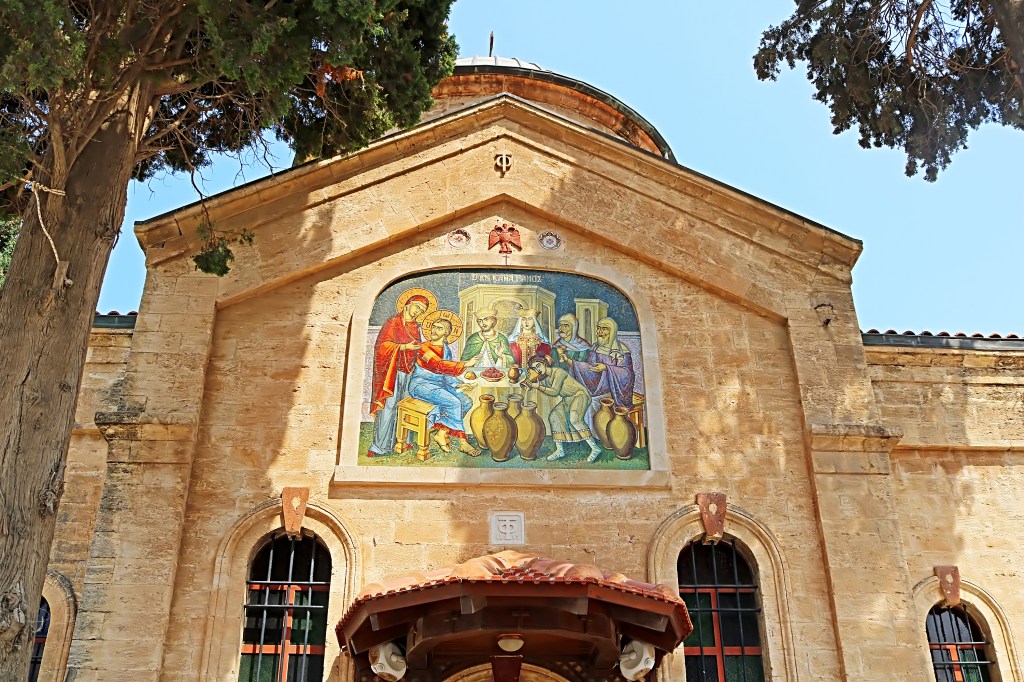
The Return of the Magi, with the three Wise Men before the Blessed Virgin Mary (in blue robe, center), Outer Narthex, Chora Church, 14th C. Copyright Evren Kalinbacak | Dreamstime.com

In future posts in A.D. 2026, I will insert additional images from Chora Church in which the Gospel reading is illustrated.

As always, thank you for your interest and support. Glory be to God for all things! Amen!

Second Sunday in Lent

The Second Sunday in Lent, which is 2/25 in A.D. 2025, finds the AIC actively engaged in updating our database of digital resources. The review and update involves taking a page-by-page review of all 22 of our printed books, plus the various Seasonal and Bible Study Video series. As of today, 2/24/2024, I have crossed the half-way point, having finished all the printed books, the Seasonal Videos (Advent, Great “O” Antiphons, Christmas, Twelve Days of Christmas, Epiphany, Gesima, Lent, Easter and Trinitytide), the Christian Education Videos (The War on Christianity; The Nicene Creed; The Lord’s Prayer; The Lives of the Saints, both the First and Second Series); and Episode One to Episode 7 in The New Testament: Gospels series. The image count stands at just over 2500, but this does not count duplicate versions (including different sizes; details; perspetive correction; brigthening effect; and other technical adjustments).

This week I am starting research on a new series of topical postings to Fr. Ron’s Blog. I begin this adventure with some material discovered in the examination of images from Constantinople before 1453. The Byzantine world produced some of the finest and most-inspiring examples of Christian art, including illuminated manuscripts, frescoes and mosaics in churches, cathedrals and monasteries in locations ranging from northeast France, where only one Byzantine building remains, to Asia Minor and the Holy Land. In my effort to make sure our citations are correct, I have had to re-visit online sites to verify a wide range of issues, including accuracy of content description, identity of the author/artist, the date or ranges of dates of creation/completion, as well as credit lines for photography, manuscript and folio numbers. Recently, this led me to revisit image of the Hagia Sophia, originally built in the reign of Emperor Justinian during the 6th C. and Chora Church (or Church of Our Saviour), the latter of which is used as the background image on this web site.

In this research I found a site that includes detailed study and imagery of Chora Church. Chora Church fell into serious decline and neglect during the period after the Crusader attack on Constantinople in 1204 A.D. For the following sixty years, until after the Byzantine Empire recaptured the city and surrounding areas Eastern Orthodox worship was effectively banned and replaced with Roman Catholic liturgies. In what is called the Late Byzantine revival in the late 13th and early 14th C. many of Byzantium’s finest buildings were restored or enlarged, including Chora Church. Between 1321 and 1321 Chora Church was repaired and improved. The two images I share today come from the Inner Narthex (which was the second Narthex, between the Outer Narthex entrance and the central Nave) and, on the right hand side, the Parakklesion, a long rectangular space which runs from the right hand end of the Outer Narthex down the long axis of the building and parallel Nave (or Naos) and the Altar (or Bema).

The first image shows a mosaic of the Blessed Virgin with Joseph and the Christ Child at center with Joachim and Anne, Mary’s parents, looking on. It is located in below the smallest of two domes in the Inner Narthex, which includes images related to Mary. At my former parish at St. Joseph’s Villa, Richmond, VA, there is a stained glass window which depicts Mary learning wisdom from her parents. (Image: Byzantologist. CC by NC-SA 2.0).

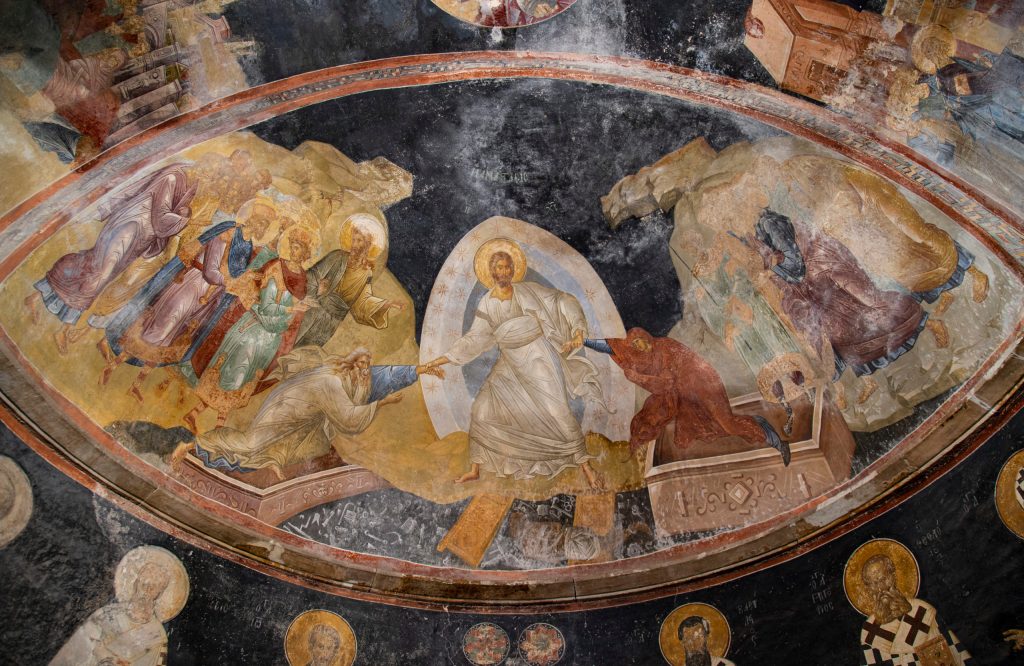
The second image is larger version of one which I used, based on a different source, in Easter: The Resurrection of Our Lord in Scripture, Art & Christian Tradition, available using the Virtual Bookstore link at the bottom of the Welcome page and on the AIC Bookstore page. The work is a Apse fresco placed at the far end of the Parakklesion. The title is Anastasis, which literally means “to stand up” and which is the Greek word for Resurrection. In this remarkable image Christ appears to yank Adam, in blue at left, with His right hand, and, with his left hand, Eve, in white, from Hades. Note that Jesus stands upon the destroyed gates of Hades, or Hell in the Western Church tradition and that there are keys remaining in the Pit (Abyssos in Greek). Surrounding the Christ figure, the saints and apostles look on. The figure at Jesus’ right, wearing a golden halo, is John the Baptist, always described as the Last Prophet of the Old Testament. (Image: Byzantologist. CC by NC-SA-2.0).

I hope you find these two images inspiring and spiritually uplifting in our age of secular decline. You can see a 16-page version or watch a companion video at http://www.SmartHistory.org under the heading Picturing Salvation-Chora’s Brilliant Byzantine Mosaics and Frescoes by Dr. Evan Freeman. This world could use a lot more of this kind of confident expression of the Christian Faith.

Next week, I will focus on The Blessed Alcuin of York, author of the Collect for Peace (“Almighty God, unto whom all hearts are open, all desires, known, and from whom no secrets are hid….’) in the Holy Communion liturgy in the 1928 Book of Common Prayer.

As always, thank you for your interest and support. Glory be to God for all things! Amen!