Sexagesima Sunday

Sexagesima Sunday is the second of three pre-Lent Sundays, which are now unique to the Anglican worship tradition. For more historical and other detail on the season watch Episode One in our video series. Gesima: the Pre-Lenten Season or listen to the audio Podcast version, which its linked from the Podcast Archive page. This week I offer site visitors two remarkable examples from our nearly 3000-item library of historic art.

The Collect for Sexagesima Sunday was adapted by Archbishop Cranmer from the Gregorian Sacramentary, which was also the source for the Collect for Septuagesima Sunday. It was used for the first time in the 1549 Book of Common Prayer and was read by Archbishop Cranmer himself on Whitsunday/Pentecost, June 9, A.D. 1549. The prayer book also may have been used earlier in the same year at St. Paul’s Cathedral, London. Like the Epistle and Gospel reading for the day, the themes are the “mercies” of God and the Christian virtues. Sexagesima Sunday is actually 57 days before Easter and not the sixty which its name suggests. Readers should remember that the Greek word for God, Theos, (Strong’s Greek Word #2316) is often translated as The One Who Sees.

O LORD God, who sees that we put not our trust in any thing that we do;
Mercifully grant that by thy power we may be defended against all adversity;
through Jesus Christ our Lord. Amen.

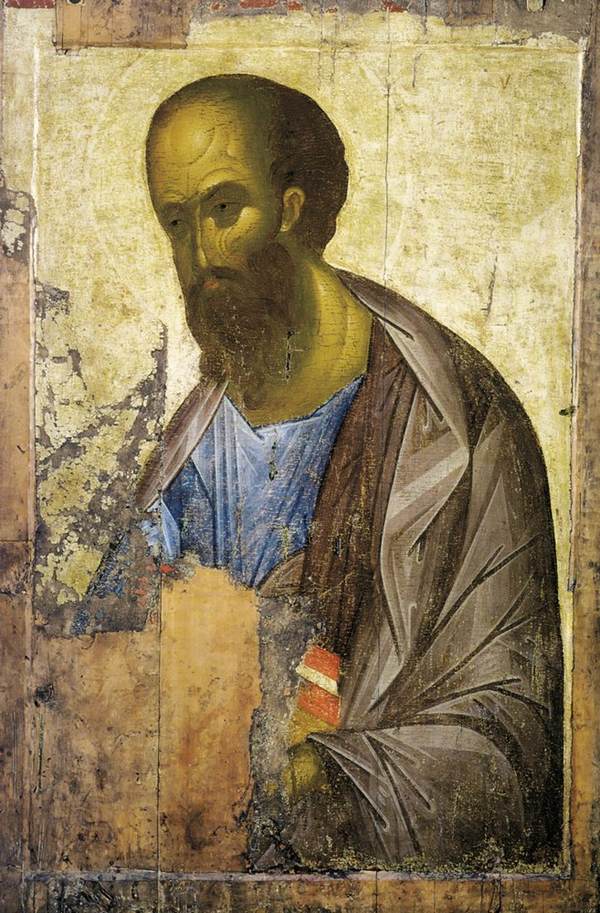
St. Paul, unfinished icon in tempera and gold on wood panel, Andre Rublev, circa 1410-1420, made for the Deesis tier in a Russian church at Zvenigorod, 33 miles west of Moscow, Tretyakov Gallery, Moscow, Russia. Wikipedia Commons/Public Domain.

The Epistle reading, 2nd Corinthians 11:13-21, St. Paul’s letter to the formerly pagan congregation he established at Corinth on his Second Missionary Journey accompanied by Silas. The verses are discussed and illustrated in Episode Two of our video series, Gesima: the Pre-Lenten Season, linked from the Digital Library page and in audio form from the Podcast Homilies page. In this epistle to congregation most resistant to his teachings, he mentions the Christian virtue of diligence and names forms of suffering he endured on his journey, including stoning, beatings, shipwreck, followed by a list of more general adversities, including hunger, thirst and robbery. The image of St. Paul was painted by one of the world’s most gifted icon painters. As the credit line suggests, the image is no longer mounted in the church for which it was being made, having become an “historic” object rather than a religious one. Even in its unfinished form it is an exceptional example of art put to use for Christian purposes. Frequent visitors to this site may have noticed that another image of this icon has a blue background, which was the result of studio lighting. This one is the real thing and will be used in all future AIC Publications and updates to existing books and videos.

The Sower, opaque watercolor over graphite on gray wove paper, James Tissot, 1886-1894, Brooklyn Museum, Brooklyn, NY. Public Domain.

The Gospel reading, Luke 8:4-15, is the evangelist’s account of the Parable of the Sower. The watercolor above appears as Illustration No. 71 in our publication, The Gospel of Matthew: Annotated and Illustrated and Illustration 71 in The Gospel of Mark: Annotated and Illustrated. In the comparable volume on the Gospel of Luke I used an oil on canvas by Vincent Van Gogh. These books are available through my Amazon Author Central page. A summary of the book, including price and pagination, is found on the AIC Bookstore page. The image is from a collection of around 300 images in James Tissot’s Life of Christ series, the largest collection of which is now held at the Brooklyn Museum.

As noted in previous posts late last year, I am working on Episode Six and Episode Seven in our video series, The War on Christianity. I expect to finish the text and slides before the end of this weekend. Each of the 24 slides in Episode Six and 33 in Episode Seven is produced by clipping from a sheet with six slides each and some single image pages in Adobe Photoshop. Afterward, each slide must be inset into a video and the sound track recorded using Apple’s iMovie software. The completed episodes probably will not be ready for publication before the middle to the end of March. It will be linked from the Digital Library page and the voice track, converted into an MP3 file, linked from the Podcast Archive page. In other news, I’ve had.a request from an Anglican clergyman in northern Italy to use some material from this site. I have given permission with the condition that the material contains a link to this site.

As always, thank you for your interest and support. Glory be to God for all things! Amen!
Septuagesima Sunday

As I pointed out in my Blog posting for Septuagesima Sunday in A.D. 2024, posted on Jan. 24th, Septuagesima Sunday is now largely unique to the Anglican worship traditions. It is the first of three Sundays the names of which end in “gesima.” “Gesima” is derived from a Latin word meaning “days,” which itself is derived from Quadragesima, which means Forty Days, specifically, the Forty Days before Easter. In some Anglican usage the three days are called “Pre-Lent.” In the first millennium of Christianity in the Western Church, these forty days were known as Septuagesima Season. In all AIC Publications I call them the “Gesima” season, pronouncing it the American way (Jes-i-mah) rather than the English manner (Guess-eh-muh). The Roman Catholic Church, in a move followed by many Protestant liturgical denominations, did away with the season in the reforms begun in the late 1960s. The Church of England now calls the three Sundays the Third-, Second- and Sunday next- before Lent. In the Eastern Church tradition there is no comparable season except that the Sunday before the First Sunday in Lent is celebrated as Forgiveness Sunday. The Easter Church service includes a unique chant based on Psalm 69:18 and 19: “Turn not away thy face from thy child, for I am afflicted. Hear me speedily: Draw near unto my soul and deliver me.” (1928 B.C.P. text, based on the Septuagint translation prepared by the Blessed Alcuin of York during the reign of the Holy Roman Emperor Charlemagne. For more on the relationship between Alcuin and Charlemagne, see my Blog posting for March 16, A.D. 2024). For a longer, more detailed and documented discussion of “Gesima” season, including its liturgical colors and the tradition of suspending singing the Gloria, watch Episode One in Gesima: the Pre-Lenten Season. Another resource is my Podcast homily for Septuagesima Sunday, which is also linked from the Podcast Homilies page.

The Collect for Septuagesima Sunday is an adaptation by Archbishop Cranmer from the Gregorian Sacramentary (10th C. based on collects attributed to, or which express doctrine interpreted by, Pope Gregory the Great (A.D. 590-604), especially the doctrines of the Holy Trinity and of Christ as our Saviour.

O LORD, we beseech thee favorably to hear the prayers of thy people;
that we, who are justly punished for our offenses, may be mercifully delivered by thy goodness,
for the glory of thy Name, through Jesus Christ our Saviour, who liveth
and reigneth, with thee and the Holy Ghost ever, one God, world without end. Amen.

The Epistle reading, 1 Corinthians 9:24-27, continues the teachings of St. Paul which were read in Epiphany season concerning the Christian virtues, here including diligence and temperance. As with the other Pauline epistles, the reading provided the Scriptural foundations which were later consolidated into Western Church doctrine during the 6th, 7th and 8th C. The Christian Virtues were also propounded by many theologians and writers in the Eastern Church. In the reading, St. Paul refers to the greater wisdom of the pursuit of heavenly (“imperishable”) values instead of earthly (perishable) values. The “imperishable” crown in verse 25 refers to salvation in the heavenly kingdom. Many of these ideas later formed the basis for the study discipline known as Christian Spirituality. The concept is discussed and illustrated in Christian Spirituality: An Anglican Perspective, available through my Amazon Author Central page. Full information about the volume is found on the AIC Bookstore page.

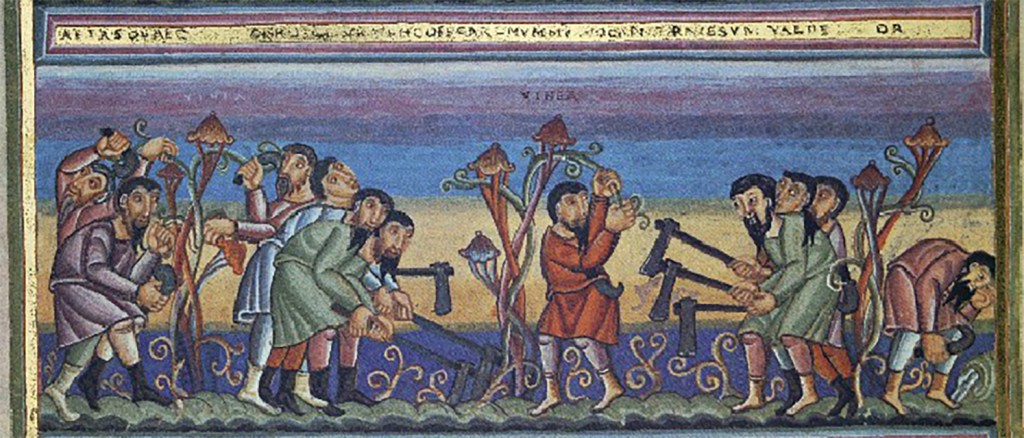
Parable of the Workers in the Vineyard, center panel of three, from an illumination in tempera and gold on parchment, Codex Aureus of Echternach, produced at Echternach, then Germany, now Luxembourg, circa 1030-1050, Hs. 156142, folio 76r, Germanische Nationmuseum, Nuremberg, Germany. This image is from the version reproduced in the York Project’s DVD, 10,000 Masterworks, Public Domain.

The Gospel reading, Matthew 20:1-16, is St. Matthew’s unique account of the Parable of the Laborers in the Vineyard, also known as the Parable of the First and the Last. Each of the men in the story agreed upon a fixed payment, a denarius, a Greek coin which is the equivalent of about $50 today. The same payment was promised by the vineyard owners no matter what time of day the person started, whether at Third Hour (or 9 A.M. in verse 3), or Sixth Hour and Ninth Hour (Noon and 3 P.M., respectively, in verse 5) or Eleventh Hour (5 P.M. in verse 6). At the end of the day, certain of those who were hired first raised the objection that those who worked only an hour got the same pay as those who started at daybreak. In verse 13, Jesus silenced the most vocal critics: “Friend, I am doing you no wrong. Did you not agree with them [the landowners] for a denarius?” (NKJV text). In the final verse is the most important lesson is taught: “the last will be first and the first last. For many are called but few chosen.” This has been interpreted as a caution against self-righteousness. In practical terms, it teaches us that we should regard those who come late to the Church as just a valuable as lifelong members. The image above appears as Illustration No. 92 in our Bookstore Publication, The Gospel of Matthew: Annotated & Illustrated, available through my Amazon Author Central page. Details of the book are available on the AIC Bookstore page. My Podcast Homily for Septuagesima Sunday is linked from the Podcast Homilies page.

As always, thank you for your interest and support. Glory be to God for all things! Amen!

Fourth Sunday after Epiphany

For Fourth Sunday after Trinity Archbishop Cranmer created a Collect which he derived from the Gregorian Sacrementory. The theme is again the need for mankind to recognize the all-knowing God as the only way to overcome man’s sinful nature and the threats of the secular world upon the Christian faithful. It is useful to remember that the Greek word Theos (Strong’s Greek word # 2316), from which the Western world derived the term theology, literally means “the one who sees.”


O GOD, who knowest us to be set in the midst of so many and great dangers,
that by reason of the frailty of our nature we cannot always stand upright;
Grant to us such strength and protection, as may support us in all dangers,
and carry us through all temptations; through Jesus Christ our Lord. Amen.

The Apostle Paul, oil on wood panel, circa 1520 A.D., attributed to Lucas van Leyden, Yale University Art Galley, New Haven, CT. Public domain.

The Epistle reading, Romans 13:1-7, is the last of four readings from Romans 12 and 13 in Epiphany season. St. Paul makes absolutely clear in the first verse that “there is no authority except from God.” In England in the early 18th C., the first verse in Basil Woodd’s hymn, Hail, Thou Source of Every Blessing [Hymn No. 49, St. Chrysostom Hymnal] the lyric declares: “Hail, Thou source of every blessing Sovereign Father of mankind; Gentiles now, Thy grave possessing, in Thy courts admission find. Grateful now we fall before Thee, in Thy Church obtain a place, Now by faith behold Thy glory, Praise Thy truth, adore Thy grace.” The St. Chrystom Hymnal is available through my Amazon Author Central page.

The Gospel reading, Matthew 8:1-13 is an account of two healings, the healing of the leper and of the Centurion’s servant. In the former case, the leper, an outcast under Jewish law, was healed immediately by Jesus’ touch. In the latter, the healing occurred some distance away and includes the phrase “wailing and gnashing of teeth.” The Collect, Epistle and Gospel reading are discussed an illustrated in Episode Three of the AIC video series, Epiphany: the Manifestation of Christ to the Gentiles. In the context of the healing the leper, an early 11th C. illumination in tempera and gold on parchment was used as Illustration # 52 and, in the context of the healing of the Centurion’s servant, as Illustration No. 53 in The Gospel of Matthew: Annotated & Illustrated, available through my Amazon Author Central page. My Podcast Homily for Fourth Sunday after Epiphany can be listened to or downloaded from the Podcast Homilies page.

As always, thank you for your interest and support. Glory be to God for all things! Amen!
Sunday Next Before Advent

First, I must apologize for last week’s error in the readings for Twenty-fifth Sunday after Trinity, when the Collect, Epistle and Gospel readings should have been the same as the Sixth Sunday after Epiphany instead of the Fifth Sunday after Trinity.

Trinitytide, the longest season on the Anglican Church Calendar, finally comes to an end with Sunday Next before Advent. In the 1892 Book of Common Prayer the occasion was labelled Twenty-fifth Sunday after Trinity. It is commonly known as “Stir-up Sunday,” a label based upon Archbishop Cranmer’s adaptation of a “Daily” prayer from the Gregorian Sacramentary as the Collect for the Day. Church historians suggest that the “stir up” phrase in the Gregorian prayers was inspired by the writings of the Apostles Paul (2 Timothy 1:6) and Peter (2 Peter 1:13; 3:1).

STIR up, we beseech thee, O Lord, the wills of thy faithful people;
that they, plenteously bringing forth the fruit of good works,
may by thee be plenteously rewarded; through Jesus Christ our Lord. Amen.

For Sunday Next before Advent, the first reading, known as a “for the Epistle” reading, is Jeremiah 23:5-8, a prophecy of the coming of a “righteous Branch” in the line of descent from King David and under whom the people are promised “judgment and justice in the earth.” The prophecy uses all capital letters in the spelling of prophesied Messiah: THE LORD OF OUR RIGHTEOUSNESS. Verse 5 is read as the Second Chapter (of three) in the traditional Anglican prayers for Third Hour in the AIC Bookstore Publication, Hear Us, O Lord: Daily Prayers for the Laity, available through my Amazon Author Central page.

The Gospel reading, John 6:5-14, is the evangelist’s account of the miraculous Feeding of the 5,000, which in extended form (using verses 1-14) is also the reading for Fourth Sunday in Lent. It is illustrated here in one of James Tissot’s historical style watercolors in which the artist captures the enormous scale of the event with details of the audience and the local geography.

Feeding the 5,000, opaque watercolor over graphite on gray wove paper, James Tissot, one of over 300 images in his Life of Christ scenes, 1886-1894, Brooklyn Museum, Brooklyn, NY.

As always, thank you for your interest and support. Glory be to God for all things! Amen!

Twenty-fourth Sunday after Trinity

Apologies to followers of this site for absence from Fr. Ron’s Blog last week. My wife and I were travelling to visit our son and his family, an 8+ hours trip down and 8+ more on the way back. Twenty-fourth Sunday after Trinity is the final Sunday with a unique appointed Collect, Epistle and Gospel reading. Since this year there are more than twenty-four Sundays after Trinity it is not the last set of readings. The 1928 B.C.P. has provisions for transferring readings from the final Sundays after Epiphany in years when the calendar has fewer Sundays leading up to Easter. I discuss the complicated rules in Episode Nine in the AIC video series, Trinitytide: The Teaching Season. These will be discussed next week.

The Collect for Twenty-fourth Sunday after Trinity was adapted Archbishop Thomas Cranmer for the first Anglican Book of Common Prayer, published in 1549 A.D. in time for Whitsunday and Trinitytide. The collect was assembled from the collection of prayers for Morning and Evening prayers in the Leonine and Gregorian Sacramentaries, two of the three primary Sacramentaries of the Roman Catholic Church. The common theme continues to be the merciful nature of God the Father and the need for his continual presence in the lives of sinful mankind. A similar prayer was used as the Sixth Prayer in the office of Sixth Hour in our publication. Hear Us, O Lord: Daily Prayers for the Laity, available through my Amazon Author Central page.

LORD, we beseech thee, absolve thy people from their offences;
that through thy bountiful goodness we may all be delivered from the bands of those sins,
which by our frailty we have committed. Grant this O heavenly Father,
for the sake of Jesus Christ, our blessed Lord and Saviour. Amen.

The Epistle reading, Colossians 1:3-12, an advance to the next in the canonical epistles of St. Paul, is a letter to the congregation at Colossae in Asia Minor. The church at Colossae was founded not by St. Paul himself but by his associate, Epaphras. There is no record of St. Paul having visited Colossae. The Apostle to the Gentiles uses spiritual-minded language to both congratulate the Christians at Colossae for their confession of faith and reminds them always of “giving thanks to the Father who has qualifed us to be partakers of the inheritance of the saints in the light.”

Raising the Daughter of Jairus, opaque watercolor over graphite on gray wove paper, part of a series of Scenes in the Life of Christ, James Tissot, 1886-1894, Brooklyn Museum, Brooklyn, NY. Tissot’s historical-style visualizations of Scriptural scenes followed several years of research into clothing styles of the 1st C. and his many visits to the Holy Land.

The Gospel reading, Matthew 9:18-26, the final reading from the Gospel of Matthew, is a record of the Raising of the Daughter of Jairus and the healing of a woman with a blood disorder, also recounted, with different detail, in Mark 5:21-43 and Luke 8:40-50. The scene was one of the favorite Gospel accounts for use in illuminated Gospels and pericope books (which contain only verses used in a liturgy) in the 8th to 12th C. and later in stained glass windows and, even later, in a famous late 19th C. watercolor by James Tissot. The Tissot watercolor was used as Illustration No. 60 in our publication, The Gospel of Matthew: Annotated & Illustrated. A 12th C. illumination and a 20th C. stained glass window by Franz Mayer of Munich, both based on St. Luke’s account are, respestively, Illustration N0. 33 and Illustration No. 34 in The Gospel of Luke: Annotated & Illustrated. The stained glass window is also used in Paintings on Light: the Stained Glass Windows of St. Joseph’s Villa Chapel. As noted above, all AIC Bookstore Publications are available through my Amazon Author Central page.

As always, thanks you for your interest and support. Glory be to God for all things! Amen!


Twenty-first Sunday after Trinity

For the Twenty-first Sunday after Trinity the Collect is another adaptation by Archbishop Cranmer from the Gelasian Sacramentary (Rome, circa 750 A.D.) for the 1549 Book of Common Prayer. It is also the last Gelasian Sacramentary collect for the season. The collect includes an iconic phrase, “pardon and peace,” in which pardon was substituted for the medieval Latin phrase “indulgence.” The word “indulgence” was, in Cranmer’s view, too closely allied to the Roman Catholic practice of selling indulgences to those with appropriate financial resources. The word “quiet” in the final phrase replaced the Latin “secure.” Quiet in mind implies unshakeable faith in the face of adversity, a concept which remains essential in the anti-Christian political and cultural environment of the 21st C. The Collect is often used by non-ordained Church leadership as a closing prayer in Morning Prayer, since it offers the hope of forgiveness without the official sanction of Absolution which only an ordained clergyman can dispense.

GRANT, we beseech thee, merciful Lord, to thy faithful people pardon and peace,
that they may be cleansed from all their sins, and serve thee with a quiet mind;
through Jesus Christ our Lord. Amen.

The Epistle reading, Ephesians 6:10-20, advances one chapter in St. Paul’s epistles from the reading for Twentieth Sunday after Trinity. The lesson includes some of the most important and boldest statements of the traditional teachings of the Apostle Paul concerning, in the broadest sense, the concept of “Spiritual Warfare.” The verses include several iconic martial phrases used in the context of the battle against “the wiles of the devil” (verse 11) and the “spiritual hosts of wickenedness in the heavenly places” (verse 12). These include “the whole armour of God” (twice, verses 11 and 13), “the breastplate of righteousness” (verse 14), “the shield of faith” (verse 16), “the helmet of salvation” (verse 17) and “the sword of the Spirit which is the word of God” (verse 18). Less military-sounding defenses include “the gospel of peace” (verse 15) in the concept of appropriate footware for spiritual conflict. “Principalities and powers” in verse twelve refers to the traditional understanding of the ranks or orders of angels and heavenly powers. I discuss this interpretation in Ninth Day (Jan 2nd) in our video series, The Twelve Day of Christmas and also in our Bookstore Publication, Angels: In Scripture, Prayer and Christian Tradition, available through my Amazon Author Central page. Paul refers to the importance of prayer and to his own boldness in defense of Christian doctrine in the closing verses (verse 18, 19 & 20).

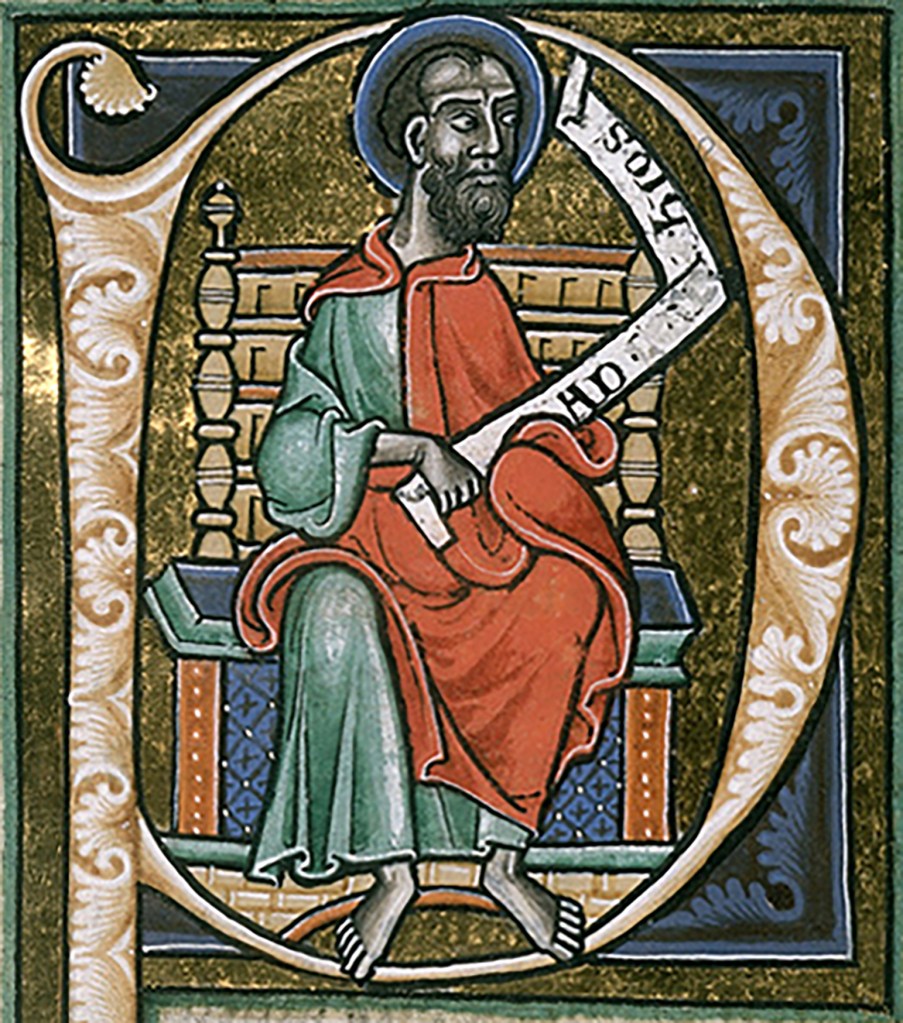
Paul, miniature illumination in colors and gold on parchment inside the letter “P,” placed before the start of 2 Corinthians, Gloss on the Pauline Epistles, Peter Lombard, France, 4th Qtr. 12th C.-1st Qtr., 13th C., Ms. Royal 4 E IX, Folio 64, British Library, London, England. Perspective correction applied.

The Peter Lombard illumination was used as Illustration No. 74 in The Act of the Apostles: Annotated & Illustrated, available using the link to my Amazon Author Central page. Although the image was used in association with the 2nd letter to the Corinthians, it is used here owing to St. Paul’s fierce facial expression. My personal favorite image of a militant St. Paul was used in the blog post for Seventh Sunday after Trinity, linked from July 2024 entry in the right hand column.

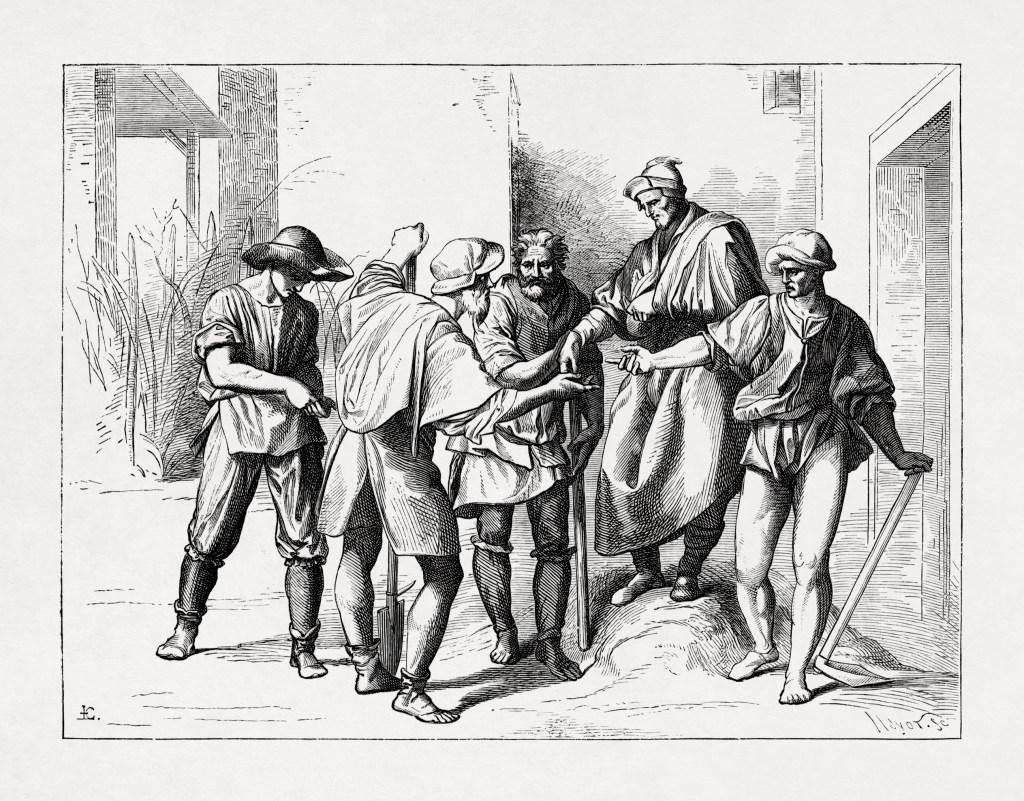
The Gospel reading, John 4:46-54, is the fifth of six readings from the Gospel of John during the period between Whitsunday and Sunday Next before Advent. The subject of the reading is the second “sign” of Jesus’ divinity cited in the Gospel of John, being John’s record of Jesus’ remote healing of a nobleman’s son. According to John’s account, only Jesus, the Nobleman and His Disciples were present in Cana of Galilee, which was also the site of the first miracle recorded by John in Chapter Two. The Nobleman’s son was ill at Capernaum. This record by John near the start of Jesus’ public ministry, traditionally understood to have been in 27 A.D., is unusual in two important ways. In his unique style, John sets the mood of the scene with an account of Jesus having left Judea and gone into the Galilee. In verse 48, John records Jesus, knowing the Nobleman’s thoughts, declaring: “Unless you people see signs and wonders, you will by no means believe.” In verse 49a, the worried man begs Jesus to come with him and heal his sick son in Capernaum, to which plea Jesus responds: “Go your way; your son lives.” John confidently states in the same verse that the Nobleman “believed the word that Jesus spoke.” In the remaing verses, John records the details of how the man learned that his son recovered “at the same hour” which Jesus spoke (7th hour, or 1 PM). John records that not only did the man believe but his household also (verse 51). The historical sytle image below, from the Bowyer Bible, was used as Illustration No. 33 in The Gospel of John: Annotated & Illustrated, available through my Amazon Author Central page. It also appears in Slides 1215-1233 in Episode Thirty-six, the first of four episodes focused on the miracles (or “signs” from the Greek Semeion) of Jesus in our Bible Study video series, The New Testament.

Healing the Nobleman’s Son, etching/engraving, Jan Luyken, 1840, Bowyer Bible, Bolton Library, Bolton, Lancashire, England. From PHOTO by Harry Kossuth; TEXT by Phillip Medhurst. From the 2018 A.D. digital edition, Early Scenes in the Life of Christ, Harry Kossuth (photographs) and Phillip Medhurst (text).

The Collect, Epistle and Gospel readings for Twenty-first Sunday after Trinity are discussed and illustrated in Episode Eight in our video series, Trinitytide: the Teaching Season.

As always, thank you for your interest and support.