Second Sunday after Christmas & Epiphany

Second Sunday after Christmas is only celebrated when Jan. 2, 3, 4 or 5 happen on a Sunday. A.D. 2026 is one of those years. aThe Collect for the day was written by Archbishop Cranmer based on the 2nd Collect for Christmas Day in the Gregorian Sacramentary, a 10th C. tribute to one of the great Roman Catholic popes. The “for the Epistle” reading is Isaiah 61:1-3, which Jesus quotes in Luke 4:18, 19 in reference to the “Spirit of the Lord.” The Gospel lesson. Matthew 2:19-23, St. Matthew’s record of the Holy Family’s Flight to Egypt and Return, both of which were the result to a dream of Joseph. Jan. 4th is also the Eleventh Day of Christmas in the AIC video series, The Twelve Days of Christmas.
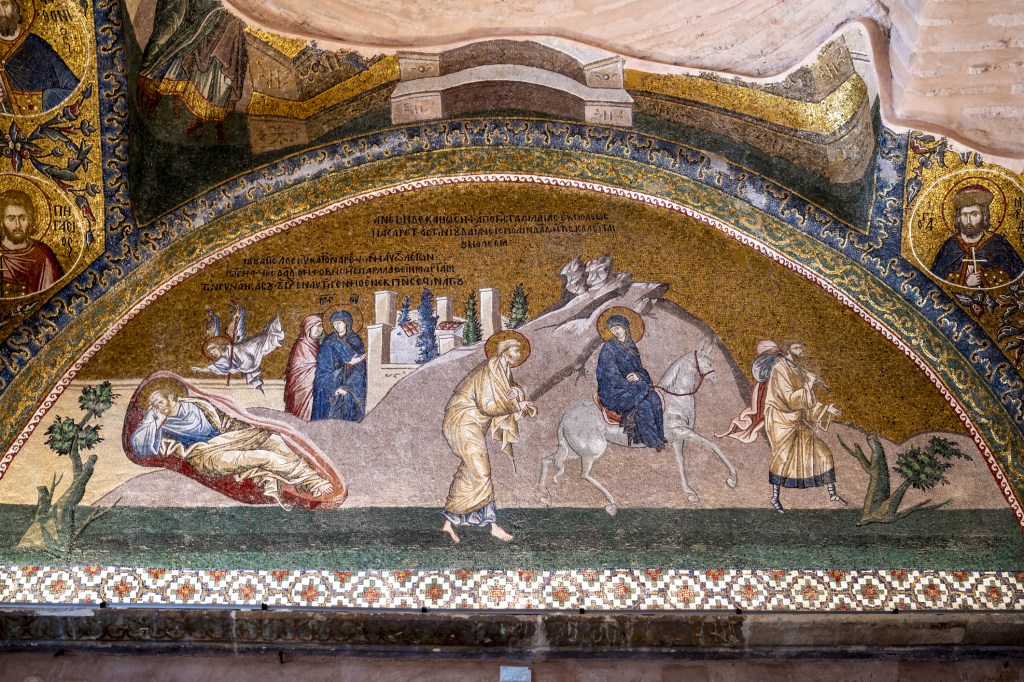
Joseph Dreaming/Holy Family Returns, Byzantine mosaic, Outer Narthex, Chora Church, Constantinople, now Istanbul, 14th C. Copyright Bapaume | Dreamtime.com

Epiphany season, one of the fixed feasts on the Anglican Church Calendar, officially begins on Jan. 6th. In A.D. 2026, Epiphany falls on a Tuesday. The name for the season is derived from the Greek word Epiphaneia, which means to manifest, or, more poetically, to “shine forth.” For the first Anglican Book of Common Prayer, published in 1549 A.D., Archbishop Thomas Cranmer wrote a new Collect for Epiphany (day). It was derived from the 10th C. version of the Gregorian Sacramentary. Epiphany was once known as “Little Christmas,” probably because Epiphany Eve (Jan. 5th) marks the end of the Christmas season. In the AIC’s video presentation for Christmas, The Twelve Days of Christmas, I use a graphic to present Christmas Day and Epiphany (Day) as “bookends.”

Epiphany and all the Sundays after Epiphany are each concerned with an example of the “manifestation” of Christ to the Gentile world. I discuss and illustrate the complex history of the season and also the readings for Epiphany Day in Episode One in our video series, Epiphany: The Manifestation of Christ to the Gentiles. The Sundays after Epiphany, which can be as many as six and as few as one, are discussed in Episode Two and Episode Three in the same series. In A.D. 2026, there are only three Sundays after Epiphany. The podcast audio version of Episode One is available on the Podcast Archive page. My Podcast Homily for Epiphany (the Day) is linked from the Podcast Homilies page. You can also listen to the Podcast Homily for Morning Prayer, based on the Psalm readings for Epiphany (day), Psalm 46 and Psalm 100, hosted on the Podcast Homilies-Morning Prayer page. The three Sundays after Epiphany will be the subject of the next three blog posts.
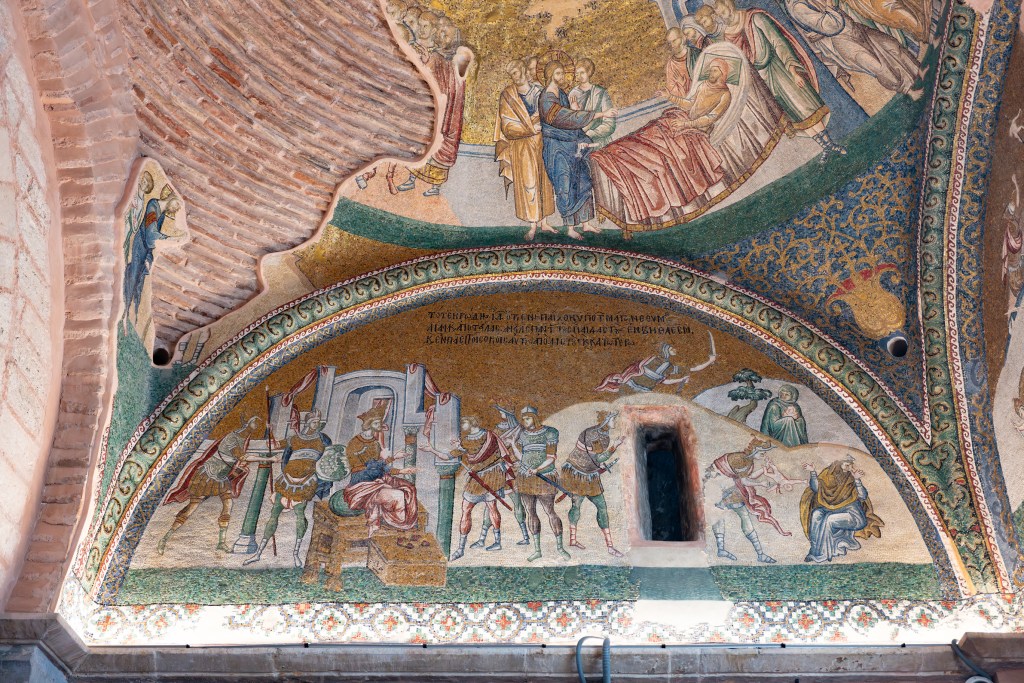
Massacre of the Innocents, Byzantine mosaic, south wall, Outer Narthex, Chora Church, Constantinople, now Istanbul, Turkey, early 14th C. The scene above the arch is a portion of Christ Healing a Paralytic Man at Capernaum (Matthew 9:1-8) Copyright Evren Kalinbacak | Dreamstime.com.

The Epistle reading for Epiphany (day) is Ephesians 3:1-12, St. Paul’s essay on the “mystery” of the Christ who is revealed to the world. The Gospel reading, Matthew 2:1-12, is Matthew’s account of the Visit of the Wise Men. In our video series, The Twelve Days of Christmas, the episode for Fourth Day of Christmas, Dec. 28th, with the theme word “Compassion,” highlights the Murder of the Holy Innocents, Herod’s violent reaction to the news of the possible birth of a Saviour.

The actual visit of the Wise Men, or Magi, is depicted in another late-Byzantine mosaic, also in the Outer Narthex (or exonarthex), in this case at the rear of the Outer Narthex above the opening into the Church’s Parakklesion, effectively a funeral chapel. For more views of these and other Byzantine mosaics and frescoes illustrating hundreds of Scriptural scenes at Chora, visit the Chora Church web site. Another site with nearly a hundred images is available at https://thebyzantinelegacy.com. Yet another is https://www.360tr.com, which offers “virtual” tours you can manipulate. For the 3-D tour, it may take a little practice manipulating the view (forward, sideways, upward), but you will find the effort worthwhile as you move, in the virtual sense, through the Outer Narthex, the Inner Narthex (or Esonarthex), the Naos (the equivalent of the modern Nave and Altar) and the Parakklesion (with its spectacular representation of The Harrowing of Hades (or Anastasis). While at the site be sure to direct the pointer to look upward into the large Christ Pantokrator dome (#8) and the smaller Blessed Virgin dome (#9) in the Inner Narthex and the Church’s third dome in the righthand portion of the Outer Narthex.
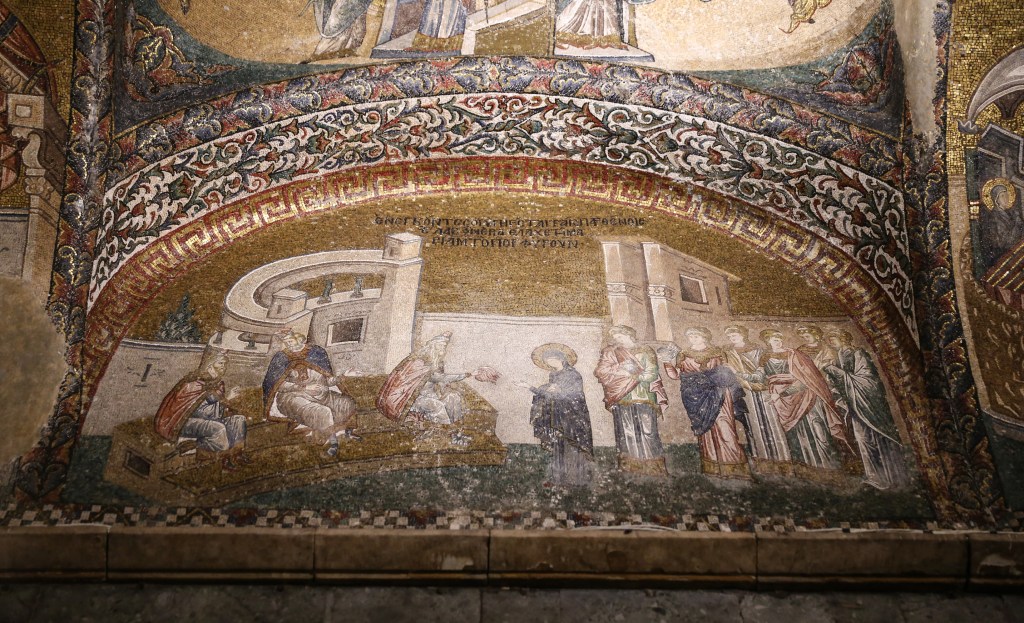
The Return of the Magi, with the three Wise Men before the Blessed Virgin Mary (in blue robe, center), Outer Narthex, Chora Church, 14th C. Copyright Evren Kalinbacak | Dreamstime.com

In future posts in A.D. 2026, I will insert additional images from Chora Church in which the Gospel reading is illustrated.

As always, thank you for your interest and support. Glory be to God for all things! Amen!

Christmas Eve, Christmas Day & The Twelve Days of Christmas

Several years ago my wife and I encountered all manner of problems trying to watch a live broadcast of a Christman Eve concert in Cambridge, England. The unreliability of the connection led me to create our own video, Lessons & Carols for Christmas Eve. I linked it from what was then our new web site at WordPress.com. It remains available, on demand, all year long from the Digital Library page, for the video version and the Podcast Homilies page for the audio-only version.

lessonscarols-title-clear

December 24th

My Podcast Homily for Christmas Day is linked from the Podcast Homilies page. Additionally, commentary and illustrations for Christmas Day are included in the first episode of our Seasonal Video series, Christmas: The Nativity of Our Lord. Access it using the links below.

Episode One
Episode Two

Another unique seasonal resource, this time from the AIC Bookstore, Christmas: The Nativity of Our Lord in Scripture, Art & Christian Tradition, is available through my Amazon Author Central page. I commented upon the book and included a copy of the cover in my Blog post for Trinity 22, posted on November 15, 2025. The post is linked from the Archive column under the November 2025 heading.

Yet another unique AIC online resource is The Twelve Days of Christmas, featuring readings, music and images with key words for each of the twelve days from Christmas Day to Epiphany Eve. Note, please, that the series bears absolutely no relationship whatsoever to the famous seasonal song of the same name. The series is focused on important theological words and concepts associated with important events in the life of the Church. It is illustrated with examples of Christian art from the 6th, 10th, 11th, 12th, 13th, 14th, 15th, 16th, 17th, 18th, 19th, 20th and 21st centuries from both the Western and Eastern Church traditions. These include mosaics, frescoes, icons, oil paintings, etchings, engravings, parchment friezes, watercolors and photographs, plus one enamel medallion from the Basilica of St. Mark, Venice, Italy.

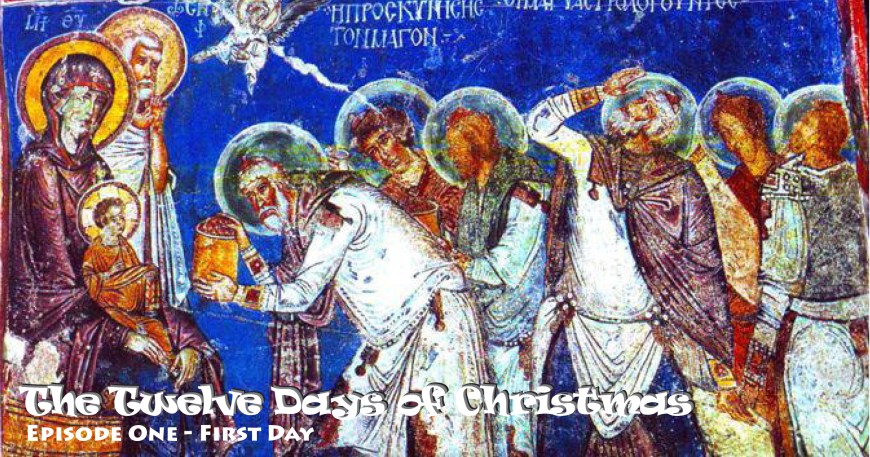
Fresco, unidentified cave church, Cappodocia region, Turkey, 12th C. Public Domain.
TwelveDays-Master Slides-2015.indd

First Day – December 25th – Love
Second Day – December 26th – Forgiveness
Third Day – December 27th – Peace
Fourth Day – December 28th – Compassion
Fifth Day – December 29th – Obedience
Sixth Day – December 30th – Joy
Seventh Day – December 31st – Family
Eighth Day – January 1st – Church
Ninth Day – January 2nd – Angels
Tenth Day – January 3rd – Commandments
Eleventh Day – January 4th – Glorifying God
Twelfth Day – January 5th – Grace and Faith

As always, thank you for your continued interest and support. Glory be to God for all things! Amen!

Epiphany Eve (First Sunday after Christmas)

Welcome to this first issue of Fr. Ron’s Blog in A.D. 2025. This Sunday, January 5th, has multiple distinctions. It is a) the eve of Epiphany, b) the First Sunday after Christmas and c) the Twelfth Day of Christmas. All twelve episodes of our video series, The Twelve Days of Christmas, are linked from the Welcome page and the Digital Library page. Podcast versions are linked from the Podcast Archive page.

In this week’s Blog post I discuss the Collect, Epistle and Gospel readings for this final Sunday in Christmastide, reserving discussion of Epiphany season, which begins on Monday, Jan. 6th, for next week’s post. My podcast homily for First Sunday after Christmas is linked from the Podcast Homilies page.

The Collect for First Sunday after Christmas Day in the 1928 Book of Common Prayer is not one which Archbishop Cranmer adapted from a Roman Catholic sacramentary. An original composition by Archbishop Thomas Cranmer for the 1549 Book of Common Prayer, it is the same Collect printed as the first of two Collects for Christmas Day. Scholars theorize that this unusual duplicate usage was intended to increase the likelihood that it would be read at least once during the busy Christmas season. The Collect expresses many concepts which are central to Anglican theology. My choice of illustrations from Christian art is one of my personal favorites. I use it on my new Mac Book Pro in the “Start” page.

The Nativity of Our Lord, mosaic, south wall, Nave, Capella Palatina, Palermo, Sicily. The cathedral was begun under the patronage of Roger II, the first Norman King of Sicily, in 1132 A.D. and was dedicated on Palm Sunday, 1140 A.D. The mosaics were added between 1140 and 1170 A.D. The legends jn the mosaic are written in Koine Greek, commonly known as New Testament Greek. The York Project: 10,000 Masterworks. Public Domain. Image lightened in Photoshop.

ALMIGHTY GOD, who hast given us thy only-begotten Son to take our nature upon him,
and as at this time to be born of a pure virgin; Grant that we being regenerate,
and made thy children by adoption and grace, may daily be renewed by thy Holy Spirit;
through the same our Lord Jesus Christ, who liveth and reigneth with thee and the same Spirit ever,
one God, world without end. Amen.

This image of the Nativity mosaic was used as Illustration No. 8 focused on “Angels in the Nativity Accounts,” in the AIC Bookstore Publication, Christmastide: The Nativity of Our Lord, available using the links to my Amazon Author Central page. It also appears in the AIC Video series, The Twelve Days of Christmas, in the episode for First Day of Christmas – Dec. 25th (linked from the Welcome and Digital Library pages).

The Epistle reading, Galatians 4:1-7, is an essay by St. Paul’s on the theological concept of sonship and adoption by grace to which Archbishop Cranmer referred in the Collect for the occasion. After alluding to the context of these events being part of God the Father’s plan (“In the fulness of time”), St. Paul wrote in verses 4b and 5: “God sent forth His Son, born of a woman, born under the law, to redeem those who were under the law, that we might receive adoption as sons.”

The Gospel lesson, Matthew 1:18-25, is St. Matthew’s account of the Nativity of Christ, one of the sources for the mosaic shown above. The account follows St. Matthew’s genealogy flowing through the mostly male line of Jewish kings and includes his account of the angelic dream in which St. Joseph was reassured concerning the Blessed Virgin Mary and emphasizes St. Matthew’s theme of the life of Christ as fulfillment of Old Testament prophecy. I discuss and illustrate all three dream sequences of Matthew in Part Three, Christmas: The Nativity of Our Lord, available using the link to my Amazon Author Central page.

As always, thank you for your interest and support. Glory be to God for all things.