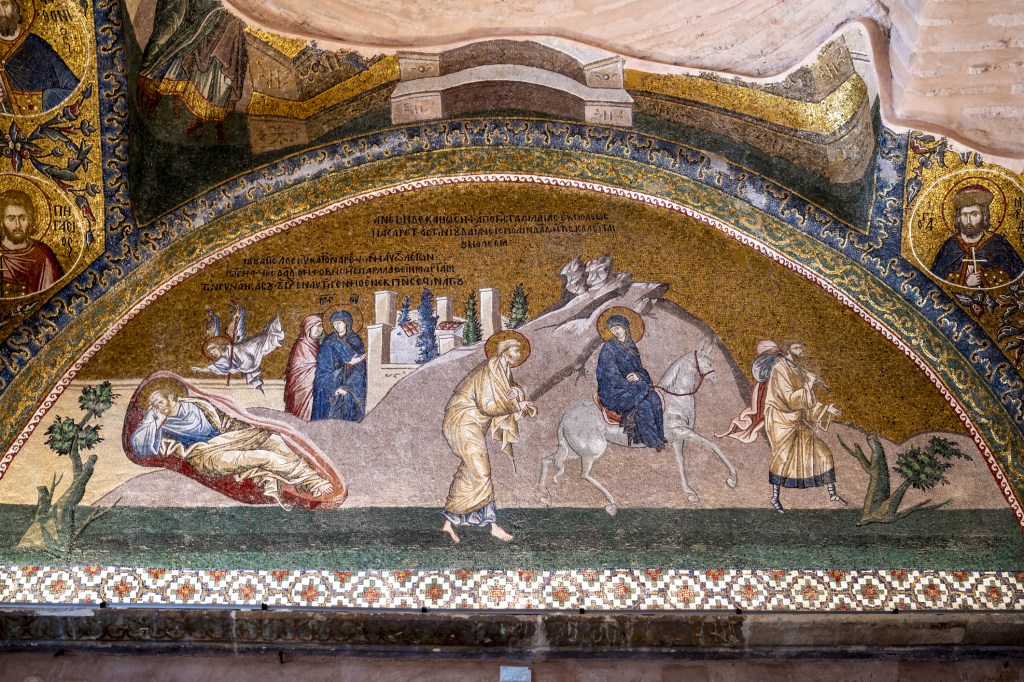
Second Sunday after Christmas is only celebrated when Jan. 2, 3, 4 or 5 happen on a Sunday. A.D. 2026 is one of those years. aThe Collect for the day was written by Archbishop Cranmer based on the 2nd Collect for Christmas Day in the Gregorian Sacramentary, a 10th C. tribute to one of the great Roman Catholic popes. The “for the Epistle” reading is Isaiah 61:1-3, which Jesus quotes in Luke 4:18, 19 in reference to the “Spirit of the Lord.” The Gospel lesson. Matthew 2:19-23, St. Matthew’s record of the Holy Family’s Flight to Egypt and Return, both of which were the result to a dream of Joseph. Jan. 4th is also the Eleventh Day of Christmas in the AIC video series, The Twelve Days of Christmas.
Epiphany season, one of the fixed feasts on the Anglican Church Calendar, officially begins on Jan. 6th. In A.D. 2026, Epiphany falls on a Tuesday. The name for the season is derived from the Greek word Epiphaneia, which means to manifest, or, more poetically, to “shine forth.” For the first Anglican Book of Common Prayer, published in 1549 A.D., Archbishop Thomas Cranmer wrote a new Collect for Epiphany (day). It was derived from the 10th C. version of the Gregorian Sacramentary. Epiphany was once known as “Little Christmas,” probably because Epiphany Eve (Jan. 5th) marks the end of the Christmas season. In the AIC’s video presentation for Christmas, The Twelve Days of Christmas, I use a graphic to present Christmas Day and Epiphany (Day) as “bookends.”
Epiphany and all the Sundays after Epiphany are each concerned with an example of the “manifestation” of Christ to the Gentile world. I discuss and illustrate the complex history of the season and also the readings for Epiphany Day in Episode One in our video series, Epiphany: The Manifestation of Christ to the Gentiles. The Sundays after Epiphany, which can be as many as six and as few as one, are discussed in Episode Two and Episode Three in the same series. In A.D. 2026, there are only three Sundays after Epiphany. The podcast audio version of Episode One is available on the Podcast Archive page. My Podcast Homily for Epiphany (the Day) is linked from the Podcast Homilies page. You can also listen to the Podcast Homily for Morning Prayer, based on the Psalm readings for Epiphany (day), Psalm 46 and Psalm 100, hosted on the Podcast Homilies-Morning Prayer page. The three Sundays after Epiphany will be the subject of the next three blog posts.
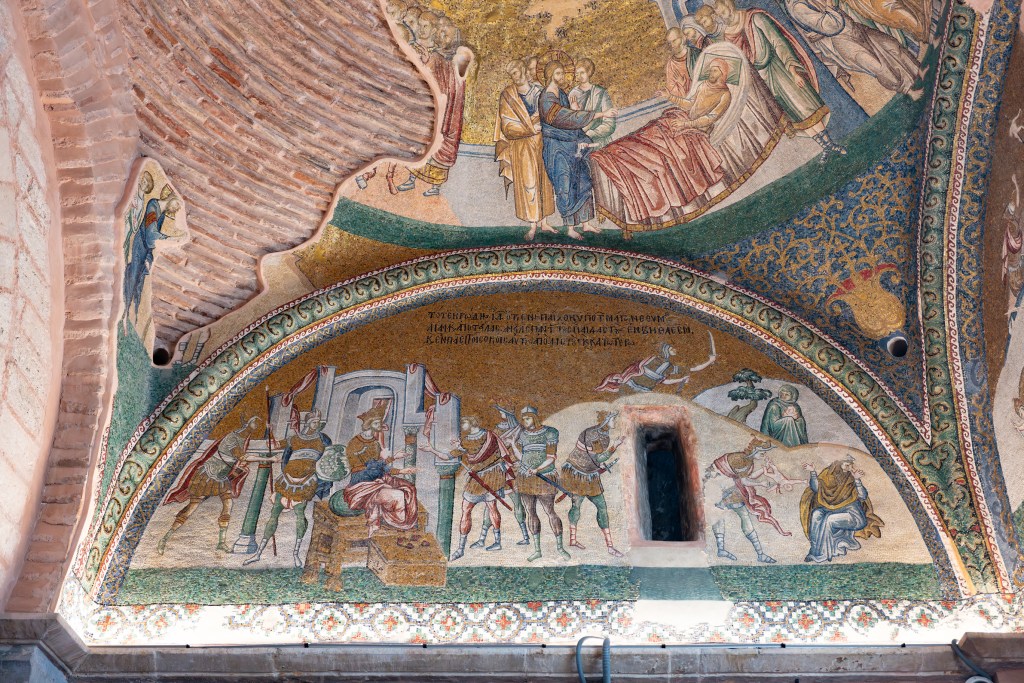
The Epistle reading for Epiphany (day) is Ephesians 3:1-12, St. Paul’s essay on the “mystery” of the Christ who is revealed to the world. The Gospel reading, Matthew 2:1-12, is Matthew’s account of the Visit of the Wise Men. In our video series, The Twelve Days of Christmas, the episode for Fourth Day of Christmas, Dec. 28th, with the theme word “Compassion,” highlights the Murder of the Holy Innocents, Herod’s violent reaction to the news of the possible birth of a Saviour.
The actual visit of the Wise Men, or Magi, is depicted in another late-Byzantine mosaic, also in the Outer Narthex (or exonarthex), in this case at the rear of the Outer Narthex above the opening into the Church’s Parakklesion, effectively a funeral chapel. For more views of these and other Byzantine mosaics and frescoes illustrating hundreds of Scriptural scenes at Chora, visit the Chora Church web site. Another site with nearly a hundred images is available at https://thebyzantinelegacy.com. Yet another is https://www.360tr.com, which offers “virtual” tours you can manipulate. For the 3-D tour, it may take a little practice manipulating the view (forward, sideways, upward), but you will find the effort worthwhile as you move, in the virtual sense, through the Outer Narthex, the Inner Narthex (or Esonarthex), the Naos (the equivalent of the modern Nave and Altar) and the Parakklesion (with its spectacular representation of The Harrowing of Hades (or Anastasis). While at the site be sure to direct the pointer to look upward into the large Christ Pantokrator dome (#8) and the smaller Blessed Virgin dome (#9) in the Inner Narthex and the Church’s third dome in the righthand portion of the Outer Narthex.
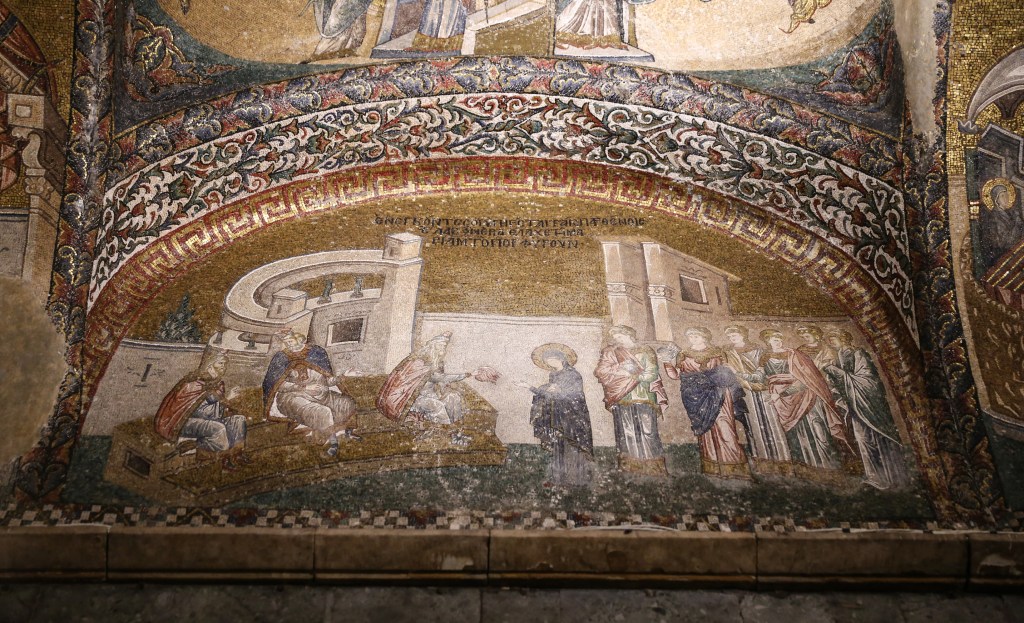
In future posts in A.D. 2026, I will insert additional images from Chora Church in which the Gospel reading is illustrated.
As always, thank you for your interest and support. Glory be to God for all things! Amen!

 Anglican Internet Church
Published by