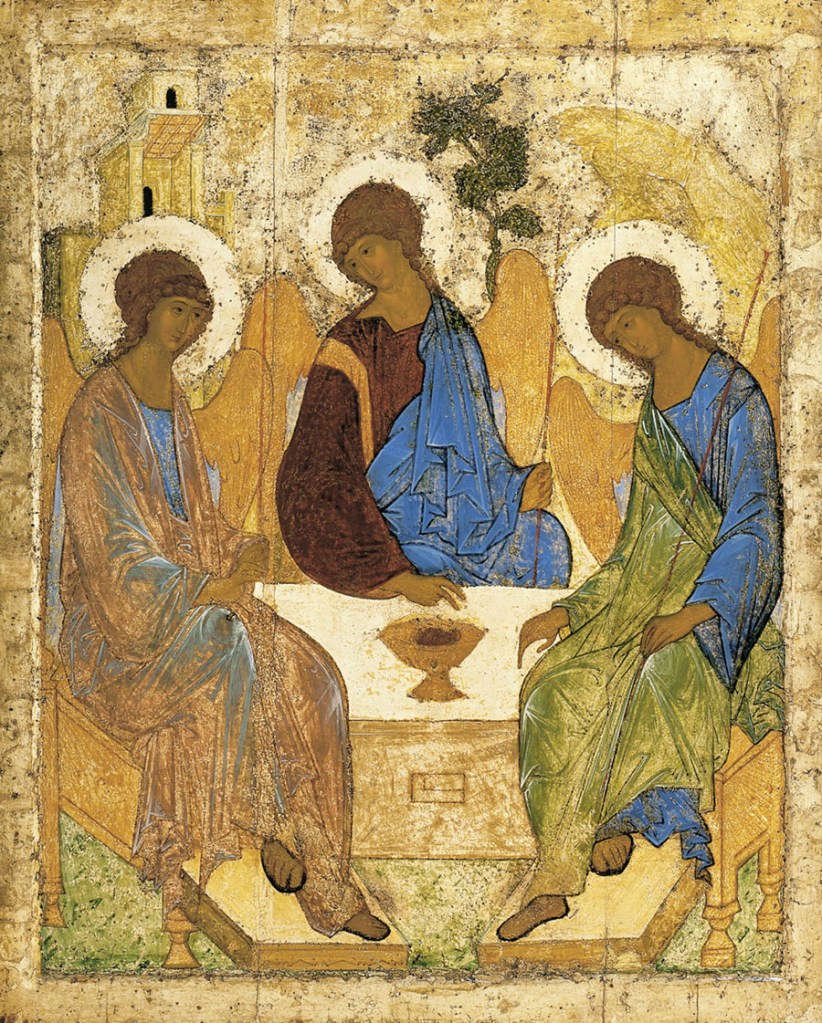
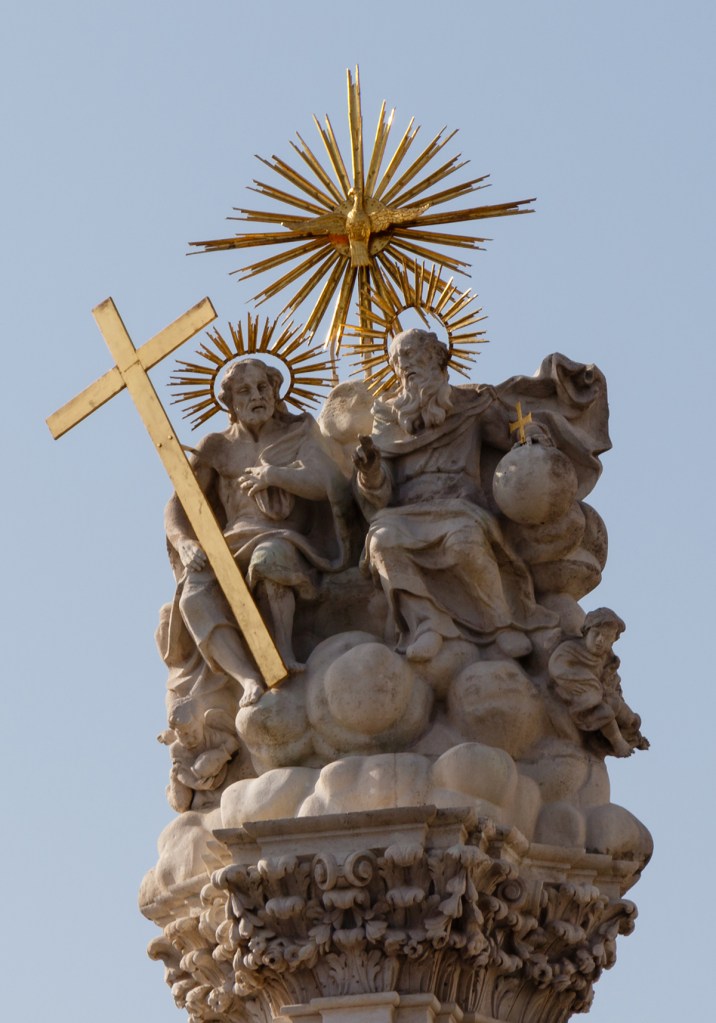
Whitsunday 2026 A.D.

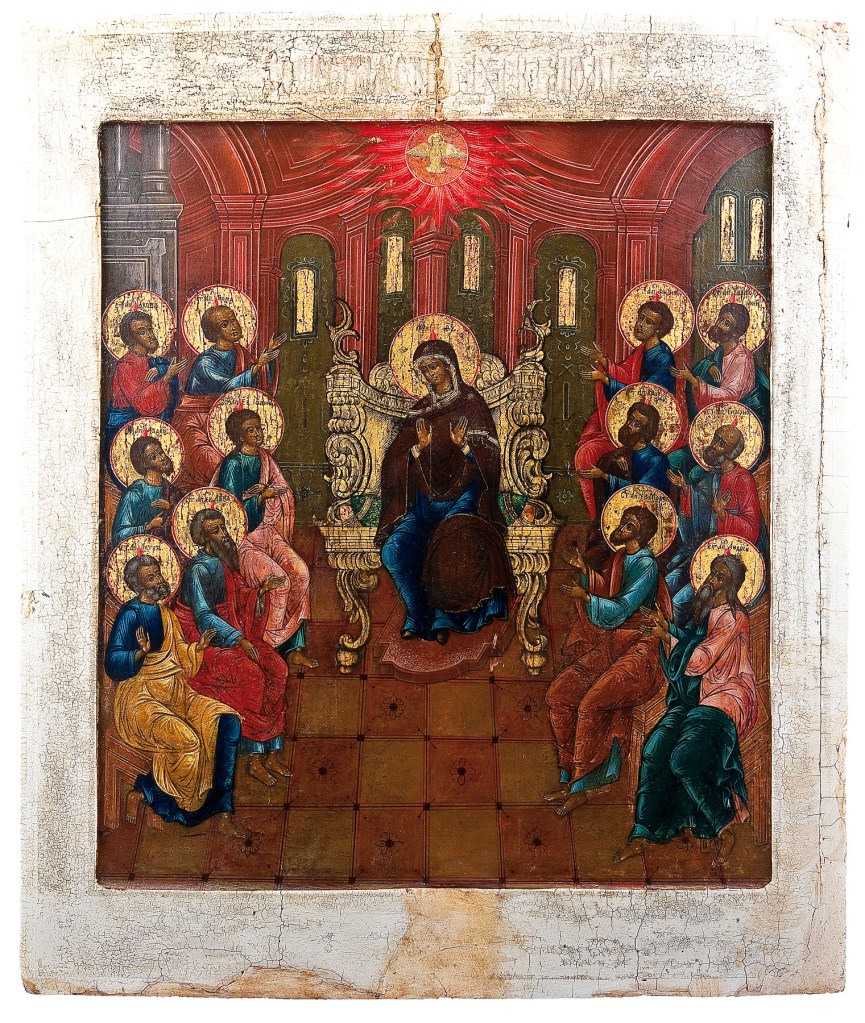
Sunday, May 24th, 2026 A.D., on the Anglican Church Calendar is Whitsunday, which in other denominations is more commonly known as Pentecost, a celebration of the Descent of the Holy Spirit (Holy Ghost in the King James Version). As noted in previous posts in A.D.2026, the Descent is commonly depicted with the Holy Spirit depicted in the form of a dove, as in the Gospel accounts of the Baptism of Christ (Matthew 3:13-17; Mark 1:9-11; Luke 3:21-22; John 1:29-34) and Acts of the Apostles (2:1-11).

The Descent of the Holy Spirit on the Apostles, gilt and silver on wood icon, probably 18th C., Russia. Holy Spirit depicted as a Dove and flames of fire. From a private collection. Wikimedia Commons.

In the 1928 Book of Common Prayer, there are two Collects for Whitsunday. The first is an adaptation by Archbishop Cranmer from the Gregorian Sacramentary (10th C.), based on the reading used for the Sunday morning Communion service for Whitsunday at St. Peter’s Basilica. In the Collect reference is made to the Spirit offering comfort to “thy faithful people.” The Collect makes clear that it is the presence of the Holy Spirit in the faithful which makes it possible for mankind to achieve “a right judgment in all things.” The second Collect is unique to the 1928 Book of Common Prayer. The identity of the author is unknown. Prayer book scholar Massey Shepherd speculated that it may have been added in order that more of the faithful would hear such doctrine on the Sunday morning celebration of Holy Communion on one of the three most important Sundays on the Church calendar, the other two being Christmas morning and Easter. It contains a plea that by the indwelling of the Spirit the faithful “may be enlightened and strengthened for thy service.” The second Collect is intended for use in the first service when there is more than one service offered on Whitsunday.

The Collects and the two sets of epistle and “for the epistle” reading from St. Luke’s account of the Descent of the Spirit (Acts 2:1-11) plus the Gospel readings for both services are discussed and illustrated in Episode One in our Seasonal Video series, Trinitytide: the Teaching Season, linked from the Digital Library page. The reading from 1 Corinthians 12:4-14 includes important instruction from St. Paul on the nature of the Church and the importance of spiritual gifts. The video series begins with readings for Whitsunday and for weekdays Whitsun Week and closes with the Sunday next before Advent, as well as the complicated rules for moving readings from Epiphany season when there are more than twenty-four Sundays after Trinity. The audio only (MP3) version is linked from the Podcast Archive page. My Podcast Homily for Whitsunday is linked from the Podcast Homilies page. A related Podcast Homily for Whitsunday, based on Psalm 68, the Psalm reading for Morning Prayer on Whitsunday, is linked from the Podcast Homilies-Morning Prayer page.

As always, thank you for your interest and support. Glory be to God for all things! Amen!
Ascension Day & Sunday after Ascension

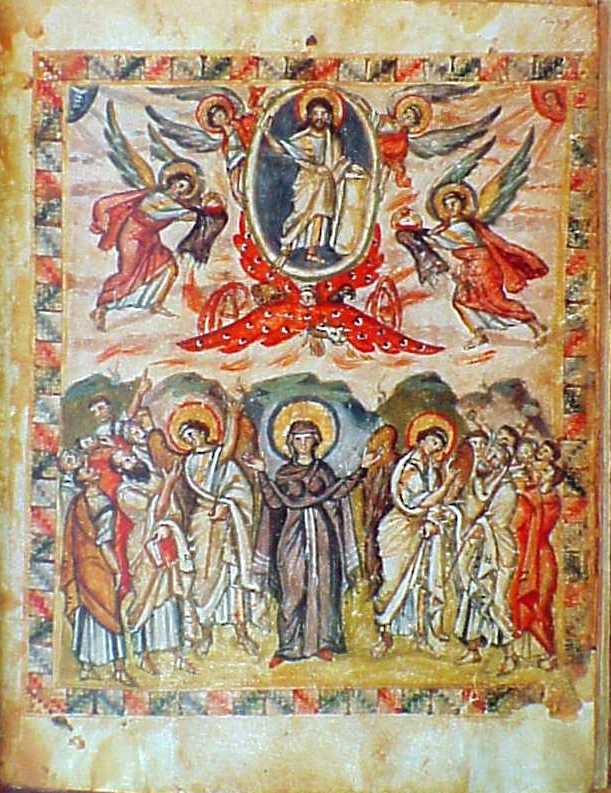
In the Anglican worship tradition, Ascension is officially celebrated on the Thursday following Fifth Sunday after Easter and, because so many cannot attend a mid-week service, themes related to the Ascension are repeated on Sunday after Ascension (the Sixth Sunday after Easter). The Collect for Ascension Day is based on the Gregorian Sacramentary and the Missal texts at Sarum (Salisbury). Theological concepts observed on Ascension Day were incorporated into the Nicene Creed in 325 A.D. The original text and the changes made in 381 A.D. are discussed and illustrated in the AIC Video Series, The Nicene Creed, linked from the Digital Library page. The Epistle reading, Acts 1:1-11, includes St. Paul’s record of post-Resurrection appearances by Christ and His being taken up into heaven. The Gospel reading, Luke 24:49-53, is the evangelist’s own record of the actual event of the Ascension to the Father.

The Ascension, illumination in tempera and gold on parchment, Rabbula Gospels, 586 A.D., region of present-day Syria. Laurentian Museum, Florence, Italy. Public Domain.

For Sunday after Ascension, the Collect was derived from a Vespers office of the new Church of England that is itself derived from the deathbed song of the Venerable Bede. The Epistle reading, 1 Peter 4:7-11, another example of New Testament wisdom features throughout Eastertide, includes St. Peter’s teachings on the proper use of one’s gifts from God. In the Gospel lesson, the sixth and last in Eastertide from the pen of St. John, John 15:26-16:4a, St. John quotes more from Jesus on preparation for the coming of the Holy Spirit, or The Comforter. The Collect and readings are discussed and illustrated in Episode Three in the AIC Seasonal Video series, Eastertide: From Resurrection to Ascension, linked from the Digital Library page. The audio-only Podcast version of Episode Three is linked from the Podcast Archive page. My Podcast Homily for Sunday after Ascension is linked from the Podcast Homilies page. A related Podcast Homily, focused on the Psalm reading for Morning Prayer on Sunday after Ascension, Psalm 8 & Psalm 108:1-5, is linked from the Podcast Homilies-Morning Prayer page.

Sunday after Ascension brings the season of Eastertide to a close. The remainder of the Anglican Church Year is focused on readings and other material focused on Trinity Sunday and Trinitytide, the longest season on the Anglican Church calendar. The AIC Seasonal Video series, Trinitytide: the Teaching Season, is presented in nine episodes, also linked from the Digital Library page with Podcast/audio only versions linked from the Podcast Archive page.

I have not decided on a plan for Fr. Ron’s Blog during Trinitytide. Since the weekly postings for Trinity were completely rebuilt in A.D. 2021, the weekly Blog will probably revert to more topical postings without any specific plan in mind. As always, thank you for your interest and support. Viewers might be interested to know that the greatest number of visits to our site is coming from Asia. To our Asian friends, another thank you. Glory be to God for all things! Amen!
Fifth Sunday after Easter

For Fifth Sunday after Easter, commonly known as Rogation Sunday, the Collect is another which was adapted from the Gelasian Sacramentary used in the Roman Catholic tradition. This short prayer acknowledges the LORD as the source of “all things that are good,” which we may think are our own, come through His “merciful guiding.” The Epistle is another reading from the Epistle of St. James offering more practical New Testament wisdom: become “doers” of the Word and “not hearers only.” James describes the benefits of restraint, or “bridling” of the tongue. Almost four centuries later one of the greatest saints of the Eastern Church, John Chrysostom, Bishop of Antioch and then Constantinople, suggested that practicing control of one’s tongue could be considered a worthy sacrifice during the season of Lent. The Gospel reading is again from John 16, this time verses 16-33, in which Jesus grants mankind permission to pray directly to the Father and promises that He will likewise pray for the same to His Father. The reading includes another concept of time of which Jesus spoke in His final days, in this case, “hour,” which are discussed in Episode 43 and Episode 44 in the AIC Video series, New Testament: Gospels, linked from the Digital Library page. In just a few days, the Disciples would discover exactly what Jesus meant in saying “that in me ye might have peace. In the world ye shall have tribulation.” This dialogue appears only in the Gospel of John. There are no examples that I know of in Christian art which depict this event. The timeline in The Orthodox Study Bible: New Testament implies, by association with other events on the last days of Christ, that the location was somewhere in Jerusalem on Maundy Thursday. The dialogue is discussed, without illustration, in the AIC Bookstore Publication, The Gospel of John: Annotated & Illustrated. The volume is available through my Amazon Author Central page. Full details about the book are found on the AIC Bookstore page.

The Collect, Epistle and Gospel readings for Fifth Sunday after Easter are discussed in Episode Three in our video series, Eastertide: From Resurrection to Ascension, linked from the Digital Library page. The audio-only version, in MP3 format, is linked from the Podcast Archive page. My Podcast Homily for Fifth Sunday after Easter is linked from the Podcast Homilies page. A related Podcast Homily for Fifth Sunday after Easter, based on Psalm 118, the appointed Psalm for Morning Prayer, is linked from the Podcast Homilies-Morning Prayer page.

Next week, my Blog post will be made on Ascension Day, May 14th, and will include commentary on readings for Ascension Day and Sunday after Ascension.

As always, thank you for your interest and support for keeping this site available, on-demand, 24/7. Glory be to God for all things! Amen!