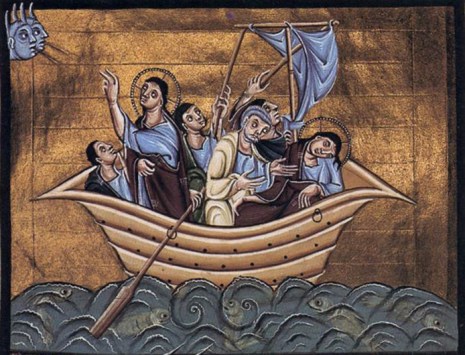
 Episode Nine in the revised edition of our Bible Study series, New Testament: Gospels is now online in both video and podcast versions. In Episode Nine I continue discussion of the Gospel of St. Mark with the next six of eighteen miracles he describes. The first three demonstate Divine Power over Nature and the second three demonstrate Divine Power over Speech and Sight. The illustration, Calming the Seas, is the top half of a miniature illumination in colored inks and gilt on vellum from the Gospels of Otto III, produced at Reichenau Monastery, Reichenau, Germany, in the late 10th or early 11th C. The original is at the Bavarian State Library, Munich, Germany. I applied perspective correction to the original image. Otto III was a Saxon/German king who ruled the Holy Roman Empire in Europe, which was revived in 800 A.D. by Charlemagne. The monastery is the same facility where the Bamberg Apocalypse was prepared in the early 11th C. Viewers who have read the AIC Bookstore Publication, Revelation: An Idealist Interpretation, which includes 51 illustrations from the Bamberg Apocalypse, will recognize the style and, possibly, some of the faces.
Watch the Video. Listen to the Podcast
The next episode in the series will be available during the week of July 8th. I am currently working on the text and slides for Episode Twenty-seven, the second focused on the Gospel of St. John. That episode will include many images of St. John which have only recently become available to the general public.
As always, thank you for your interest and support. May God bless you in all that you do in His Name! Amen! Glory be to God for all things! Amen!
Please consider following the blog by clicking the Follow Anglican Internet Church legend in the righthand column and also letting your friends, neighbors, and others know of the site and the resources its offers the faithful. All easily available in this aggressively anti-Christian world.
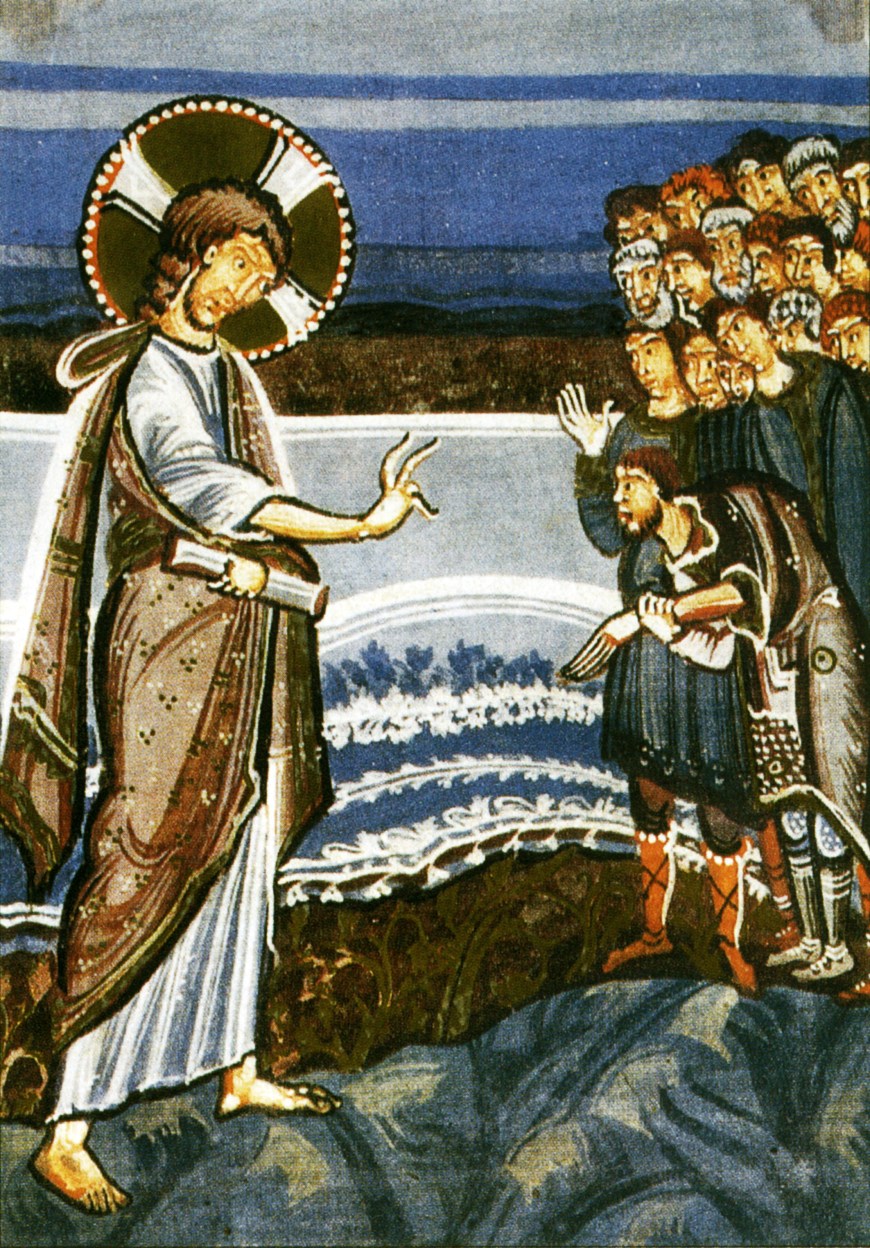 The example is Christ Healing the Man with a Withered Hand from the Hitda Codex, a Gospel book commissioned by and named in honor of the Abbess of the convent at Meschede, Germany, after 1020 A.D., Hessische Landesbibliotek, Darmstadt, Germany. Photoshop effects applied. The document is in the artistic tradition of the Ottonian dynasty of Saxon kings, successors to Charlemagne in the revived Holy Roman Empire in Western Europe. A better image is now available in The Gospel of Luke: In Scripture, Art & Christian Tradition, image number 52 (See the

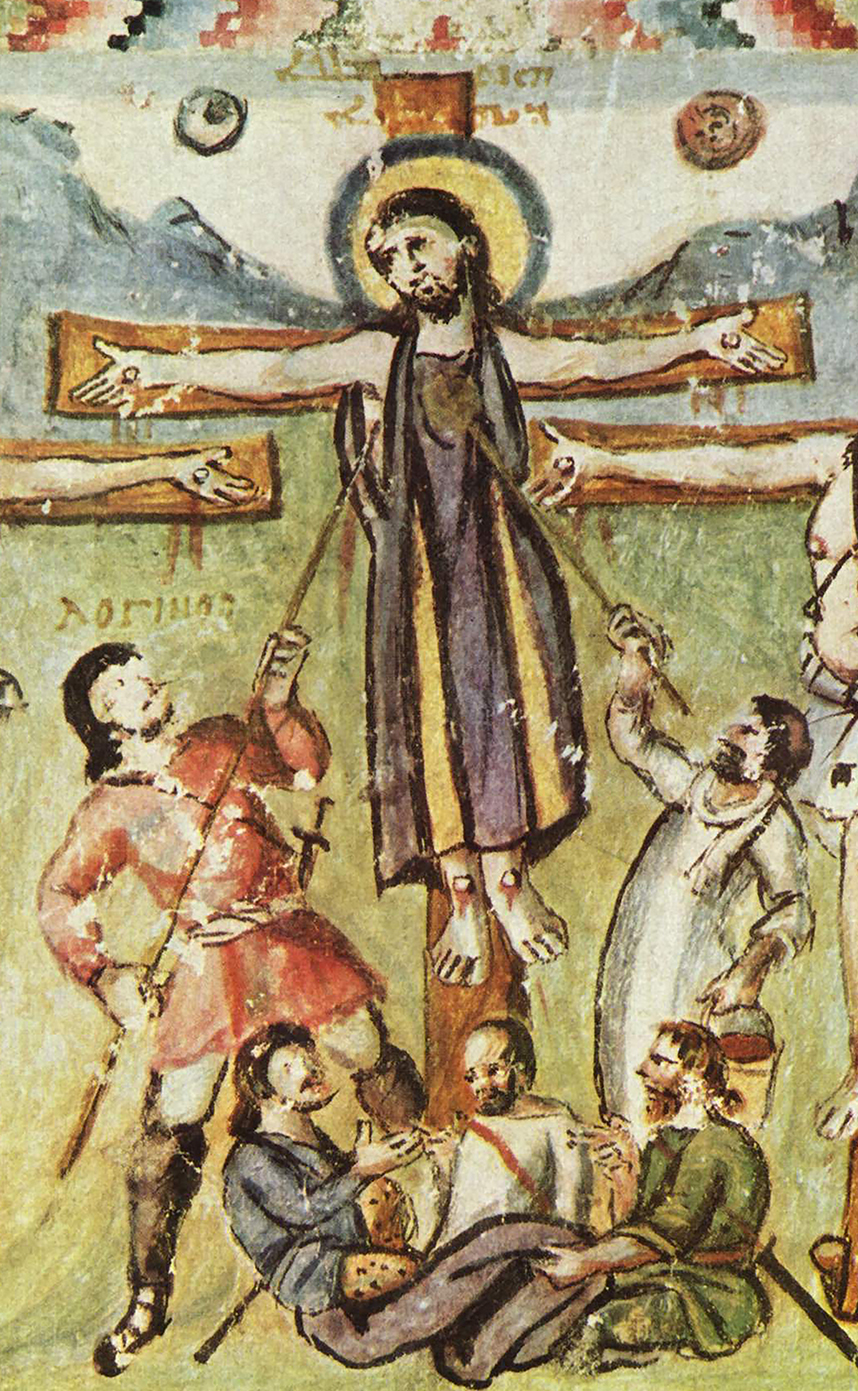 The illustration is the central detail of an illumination on parchment from the Rabbula Gospels, 586 A.D., the oldest surviving depictions of the Crucifixion. The original is at the Laurentian Library, Florence, Italy. Public Domain. Source: 10000 Masterworks: the Yorck Project.
 Anglican Internet Church