The War on Christianity – Episode Four

Earlier this week I completed and uploaded Episode Four in The War on Christianity series.  Episode Four is Part 1 of 2 in Three Case Studies, an account of the decline of Christianity in regions of the world where it had once been the dominant religion.  To keep the episodes under 25 minutes, Episode Four is focused on two regions only, the Holy Land (Middle East to the secular world) and North Africa.  Next week I will upload Episode Five, which carries the story into the decline of Christianity in Asia Minor.

Watch the Video of Episode Four       Listen to the Podcast of Episode Four

canstockphoto11394994-Detail1.jpg
By This Sign Conquer, Statue of Constantine the Great by sculptor Philip Jackson installed in 1998 A.D. at York Minster, England.

Because the story traces the Church over 19 centuries, in Episode Four, and later in Episode Five, I have used the Pivotal Events device to explain only the most critical moments in the Church’s transition from majority to minority status, with applicable and, I hope, interesting illustrations from the religious art of both the Eastern and Western Christian traditions.  The fate of Christianity in both areas is intricately and inseparably intertwined with the rise and decline of the Byzantine Empire and the rise of a new religion, Islam, in the 7th C. A.D.   The first Christian emperor, Constantine the Great, and his mother, St. Helen, played major parts in the story.   He for his bold decisions and her for her patronage of the Church in the Holy Land.  The illustration is statue of Constantine the Great, bearing the legend “by this sign conquer,” in front of York Minister, England, where Constantine declared himself emperor in 306 A.D.  The interconnection with the fate of the Byzantine Empire comes back into focus in Episode Five, with my account of the decline of Christianity in Asia Minor (now generally known as Anatolia, part of eastern Turkey), between the 11th C. and the present day.

Even though Christianity lost its influence over civil government in the Holy Land and North Africa in the spread of Islam in the 7th C., culminating in absolute control over North Africa by the time of the Ummayad Moslem conquest of Algeria in 698 A.D., Christians were allowed to practice their religion, albeit under stringent controls, between the end of the 7th C. and the 14th C.  In fact, they remained the majority religion in Egypt all the way to the 14th C.   The final decline to under 10% of the population of Egypt is owed to the rise of a political side of Islam after the fall of the Byzantine Empire in 1453 A.D.
Cyprian of Carthage-Basilica-ruins3-1915
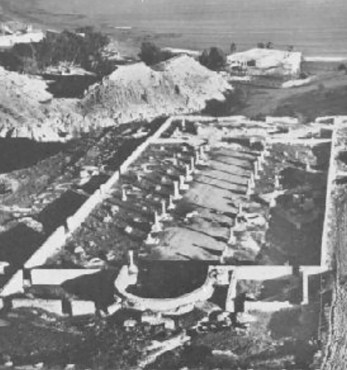
Remains of Basilica of St. Cyprian of Carthage, 6th C., in the early 20th C.  Public domain.

Silent testimony to the absolute decline of Christianity in North Africa is the early 20th C. photograph of the remains of the Basilica of St. Cyprian of Carthage, built in the 6th C. under the patronage of the Byzantine Emperor Justinian, who also sponsored the Monastery of St. Catherine at Sinai and commissioned the monastery’s Christ Pantokrator icon, the oldest known icon of Jesus Christ.  In the 4th C., the height of Christian influence in Algeria and the rest of North Africa, there were said to be over 160 Christian churches near Carthage.  Today, there are only a handful in the whole country and the former Roman Catholic Cathedral of St. Louis, built by France in the late 1880s A.D., is now a “cultural center,” featuring live performances where devout Catholics once prayed.  Will Christianity become a quaint reminder of cultural history in Europe at the end of the 21st C., like the remains of the Basilica of St. Cyprian of Carthage were in the early 20th C.?

Next week, I will upload Episode Five, completing the Three Case Studies, and also bring you news of a new development in the AIC Bookstore publications, just in time for Christmas.

As always, thank you for your interest and support.  Please help spread the word of the availability of the AIC’s videos, podcasts and publications by clicking the “Follow Anglican Internet Church” tab in the right column and letting friends, family and others know where to find the AIC.

Glory be to God for all things! Amen!
The War on Christianity – Episode Three

Early this week I uploaded Episode Three in the AIC Christian Education video series, The War on Christianity.  Episode Three is Part Two (of Two) in A Summary History of the Church from Pentecost Until Now.  The episode takes up the narrative with the story of the Church in North Africa, Sub-Saharan Africa, the Western Hemisphere, plus Asia and the Pacific Islands; a quick summary of the impact of the Protestant Reformation, English Reformation and the Catholic Counter-Reformation; and the growth of new denominations around the world.  The final one-third of the episode is focused on a census of the Christian population worldwide, as of 2010 A.D., and discussion of that population, region-by-region, with emphasis on where the largest concentrations of Christian populations exist.

Augustine_Lateran
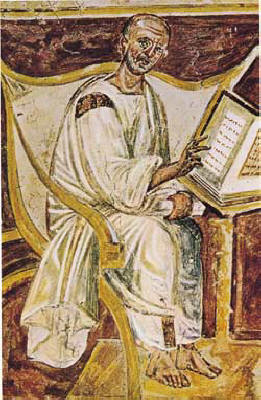
Late 6th C. fresco of St. Augustine of Hippo, Lateran Palace, Rome.  Public Domain.

Given the media’s lack of attention to actual facts versus opinions, two such actual facts pointed out in Episode Three may surprise many readers.

First, if we exclude Russia, which is not really European, from the census for Europe, there are far more Christians, by a large margin, in the United States (246,780,000), Brazil (175,770,000), Mexico (107,780,000), the Philippines (89,790,000) and Nigeria (80,510,000) than in any country in Europe.  To be fair, the census estimate says that Russia is home to 105,220,000 Christians.

Second, a fact extrapolated from the data, there are almost twice as many Christians in Nigeria as there are in the United Kingdom, the home country of the Church of England, and the Protestant population in the home country of Martin Luther has declined, in percentage terms, by approximately 30% since the start of World War II, while the Roman Catholic population (again, as a percentage) has remained largely unchanged during the same time frame.  During the balance of the series I intend to discuss the implications of this data.

[Data Source: Regional Distribution of Christians, Pew Research Center, December 19, 2011 A.D.  http://www.PewForum.org/2011/12/19/global-christianity-regions]

Watch Episode Four          Listen to the Podcast version

Next time, in Episode Four, I will discuss Three Case Studies of regions in which Christianity has been marginalized in both absolute and percentage terms: the Holy Land (or Middle East), North Africa, and Asia Minor, the latter being the region in which the greatest growth of the early Church happened.

Please help us spread the news of the availability of the prayer, teaching, Bible Study and historical resources made available on-demand via the AIC Web site, and through our Virtual Bookstores (accessed using links at the bottom of our Home Page).  Further, you can “follow” this blog by clicking the “Follow Anglican Internet Church” tab in the right hand column.  And you can similarly subscribe to our YouTube videos and the Podcast versions (via our PodBean channel).

As always, thank you for your interest in and support of the Internet-based ministry of The Anglican Internet Church.  May God bless you in all that you do in His Name.  Amen.  Glory be to God for all things! Amen!


The War on Christianity – Episode Two

Early this week I uploaded Episode Two in our new video and podcast series, The War on Christianity.   This episode is part one (of 2) in A Summary History of the Church from the Day of Pentecost Until Now, in which I review the growth of the Church from its birthday at Pentecost (Acts 2) through its spread into Northern Europe in the 12th C.  There are 17 illustrations from the 6th to the 20th C.   The episode attempts to put the expansion of Christianity into context, giving credit to the major saints along the way, including the original Apostles and the bishops, archbishops, clergy and scholars who were the driving force, even in the face of the risk of death.

Ignatius of Antioch-Fresco-1870s-Macedonia.jpg
Public domain

One of the most interesting illustrations is a 19th C. fresco depicting the martyr’s death of St. Ignatius of Antioch from the Monastery of Elijah in Melnica, Republic of Macedonia.  It is attributed to artist Avram Dichov and was created in 1872 A.D. following the two-year-long construction of the building.   Viewers also get glimpses of later saints, such as Cyril and Methodius (7th C.) and the Venerable Bede (8th C.), plus a recent photograph of the Monastery of St. Michael, Kiev, Ukraine, opened in 1999 A.D. to replace the early 12th C. original building which was destroyed by the Soviet Union under Stalin’s rule in the late 1930s.  Both the Elijah Monastery and the rebuilt St. Michael’s are a tribute to Eastern Church Christians who maintained their faith through the terrible anti-Christian persecution after the Bolshevik Revolution in 1917 A.D. and the spread of Soviet-style Communism across eastern and southeastern Europe.   The survival or restoration of both buildings demonstrates the benefits derived when modern Christians stand up to the anti-religious forces from within and from outside their communities, a message which underpins The War on Christianity series.

Watch Episode Two      Listen to Episode Two

Early next week I will upload the completed Episode Three in which the Summary History is carried from the spread of the Church across North Africa, into Africa below the Sahara, across the Atlantic into the Western Hemisphere, and, since the 17th C. across the Pacific, extending the reach of Christianity to an estimated 2 billion-plus people worldwide (as of 2010 A.D.).

I thank those who have subscribed to this Blog and who follow the AIC on our YouTube and Podbean channels (links to which are always found on the Home page at http://www.AnglicanInternetChurch.net.  You can help us reach more people by letting others know how to find us on the Web.

As always, thank you for your interest in and support for The Anglican Internet Church electronic ministry.  May God bless you in all that you do in His Name.  Glory be to God for all things! Amen!
Gabriel, Michael & Raphael

Gabriel_fresco_Georgia_14th_c).jpg
Wikipedia Commons

Earlier this week I uploaded a new video in The Lives of the Saints – Second Series.  Episode Twenty-three pays tribute to the three Archangels: Gabriel, Michael and Raphael using some of the most strikingly beautiful art work I could find from both the Western and Eastern Church traditions.   The episode is among the longest in the series, running around 26 minutes.

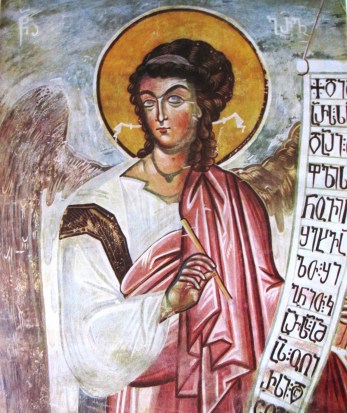
One of the images of St. Gabriel (left) is a fresco from the early 14th C. found at the Georgian Orthodox Cathedral Church of the Transfiguration of the Saviour, Tsalenjikha, Republic of Georgia.  The artist was Cyrus Emanuel Eugenicus, who was brought to Georgia from the imperial capital of Constantinople by the country’s royal family.  The style is described as late Byzantine, representing the beginning of the introduction of Western Church artistic styles into the Byzantine manner.     WATCH THE VIDEO         LISTEN TO THE PODCAST

canstockphoto29989546.jpg
Apse Mosaic, 1191 A.D., Church of St. George, Kurbinovo, Macedonia. Image Copyright Can Stock Photo/Nehru

But the best, to my untrained but appreciate eye, is an apse mosaic of St. Gabriel, the most famous of the three Archangels, by an unknown group of artists working in the Ohrid bishopric, one noted for the exceptional quality of its frescoes and icons, in what is now the Republic of Macedonia.  The location is the little stone Church of St. George, Kurbinovo, Macedonia.  I suspect that these traditional Christians could use some outside help in the restoration of the building, which was completed around 1191 A.D.    The celestial blues and whites are, pardon the pun, stellar.  In the original, St. Gabriel is at the left side of the image.  He leans toward the central figure, a seated Blessed Virgin Mary holding the infant Jesus Christ.

I find this picture so intriguing because it shows us the high spirituality found in the Eastern Church tradition of that era, and to a lesser extent today, to fill virtually every inch of a Church building wit with art which is not only beautiful but emotionally and spiritually uplifting.  This stands in very sharp contrast to today’s Church buildings which, to my eye, look more like auto showrooms without the auto.  The building in which this astonishing work is found is a small stone chapel, not a great cathedral as you might imagine.  It is this kind of confident spirituality, representing unwavering faith in the face of adversity as well as prosperity, that the Western Church so badly needs today.

I can also report that The Writing Prophets of the Old Testament, published earlier this year, is now available in Kindle format at $9.99 from my Amazon Author Central page.  Those who purchase the print edition can purchase the electronic version for $2.99.  For pricing and ordering Kindle Editions and Paperbacks visit Fr. Ron’s Amazon Author page,

As always, thank you for your interest in and support of the Anglican Internet Church’s online ministry.

Cyprian of Carthage/Lancelot Andrewes

Two new episodes are now available on our You Tube channel.  Episode Twenty-one celebrates the life of Cyprian of Carthage, whose Feast Day is September 13th.  I wrote about St. Cyprian in the previous blog post.  I’ve fixed the You Tube link so it should be available as of this morning.    Watch the video.   Listen to the Podcast

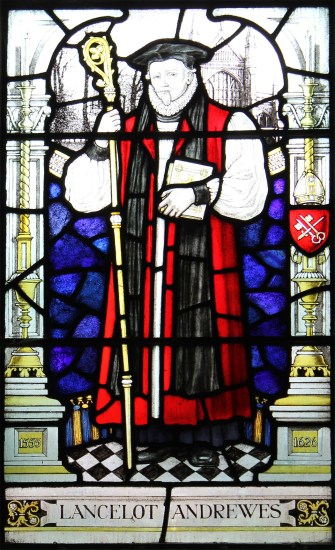
Lancelot_Andrewes_(Stained_glass,_Chester_Cathedral).jpgEpisode Twenty-two, also published today, celebrates the life and contributions of one of the greatest of the 16th-17th Anglican divines, the Blessed Lancelot Andrewes, whose Feast Day is September 25th.  Andrewes is one of my personal favorites.  I suspect that he was one of those rumored to have desired placing the Church of England under the jurisdiction of the Patriarch/Archbishop of Constantinople.    The illustration is a memorial window in the Cloister at Chester Cathedral, Chester, England.  The picture is public domain through Wikipedia Commons.  I applied perspective correction using Photoshop to the original file.

Watch the Video

Listen to the Podcast

Andrewes is little-known outside the world’s small circle of Anglicans interested in the history of the Church.  He was a remarkable man in many respects.  He could speak and write in the ancient languages of the Holy Land:  Aramaic, Latin, Greek, Hebrew, Arabic, and Syriac.  He served on the committee which supervised the production of the Histories in the Hebrew Old Testament.  He was Chaplain to both Queen Elizabeth I and King James I.  During his lifetime he wrote a series of devotions, commonly called catenae, which are prayers based on Scriptural verses.  His placed a restriction that this collection could not be published until after his death, I suspect it was out of a desire not to introduce another potential form of worship into an already troubled Church environment that was not too far relieved from the memory of the terror of Bloody Mary and the death of the three Oxford Martyrs, Latimer, Ridley and Cranmer (the subject of Episode Twenty-three in this series.  I wrote about him in Christian Spirituality: An Anglican Perspective


I’ve finished both the slides and script for the next several episodes in the Saints2 series, including No. 23-Gabriel, Michael and Raphael; No. 24-Jerome of Jerusalem; No. 25-Francis of Assisi; No. 26-Vincent De Paul and am currently completing No. 27-The English Martyrs (mentioned above).

In book news, the Kindle version of The Writing Prophets of the Old Testament should be available on or before September 22nd.  I’m awaiting the final proof of the file around the 18th of the month.   Until two weeks ago, I had not been aware that it was not already converted and available.

As always, thanks to viewers for your interest in this internet ministry.  Book sales and contributions are our only sources of financial support.

May God bless you in all that you do in His Name!  Amen.  Glory be to God for all things!  Amen!

The War On Christianity

WOC-Title1-RevUPDATED VERSION – 08/25/2017

The 12-15 minute introduction to our newest Christian Education Video series, The War on Christianity, has been uploaded to our You Tube site.  The MP3 Podcast version is linked from the newly-created Podcast Archive page here on our web site.

WATCH THE VIDEO

LISTEN TO THE PODCAST

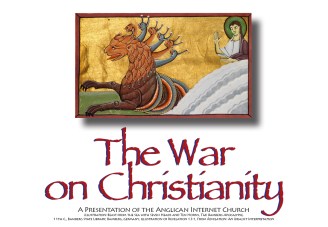
The Introduction includes an explanation of the premise of the series and its organization,   It includes an opening discussion of five examples of physical assaults on Christianity, or what I call the First Front, in the United States, Egypt, France and Germany in A.D. 2016 and 2017.   The title art is The Beast With Seven Heads and Ten Horns, from The Bamberg Apocalypse, an 11th C. illuminated manuscript of Revelation at the Bamberg State Library, Bamberg, Germany.  It illustrates Revelation 13:1 as it was used in the AIC Bookstore publication, Revelation: An Idealist Interpretation.

The balance of the series will be focused on what I have called the Second Front, the insidious, public and private war on Christianity that is being waged each and every day, 24 hours a day, somewhere in the world.  The Second Front is being fought in classrooms, courtrooms, legislative bodies, social media posts, blogs, newspapers, magazines, television, radio and, regrettably, within the Church itself.

I had initially thought to offer only Episode One in video format, but upon reconsideration, having written the script for the next two episodes, I’ve decided the offer the entire series in both formats.  The reason is that illustrating my points will be easier with the hundreds and hundreds of illustrations the AIC has acquired or gained permission to use in the various other Christian Education, Seasonal and Bible Study videos.

Episode Two will begin with a discussion of how Christianity was reduced to marginal status in parts of the world where it once was dominant, including the Middle East, Asia Minor and North Africa.   The obvious message is that the new War on Christianity is simply repeating what has already happened.   If it is not resisted, the new WOC will have the same result.

canstockphoto25596841-CyprianNext week (week of 8/28)  I will release Episode Twenty-one in The Lives of the Saints – Second Series.  Episode Twenty-one celebrates the life of St. Cyprian of Carthage, whose Feast Day is September 12.  The illustration is a detail  which I lifted from a 6th C. Byzantine mosaic frieze at the Basilica of St. Apollinare, Ravenna, Italy (image copyright RibieroAntonio/Can Stock Photo, Inc.).  In the frieze the martyred saints stand in line to give their crowns to Jesus Christ, who is seated as Christ Pantokrator flanked by angels.  In the original, St. Cyprian stands between St. Cornelius, Bishop of Rome when Cyprian was Bishop of Carthage, and St. John Cassian, one of the earliest Western Church chroniclers of the early Church.

As always, thanks for your interest in and support of The Anglican Internet Church ministry.  Glory be to God for all things!  Amen!


Joseph of Arimathea & Bookstore Updates

Lamentation over the dead Christ-Perugino-1495Episode 19 in The Lives of the SaintsSecond Series, focused on the life of St. Joseph of Arimathea is now available in both video and podcast versions.  Finding a good graphic for St. Joseph was a challenge, since there are so few icons, mosaics or paintings of him.   The Byzantine icon, Descent from the Cross (14th C., Agia Marina, Kalapanagiotis, Cyprus shows the scene well.  But the most striking is Lamentation Over the Dead Christ, painted in oil on canvas by Pietro Perugino in 1495 A.D. and which is now displayed at the Pitta Palace, Florence, Italy, provides the most famous depiction.  From it many have extracted the head of St. Joseph, who kneels at the feet of Jesus.

Joseph of Arimethea-Tissot.jpgAnother image of Joseph of Arimathea is from the Life of Christ series of sketches in charcoal and watercolor by French artist James Tissot, now in the collection of the Brooklyn Museum, which has made them available in the public domain.  In Tissot’s work the subject is much more clearly of Semetic origins (compared to the Europeanized image painted by Perugino and typical of Western Church art).
The episode runs not quite 12 minutes.

Watch the Video

Listen to the Podcast 


GREAT NEWS FROM THE AIC BOOKSTORE

After many delays the Second Edition of The Prayer Book Psalter: History, Text and Commentary is now available in both paperback and Kindle versions.  You can purchase either or both versions (discount offered for purchasers of both versions) using the two Virtual Bookstore links at the AIC web site’s Home page.   The revised edition features larger illustrations in the Introduction, text formatting changes in the Psalter text and commentary section, and much new content which relates the text and commentary to all the other AIC Bookstore publications and the AIC Digital Library.  I have also added the Psalm’s first words in Latin, using the spellings from the 1928 B.C.P. text.  Another new feature is an primer on the method used in preparing the Prayer Book Usage sections, which follow the text of each of the 150 Psalms.   I had been working on the upgrade for almost a year and am very pleased to see this finished work available to the general public.

Visit the AIC Web Site today

As always, thank you for your interest in and support of this Internet ministry.  May God continue to bless you in all that you do in His Name.  Amen. Glory be to God for all things! Amen!


Sts. Cyril & Methodius and The Garden in June Video

This has been an eventful week.  Revisions of two of our books have been sent to the printer, awaiting production of finished proofs and two new videos are available on our You Tube channel.

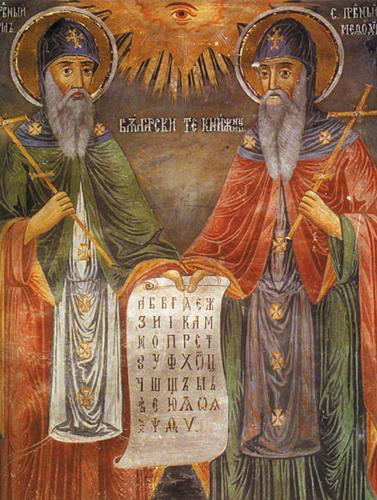
Cyril & Methodius-Mural-Troyan Monas
Portion of a 19th C. mural of Sts. Cyril and Methodius holding the Cyrillic alphabet. Monastery of the Holy Mother of God, Troyan, Bulgaria. Public domain.

Episode Eighteen in The Lives of the Saints – Second Series, celebrating Saints Cyril and Methodius was uploaded last night.   The running time is just over 15 minutes.

Labelled in the 19th C. by Roman Catholic Pope Leo XIII as Apostles of the Slavs and known in the Eastern Church as “Enlighteners of the Slavs,” these two men created a new alphabet and produced Bible translations which brought the New Testament and much of the Old to the Slavic peoples in south central and Eastern Europe for the first time.

Working before the split between Rome and Constantinople that still plagues Christianity, Cyril and Methodius enjoyed the support of both jurisdictions.

The episode includes many illustration to usually seen in the Western Church.  The two saints are honored in the East and the West by the naming of churches and monasteries.

Watch the Video     Listen to the Podcast

Regular readers of this blog know that I am a great fan, if not to say, a fanatical one, of the latest developments in the world of petunias, especially those produced as Supertunias and the trademarked and patented line known as Surfinias.  Last month AIC Videos offered a 3-minute glimpse of my garden and its features.  To demonstrate the spectacular growth the my trailing petunias I produced a 1-minute update showing the growth.

Watch The Garden in June

As always, thank you for your interest and support for the Anglican Internet Church ministry.  Glory be to God for all things! Amen!

New Videos: Basil of Caesarea; Bookstore; & Garden

Basil of Caesarea-Ohrid CathedralThis week I offer three new videos and one new podcast from the AIC’s digital library.
The first is Episode 17 in The Lives of the Saints – Second Series, a tribute to St. Basil of Caesarea, whose Feast Day in Jun 14.   The episode features illustrations generally unseen in the Western Church, including the beautiful blue and white themed icon of St. Basil celebrating Holy Communion, a 9th C. work from St. Sophia Cathedral, Ohrid, Macedonia.  The work is public domain.   St. Basil is primarily remembered for his contribution to the Church’s understanding of the equality of the Holy Spirit with God the Father and God the Son in the Holy Trinity.  The concept was incorporated into the Nicene Creed at the Council of Constantinople in 381 A.D., primarily owing to the work of his brother, St. Gregory of Nyssa and his friend St. Gregory Nazianzen.   The next episode, celebrating Its. Cyril and Methodius, whose Feast Day in Jul 11.

Watch Episode 17.                      Listen to Episode 17.

The second video is a new preview of the AIC Bookstore, using new software included with my new Mac computer.  The video includes the covers and glimpses of pages from the entire catalogue.  Since the content is primarily visual, there is no companion podcast.

Watch the Bookstore preview.

In my Weekly Update, which goes out to a selected group of interested recipients, I often write about my passion for gardening, especially with Petunias.  The third new video is a light-hearted picture and music video giving viewers a 3-minute look at my garden, focusing on the new varieties of petunia available for the first time this year, plus views of other plants and garden details.  Included this year are several new petunias offered for the first time in 2017:  Supertunias Latte, Really Red; Black Cherrt; and Honey; plus several amazing Surfinias which can trail up to 4′ down from the pot, including:  Heavenly Blue; Sky Blue; Blue-veined; Pink-Veined; Heartbeat; and the unique Crazytunia series:  Blueberry Cheesecake; Citrus Twist; Razzmatazz; & Bitter Lemon.   All flowers are identified with subtitles.

Watch the Garden Preview

As always, thanks for your interest in and support for the Anglican Internet Church online ministry.  May God continue to bless you in all that you do in His Name!  Glory be to God of all things!  Amen!

Late Spring-Summer Events

I thought to share with readers my plans for the Blog and Web Site for the rest of Spring and also for the coming Summer.

pbp-ver3-cvr-front-mid2This coming week I expect to finish the first video produced on our new iMac laptop using the more advanced version of iMovie.  It is a short preview with page images for the AIC Bookstore – Spring A.D. 2017 Preview.  You’ll see the stylistic differences right away, with new page transitions not available in the iPad version used for all earlier videos.  There will be information about all publications, including the pending revised edition of The Prayer Book Psalter.   The revised version includes some design changes to type faces and content.  Some of these include the first line in Latin for each Psalm and additional focus in the commentaries on how the same issues and verses are addressed in other AIC Publications, including books, videos and podcasts.  The publication date depends upon completion of the proof-reading, but I hope it can be finished by early summer.

In June there will be new episodes on The Lives of the Saints – Second Series, including one of my favorite saints, Basil of Caesarea (Jun 14th).  Later in the summer will be Cyril and Methodius (Jul 11th);Joseph of Arimethea (Jul 25th); and Augustine of Hippo (Aug 28th).

As always, thank you for your interest and support.  The sales of our books have been very encouraging, with 100% of all royalties donated to the AIC.

May God bless you in all that you do in His Name.  Glory be to God for all things!  Amen!