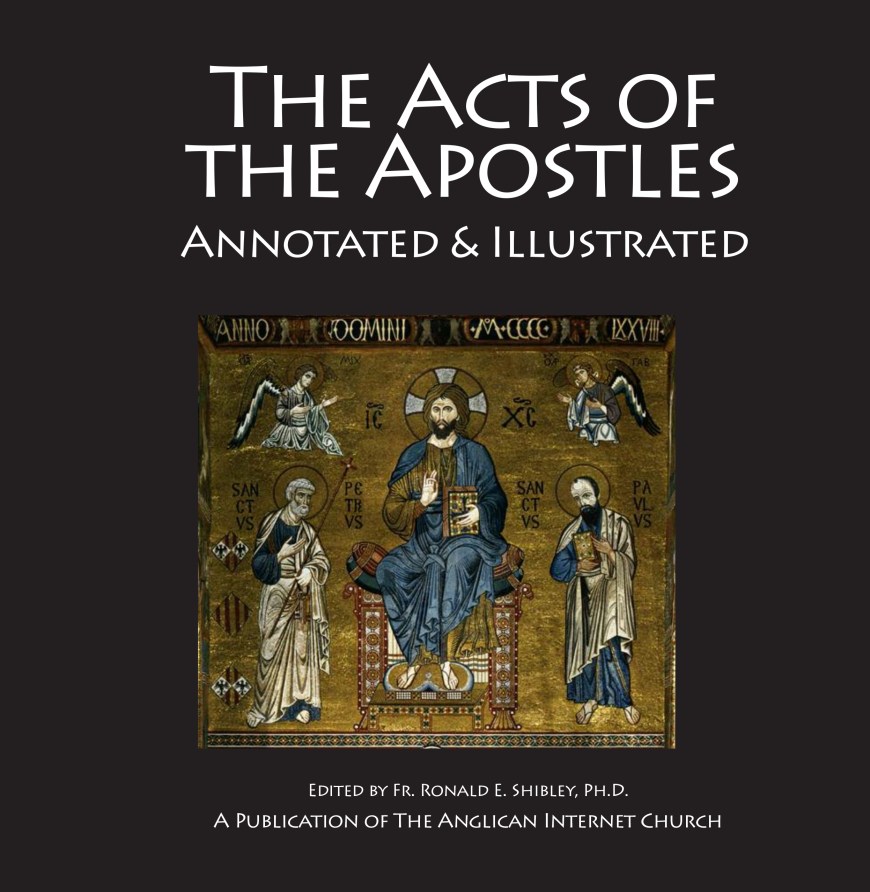
Septuagesima Sunday and AIC Bookstore 13

The Collect, Epistle and Gospel readings for Septuagesima Sunday are discussed and illustrated in Episode One in the AIC Christian Education Video series, Gesima: the Pre-Lenten Season. The episode includes explanations of the name, the possible dates and many of the myths about the literal meaning of each name. The season’s usage, and non-usage, in other Christian traditions, especially the Roman Catholic, is also explained. The audio only version of Episode One is linked from the Podcast Archive page. My Podcast Homily for Septuagesima Sunday is linked from the Podcast Homilies page. A second Podcast Homily for Septuagesima Sunday, this one based on the Psalm reading in Morning Prayer, Psalm 18:21-35, is linked from the Podcast Homilies-Morning Prayer page. The abbreviated name “Gesima,” a short transitional season, is derived from a Latin word meaning day or days. The start of “Gesima” season is moveable, with variations based upon the date of Easter. The earliest possible date is January 18th and the latest possible date is February 22nd. In A.D. 2026 the first Sunday in “Gesima” season is February 1st.

The Collect for the Septuagesima Sunday is a composition from the 1549 Book of Common Prayer by Archbishop Thomas Cranmer, based on the Gregorian Sacramentary (10th C.) and also strongly influenced by the late 8th-early 9th C. Vulgate Bible translation by Alcuin of York. Alcuin of York was spiritual advisor to Holy Roman Emperor Charlemagne and the imperial family, Abbot of the Abbey of St. Martin of Tours, and author of the Collect for Purity in the Anglican Holy Communion liturgy. The complicated relationship between Alcuin and Charlemagne, and the results of their joint effect upon the development and spread of Christianity in Western Europe was the subject of my Blog post for 3/16/2024. The entry is linked from the Archive column (under March 2024) at right.

The Epistle reading, 1 Corinthians 9:24-27, is the 4th of four lessons by St. Paul’s focused on the theme of the Christian Virtues. The concept of “virtue/virtues” in the Christian Tradition and its development in both the Western and Eastern Church is explored in the AIC Bookstore Publication, Layman’s Lexicon, which was featured in the blog post on 10/18/2025 for Seventeenth Sunday after Trinity (linked from the October 2025 entry in the Archive column at right).

The Gospel reading, Matthew 20:1-6, the fourth so far in A.D. 2026 from the Gospel of Matthew, is the Evangelist’s account of the Parable of the Laborers in the Vineyard. The image below is a 16th C. depiction of the event. An 11th C. depiction of the lesson, with color and more detail, from the Codex Aureus of Echternach, was used in my Blog posts for Feb. 18th, 2025 and Jan. 18th, 2019, both linked from the Archives column at right. The Codex Aureus of Echternach version also appears in the AIC Bible Study Video series, The New Testament: Gospels in Episode Six, using a copy from the Yorck Project: 10,000 Masterworks. The Yorck Project offered quite literally 10,000 images from around the world in both the civil and religious world. The project’s several authors released the images in their DVD into the Public Domain.

The Parable of the Laborers in the Vineyard, engraving after a pen and ink drawing, Andrea del Sarto (also known as Andrea d’Agnola), Florentine artist, 16th C. © Coatchristophe|Dreamstime.com.

This week’s AIC Bookstore Publication is The Gospel of Matthew: Annotated & Illustrated, one of five volumes in our Christian Education: New Testament series. The book is one of twelve printed in the large page format (8.5″ x 8.5″). The format allows for larger images from historic Christian art, wider margins and larger type faces for body text. Three other volumes in the large page format were the subject of my Blog posts in 2025 for 11/15, 11/22 and 11/27. All three are linked from the Archives column.

Matthew Writing His Gospel, a miniature illumination in gold and egg tempera on parchment, Pericope Book of Henry II (1007-1012), the last of Ottonian successor to Charlemagne, produced at Reichenau Monastery, Reichenau, Germany, Ms. Clm 4452, Folio 3v., Bayerisches Staatsbibliothek, Munich, Germany. CC-by-SA 4.0.

The book includes the entire text, with commentary, of the Gospel of Matthew, set in the text of the New Kings James Version. There are thirteen “special text boxes,” including The Art of Illumination of Scripture; A Guide to Reading the Gospel of Matthew; The Holy Spirit in the Gospel of Matthew; Angels in the Gospel of Matthew; Parables in the Gospel of Matthew; The Christian Virtues and Their Opposites; and Samara and Samaritans in the Gospel of Matthew. The book’s 117 illustrations are from the 6th through the early 20th C. 278 pages, including full Bibliography, detailed list of Sources of Illustrations and summary information about other AIC Bookstore Publications. $65.oo. The book is available exclusively through our Virtual Bookstore (which is Fr. Ron’s Author Central page on Amazon.com). Portions of the text of St. Matthew’s Nativity, Resurrection and Post-Resurrection narratives also appear in our two Seasonal publications, Christmas: The Nativity of Our Lord in Scripture, Art & Christian Tradition and Easter: the Resurrection of Our Lord in Scripture, Art & Christian Tradition. Both volumes are also printed in the 8.5″ x 8.5″ format.

During January A.D. 2026 I have continued searching historic archives for additional examples of Christian art depicting scenes which are the subject of the Gospel lessons later in the year. I have also been busy updating and sorting our catalogue of nearly 3,000 images, all with their own detailed entries in an Excel spreadsheet. In the spreadsheet they are categorized first by subject. Each entry includes the source, background, whether Public Domain or copyright protected (with author or source indicated), and where each is filed in the AIC’s records. Even more detailed information about each entry is also listed, where available, in seventeen notebooks labelled “Picture Sources.” I am especially grateful to the helpful staff at the British Library for the continued digitization of the Library’s vast collection. The British Library is still recovering from an assault on its resources in 2024 A.D., which resulted in the destruction of or damage to many valuable cross-references, and previously-digitized material. Many resources used in AIC Bookstore Publications are no longer available to the public. Many sources require expensive re-photographing. The AIC remains committed to keeping these valuable resources available, on-demand, in one or more of the WATCH-LISTEN-READ formats and, except for the Bookstore Publications, free of charge.

As always, thank you for your interest and support. Glory be to God for all things! Amen!
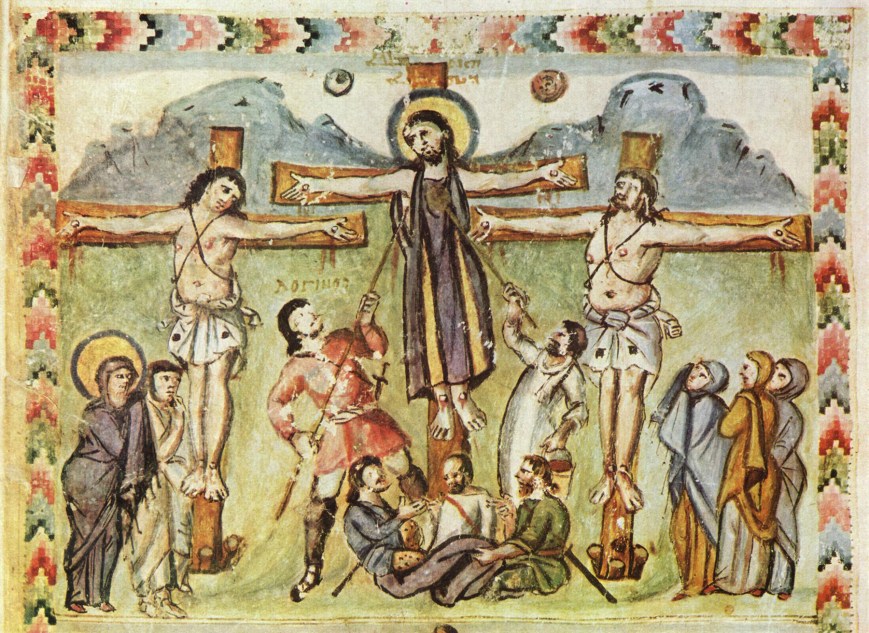
Third Sunday after Epiphany, the Conversion of St. Paul and AIC Bookstore-Part 12

Welcome to my Blog post for Third Sunday after Epiphany, the last of three Sundays following Epiphany Day in A.D. 2026. Sunday, Feb. 1, will mark the beginning of the three “Gesima” Sundays (or Pre-Lent season). The “Gesima” Sundays offer a transition in tone and content before the start of Lent on Sunday, February 22nd.

In A.D. 2026, Sunday, January 25th, is also the appointed fixed day honoring the Conversion of St. Paul, a pivotal event in the history of the Church Universal. Below is a remarkable mosaic depicting the event (left) and its immediate consequences (right), of the blinded St. Paul led away, with Christ in a semi-circle at top right. The Collect for the Conversion of St. Paul refers to Saul/Paul as one who “caused the light of the Gospel to shine throughout the world.” The event and the unique legacy of one of Christianity’s most fervent defenders, is discussed and illustrated in more detail in Episode Five in our Christian Education Video series, The Lives of the Saints, Volume 1 – the 1928 B.C.P. Saints. All sixteen episodes in the series are linked from the Digital Library page. The audio track of Episode Five is linked from the Podcast Archive page.

The Conversion of St. Paul, mosaic, Capella Palatina, Palermo, Sicily, commissioned by the first Norman king of Sicily, Roger II, in 1132 A.D. The mosaics were completed between 1140 and 1170 A.D. Public Domain, World Gallery of Art.

I discuss and illustrate the readings for Third Sunday after Epiphany in Episode Three on our video series, Epiphany: The Manifestation of Christ to the Gentiles. The audio version of the Episode Three is linked from the Podcast Archive page. My Podcast Homily for Epiphany 3 is linked from the Podcast Homilies page. Another Podcast Homily, this one derived from the Psalm readings in Morning Prayer for the day, Psalms 42 and 43, attributed to the Sons of Torah, is linked from the Podcast Homilies-Morning Prayer page. In the Hebrew worship tradition, Psalm 43 was spoken aloud by the priest upon approach to the altar.

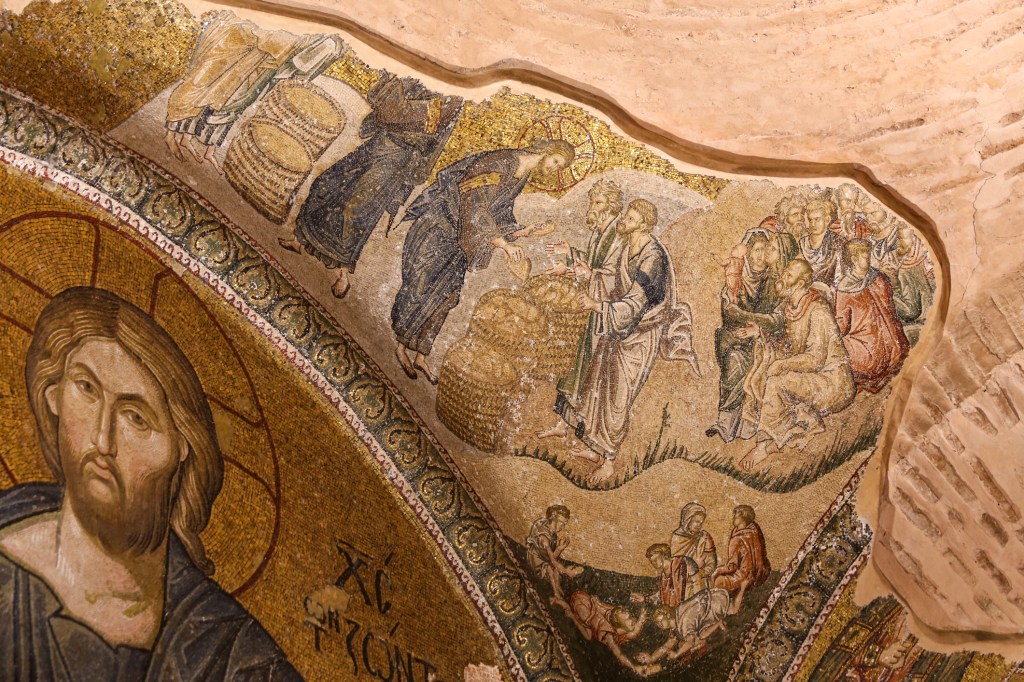
The Miracle at Cana, Byzantine mosaic, Outer Narthex, Chora Church, Constantinople/Istanbul, early 14th C. The image is positioned in a pendentive above the Christ Pantokrator image (visible at lower right) over the door to the passage between the Outer and Inner Narthex. © Evren Kalinbacak|Dreamstime.com

For the occasion, Archbishop Cranmer prepared a Collect based upon the Gelasian Sacramentary in a version strongly influenced by the late 8th-early 9th C. translation of the Vulgate Bible by the Blessed Alcuin of York. Alcuin was the author of the Collect for Purity in the 1928 Book of Common Prayer, spiritual advisor to Holy Roman Emperor Charlemagne and teacher of Christianity to the Emperor’s family, and Abbot of the Abbey of St. Martin of Tours in France. The Epistle reading, Romans 12:16-21 is the third of four teachings of St. Paul on the Christian Virtues. The reading ends with the advice to “overcome evil with good.” The Gospel reading, John 2:1-11, is St. John’s account of the Wedding at Cana, or, in St. John’s words, “the beginning of the miracles did Jesus in Cana of Galilee.”

This important symbolic event is honored in the Galilee by several churches claiming to be on the site of, or near the historic location of, the Wedding, including a Greek Orthodox “Wedding” Church in Kfar Kana, which claims to possess two of the jars used in the wedding. The Greek church features an image of the event over its front door. It is near a similar “Wedding Church” owned by the Franciscans. © Gelia|Dreamstime.com.

This week’s focus among the AIC Bookstore Publications is Fr. Ron’s Kitchen Companion. The book evolved out of several sources over several decades, beginning with the first version (produced in the early 1980s for a former employee off to college and, later, for my daughter in her first apartment at college). It emerged in a greatly-expanded form for use by my former parishioners, most of whom were living on limited incomes. The current edition, the 9th, dates to 2024, when all the Bookstore publications were updated. The books was given a new cover and expanded content as part of the celebration of the start of the AIC’s second decade on the web.

The book’s sub-title, is self-explanatory. Inside the volume is a list of essential seasonings, some easily available, some which must be ordered from Amazon or other vendors. It is what I label as a backwards cookbook, with the recipes, grouped by protein source, organized to help decide what to do with a particular ingredient; examples: Beef: steak? stewed? ground? skewered? The book is worth the purchase price based on just a few key recipes, including my time-tested recipes for Classic Southern Pot Roast, Hawaiian “Mochi” Chicken and Byzantine Eggplant Moussaka. I hope to produce an updated version of the ingredients list and some new recipes later in A.D. 2026. The revised version also would add sources for some of the Hawaiian-sourced seasonings discovered during or after the trip my wife and I took to Maui at mid-year A.D. 2025. The cover image was arranged and photographed by Corinne (Corkie) Shibley.

As always, thank you for your interest and support. Glory be to God for all things.

Plans for A.D. 2026

In addition to continued development and improvement of both features and ease of navigation within this web site, three projects are envisioned for A.D. 2026.

First: A revised edition of our Video Series, The War on Christianity, with the objective of updating references in Episode One to reflect additions to the AIC Bookstore worldwide assaults on Christianity in A.D. 2025 and in Episode Four concerning statistics on Christian populations in all regions of the world.

Second: The development of a new Christian Education Video series derived from our Bookstore Publication: The Beliefs of the Anglican Church and the slide show of the same name which I developed and used at my former parish as preparation for Confirmation of new members. The project reflects our continued commitment to the WATCH/LISTEN/READ initiative developed and applied beginning in A.D. 2022.

Third: Expansion of our image archive of historic Christian art from around the world. We now own over 3,000 images from the 3rd through the 21st C., including icons, mosaics, frescos, paintings, watercolors, stained glass windows, altarpieces and illuminations from both the Western and Eastern Church traditions. These newly-acquired images will used in connection in Fr. Ron’s Blog postings during this calendar year. About fifty such images were downloaded in November and December, A.D. 2025 and so far in January A.D. 2026.

Fourth: Revised edition of Fr. Ron’s Kitchen Companion with revisions to A Primer on Herbs, Spices & Other Special Ingredients plus some new recipes and slight changes to existing recipes, plus, of necessity, a revised Guide to Sources. This one may be fairly late in the year, but if we get snowed-in during late Winter this would be a good project.

As always, thank you for your interest and support. Glory be to God for all things! Amen!
Second Sunday after Epiphany and AIC Bookstore, Part 11

Welcome to the second of three posts for the Sundays after Epiphany in A.D. 2026.

The Collect (Gregorian), Epistle (Romans 12:1-6) and Gospel (Mark 1:1-11) readings for Second Sunday after Epiphany are discussed and illustrated in Episode Three in the AIC Seasonal Video series, Epiphany: The Manifestation of Christ to the Gentiles. The audio version of Episode Three is linked from the Podcast Archive page. My Podcast Homily for Second Sunday after Epiphany is available on the Podcast Homilies page. My Morning Prayer Podcast Homily for Second Sunday after Epiphany, with commentary and reading of Psalms 22 and 29, is linked from the Podcast Homilies-Morning Prayer page.

The Collect for Second Sunday after Epiphany, another composition by Archbishop Cranmer based upon the Gregorian Sacramentary, includes a plea to Almighty God to hear “the supplications of thy faithful people.” The Epistle reading, Romans 12:6-12, is the second of a sequence of four readings from Romans on St. Paul’s understanding of the Christian virtues during Epiphany season.

Baptism of Christ, fresco, Chiesa di San Agostino, Milan, Italy. The fresco is a 20th C. reproduction of the original mosaic which was destroyed by bombing during World War II. © Jozef Sedmak | Dreamtime.com.

The Gospel reading, Mark 1:1-11, is St. Mark’s account of the baptism of Christ, presented in the context of the fulfillment of Old Testament prophecy (verse 3) and the importance of John the Baptist, the last prophet of the Old Testament, as the “forerunner,” appropriately placed at the start of Jesus’ earthly ministry.

Baptism of Christ, marble bas relief, Benedetto da Maiano, San Zeno Cathedral, Pistoia, Tuscany, Italy. © Jozef Sedmak | Dreamtime.com

Sr. Mark describes the simultaneous presence of all three divine persons of the Holy Trinity: the Father, the Son and the Holy Spirit (the latter as the dove who speaks (verses 10-12). The same verses are pictured in Illus. No. 24 of a stained glass window by Franz Mayer of Munich in the AIC Bookstore Publication, Paintings on Light: The Stained Glass Windows of St. Joseph’s Villa Chapel, discussed in the post for First Sunday after Epiphany (1/5/26), linked from the Archive column at right.

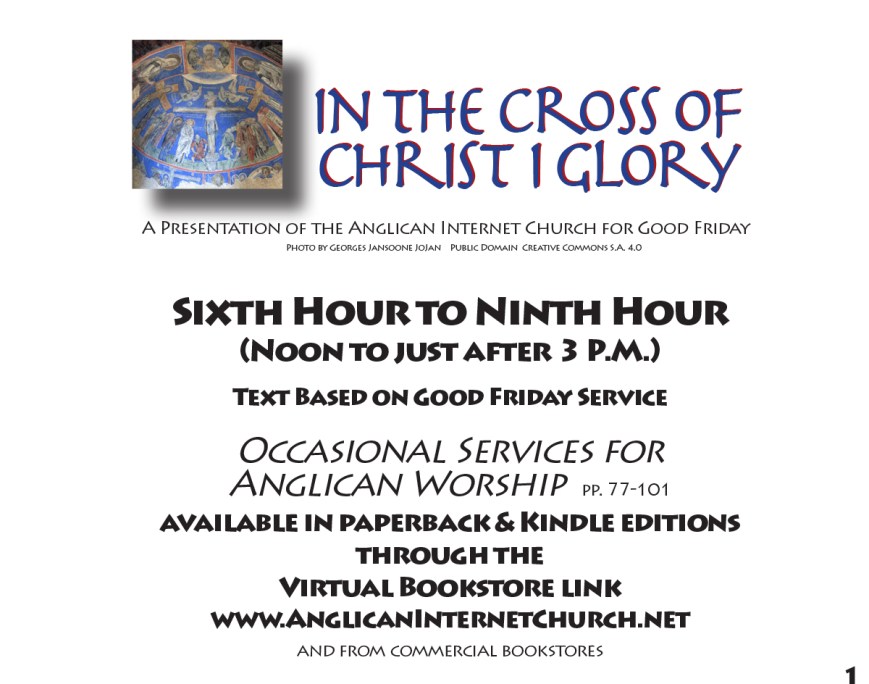
The focus of this week’s installment of my commentary on the AIC Bookstore Publications is Occasional Services for Anglican Worship. Presented in 198 pages in our 5.5″ x 8.5″ black & white format. The volume includes the text of offices not provided for in the 1928 Book of Common Prayer. The include a) Holy Communion in the style of the 1549 Book of Common Prayer, a text I produced at the request of former UECNA Archbishop Stephen C. Reber, at whose direction a text of the Decalogue, harmonization of the offertory text with the 1928 Book of Common Prayer version and two additional Propers were included; b) a Christmas Eve suite in three parts: the Great “O” Antiphons for Dec. 12 to Dec. 24; Midnight Mass for Christmas Eve/Christmas Day with parts of Evening Prayer, and a Midnight Office for Christmas Eve, commonly known as Visits to the Crib; c) Holy Communion for Maundy Thursday using my 1549 version; d) In the Cross of Christ I Glory, prayers and responses for Good Friday, with each section based on the Seven Words from the Cross, 1940 Hymnal & St. Chrysostom Hymnal; e) Easter Morning Office, a Sunrise service for use either outside or inside at dawn on Easter Sunday; f) Ascension Day Office, including music for A Hymn of Glory Let Us Sing; g) Holy Communion for Transfiguration Day, using the 1549 BCP); h) Hours Offices for First Hour, Sixth Hour & Compline; i) A Litany for Healing; and, finally, j) an Advent Wreath Ceremony, a four-part verse and response originally composed by the late UECNA Archdeacon George McClellan.

The cover image (see above) is a detail of the stained glass window for the Annunciation to the Blessed Virgin Mary at St. Joseph’s Villa Chapel. The full image is Illustration No. 54 in the AIC Bookstore Publication, Paintings on Light: the Stained Glass Windows of St. Joseph’s Villa Chapel. The book was featured in my Blog post for 1/9/26, which is linked from the Archive column at right.

This week, as part of the continuing effort to make this site easier to navigate using the built-in links at the top and bottom of all pages, I have made some corrections. These are: a) fixing broken links on the Podcast Archive and Bible Study pages; b) editorial changes to line spacing and other technical details on the Digital Library and Podcast Archive pages; c) adding the cover image and summary text for Christian Spirituality: An Anglican Perspective (highlighted in my 12/5/25 blog post),which was missing from the AIC Bookstore page. We aim to provide access to teaching and learning materials in all three forms: watch/listen/read.

As always, thank you for your interest and support. Glory be to God for all things.

First Sunday after Epiphany & AIC Bookstore, Part 10

First Sunday after Epiphany, the first of three Sundays after Epiphany in A.D. 2026, is celebrated this year on January 11th. I discuss the Collect and the Epistle and Gospel readings in Episode Two in our Seasonal Video series, Epiphany: The Manifestation of Christ to the Gentiles. The audio version of Episode Two is linked from the Podcast Archive page. There are two podcast homilies for First Sunday after Epiphany. The first Podcast Homily is based on the Holy Communion readings. The second, my Podcast Homily for Morning Prayer, is based on Psalm 72. The video version includes an image related to Psalm 72 from the Stuttgart Psalter, as it was used in the AIC Bookstore Publication, The Prayer Book Psalter: Picture Book Edition (see more below).

The Collect for First Sunday after Epiphany is a composition by Archbishop Cranmer based upon the Gregorian Sacramentary on the theme of mankind’s dependence upon God for His Grace and how it can and should be applied in the daily life of a Christian. The Epistle reading, Romans 12:1-5, is the first of a sequence of four readings from Romans during Epiphany season in the 1928 Book of Common Prayer. The subject is Paul’s observations on the Church as “one body in Christ.” As noted earlier, only three of these will be read in A.D. 2026.

Finding in the Temple, 19th C. stained glass window, Werchter, Belgium. Copyright Jorisvo | Dreamtime.com.

The Gospel lesson, Luke 2:41-51, is St. Luke’s unique account of the childhood of Christ, when at age 12 he encounters and teaches the leadership of the Temple in Jerusalem. Another stained glass window depicting this event, designed and made by Franz Mayer of Munich, is Window No. 57, St. Joseph’s Villa Chapel, Richmond, VA.

This gives me an opportunity to resume promotion of the AIC Bookstore Publications which was interrupted in mid-December of last year. One of ten books in our unique large page format, Paintings on Light: the Stained Glass Windows of St. Joseph’s Villa Chapel, is available exclusively at our Virtual Bookstore, which is accessible through my Amazon Author Central page. All book royalties are donated to the AIC. The image of Window 57, Teaching the Doctors in the Temple, was used in my Blog Post for First Sunday after Epiphany, 1/9/2015. The post is linked from the Jan. 2015 entry in the Archive column at right.

Paintings on Light: the Stained Glass Windows of St. Joseph’s Villa Chapel, printed in our square large page (8.5″ x 8.5″) format, offers high-resolution images of all 46 stained glass windows by Franz Mayer of Munich, the three Sanctuary murals and the 14 Stations of the Cross, as well as the story of the restoration of the Chapel by myself and my former parishioners at St. John Chrysostom Anglican Church (now closed), which worshipped at the Chapel. Summary: Details: 84 pages, including Bibliography, General Index and Scriptural cross-reference.

NOTE: Just for readers/viewers who like knowing small details, here are some statistics not included in the Blog post for Epiphany (Day & Season, linked from the Archive column at right): In Epiphany season, there are five readings from the Gospel of Matthew and one each from the Gospel of Mark and Gospel of John. There are five Collects derived from the Gregorian Sacramentary, one from the Gelasian Sacramentary and one original composition by Bishop John Cosin, added for the 1662 Book of Common Prayer.

As always, thank you for your interest and support, which makes possible the maintenance of our unique collection of videos, podcasts and books and making them available 24/7 on demand, and the continued search for royalty-free images of Christian art across the centuries. Over four dozen additional images were acquired in December 2025 and in this first week of A.D. 2026. Many of these images will be used in Blog posts in the first half of this year.

Glory be to God for all things! Amen!
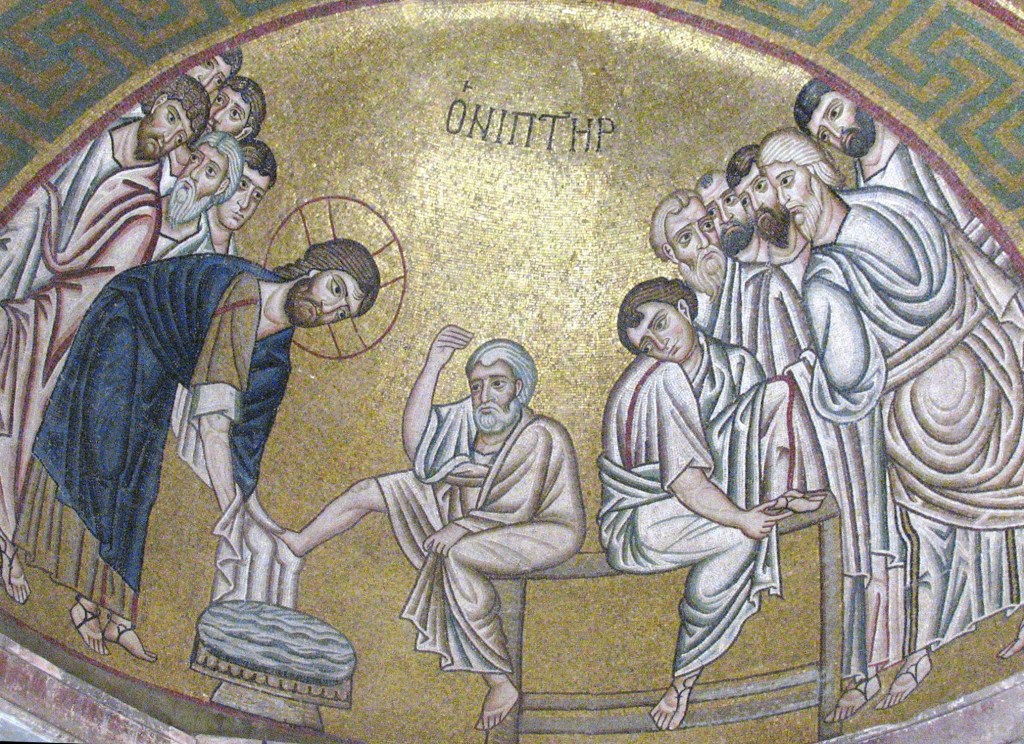
Second Sunday after Christmas & Epiphany

Second Sunday after Christmas is only celebrated when Jan. 2, 3, 4 or 5 happen on a Sunday. A.D. 2026 is one of those years. aThe Collect for the day was written by Archbishop Cranmer based on the 2nd Collect for Christmas Day in the Gregorian Sacramentary, a 10th C. tribute to one of the great Roman Catholic popes. The “for the Epistle” reading is Isaiah 61:1-3, which Jesus quotes in Luke 4:18, 19 in reference to the “Spirit of the Lord.” The Gospel lesson. Matthew 2:19-23, St. Matthew’s record of the Holy Family’s Flight to Egypt and Return, both of which were the result to a dream of Joseph. Jan. 4th is also the Eleventh Day of Christmas in the AIC video series, The Twelve Days of Christmas.

Joseph Dreaming/Holy Family Returns, Byzantine mosaic, Outer Narthex, Chora Church, Constantinople, now Istanbul, 14th C. Copyright Bapaume | Dreamtime.com

Epiphany season, one of the fixed feasts on the Anglican Church Calendar, officially begins on Jan. 6th. In A.D. 2026, Epiphany falls on a Tuesday. The name for the season is derived from the Greek word Epiphaneia, which means to manifest, or, more poetically, to “shine forth.” For the first Anglican Book of Common Prayer, published in 1549 A.D., Archbishop Thomas Cranmer wrote a new Collect for Epiphany (day). It was derived from the 10th C. version of the Gregorian Sacramentary. Epiphany was once known as “Little Christmas,” probably because Epiphany Eve (Jan. 5th) marks the end of the Christmas season. In the AIC’s video presentation for Christmas, The Twelve Days of Christmas, I use a graphic to present Christmas Day and Epiphany (Day) as “bookends.”

Epiphany and all the Sundays after Epiphany are each concerned with an example of the “manifestation” of Christ to the Gentile world. I discuss and illustrate the complex history of the season and also the readings for Epiphany Day in Episode One in our video series, Epiphany: The Manifestation of Christ to the Gentiles. The Sundays after Epiphany, which can be as many as six and as few as one, are discussed in Episode Two and Episode Three in the same series. In A.D. 2026, there are only three Sundays after Epiphany. The podcast audio version of Episode One is available on the Podcast Archive page. My Podcast Homily for Epiphany (the Day) is linked from the Podcast Homilies page. You can also listen to the Podcast Homily for Morning Prayer, based on the Psalm readings for Epiphany (day), Psalm 46 and Psalm 100, hosted on the Podcast Homilies-Morning Prayer page. The three Sundays after Epiphany will be the subject of the next three blog posts.

Massacre of the Innocents, Byzantine mosaic, south wall, Outer Narthex, Chora Church, Constantinople, now Istanbul, Turkey, early 14th C. The scene above the arch is a portion of Christ Healing a Paralytic Man at Capernaum (Matthew 9:1-8) Copyright Evren Kalinbacak | Dreamstime.com.

The Epistle reading for Epiphany (day) is Ephesians 3:1-12, St. Paul’s essay on the “mystery” of the Christ who is revealed to the world. The Gospel reading, Matthew 2:1-12, is Matthew’s account of the Visit of the Wise Men. In our video series, The Twelve Days of Christmas, the episode for Fourth Day of Christmas, Dec. 28th, with the theme word “Compassion,” highlights the Murder of the Holy Innocents, Herod’s violent reaction to the news of the possible birth of a Saviour.

The actual visit of the Wise Men, or Magi, is depicted in another late-Byzantine mosaic, also in the Outer Narthex (or exonarthex), in this case at the rear of the Outer Narthex above the opening into the Church’s Parakklesion, effectively a funeral chapel. For more views of these and other Byzantine mosaics and frescoes illustrating hundreds of Scriptural scenes at Chora, visit the Chora Church web site. Another site with nearly a hundred images is available at https://thebyzantinelegacy.com. Yet another is https://www.360tr.com, which offers “virtual” tours you can manipulate. For the 3-D tour, it may take a little practice manipulating the view (forward, sideways, upward), but you will find the effort worthwhile as you move, in the virtual sense, through the Outer Narthex, the Inner Narthex (or Esonarthex), the Naos (the equivalent of the modern Nave and Altar) and the Parakklesion (with its spectacular representation of The Harrowing of Hades (or Anastasis). While at the site be sure to direct the pointer to look upward into the large Christ Pantokrator dome (#8) and the smaller Blessed Virgin dome (#9) in the Inner Narthex and the Church’s third dome in the righthand portion of the Outer Narthex.

The Return of the Magi, with the three Wise Men before the Blessed Virgin Mary (in blue robe, center), Outer Narthex, Chora Church, 14th C. Copyright Evren Kalinbacak | Dreamstime.com

In future posts in A.D. 2026, I will insert additional images from Chora Church in which the Gospel reading is illustrated.

As always, thank you for your interest and support. Glory be to God for all things! Amen!
First Sunday after Christmas & Feast of the Holy Innocents

The First Dream of Joseph, stained glass window, 19th C., Basilica of St. Clotilde, Paris, France. Copyright Zatletic|Dreamstime.com

In A.D. 2025, the First Sunday after Christmas falls on the same day at the observance of the Feast of the Holy Innocents, Dec. 28th. The Collect for the day is the same as the First Collect appointed for Christmas Day, a composition by Archbishop Thomas Cranmer for the 1549 Book of Common Prayer based on John 1:9 and 1 John 1:5. The Gospel lesson, Matthew 1:18-25, is St. Matthew’s account of the first dream of Joseph, for this post illustrated by a 19th C. stained glass window in Paris, France. Another interpretation in a different artistic medium, a fresco at St. Martin’s Chapel, Brezenza, Austria is Illustration No. 23 the AIC Bookstore Publication, The Gospel of Matthew: Annotated & Illustrated, available through my Amazon Author Central page, with author royalties donated to the AIC online ministry.

My Podcast Homily for First Sunday after Christmas is available on the Podcast Homilies page. First Sunday after Christmas is also discussed in Episode Two of the AIC Christian Education Video series, Christmas: The Nativity of Our Lord. The audio version of Episode Two is linked from the Podcast Archive page. The Feast of the Holy Innocents is discussed and illustrated on the Fourth Day of Christmas in our video series, The Twelve Days of Christmas with the key word for the day being COMPASSION. All the other episodes in the series, covering the days from Dec. 25th to Jan. 5th, are linked from the Digital Library page.

I have been busy searching my image sources for historic Christian art to be used in the first half of A.D. 2026. I’ve added almost a hundred images. I will be loading the Epiphany graphics and appropriate links to the Welcome page during the Week of 1/5. As always, thank you for your interest and support. Glory be to God for all things! Amen!
Christmas Eve, Christmas Day & The Twelve Days of Christmas

Several years ago my wife and I encountered all manner of problems trying to watch a live broadcast of a Christman Eve concert in Cambridge, England. The unreliability of the connection led me to create our own video, Lessons & Carols for Christmas Eve. I linked it from what was then our new web site at WordPress.com. It remains available, on demand, all year long from the Digital Library page, for the video version and the Podcast Homilies page for the audio-only version.

lessonscarols-title-clear

December 24th

My Podcast Homily for Christmas Day is linked from the Podcast Homilies page. Additionally, commentary and illustrations for Christmas Day are included in the first episode of our Seasonal Video series, Christmas: The Nativity of Our Lord. Access it using the links below.

Episode One
Episode Two

Another unique seasonal resource, this time from the AIC Bookstore, Christmas: The Nativity of Our Lord in Scripture, Art & Christian Tradition, is available through my Amazon Author Central page. I commented upon the book and included a copy of the cover in my Blog post for Trinity 22, posted on November 15, 2025. The post is linked from the Archive column under the November 2025 heading.

Yet another unique AIC online resource is The Twelve Days of Christmas, featuring readings, music and images with key words for each of the twelve days from Christmas Day to Epiphany Eve. Note, please, that the series bears absolutely no relationship whatsoever to the famous seasonal song of the same name. The series is focused on important theological words and concepts associated with important events in the life of the Church. It is illustrated with examples of Christian art from the 6th, 10th, 11th, 12th, 13th, 14th, 15th, 16th, 17th, 18th, 19th, 20th and 21st centuries from both the Western and Eastern Church traditions. These include mosaics, frescoes, icons, oil paintings, etchings, engravings, parchment friezes, watercolors and photographs, plus one enamel medallion from the Basilica of St. Mark, Venice, Italy.

Fresco, unidentified cave church, Cappodocia region, Turkey, 12th C. Public Domain.
TwelveDays-Master Slides-2015.indd

First Day – December 25th – Love
Second Day – December 26th – Forgiveness
Third Day – December 27th – Peace
Fourth Day – December 28th – Compassion
Fifth Day – December 29th – Obedience
Sixth Day – December 30th – Joy
Seventh Day – December 31st – Family
Eighth Day – January 1st – Church
Ninth Day – January 2nd – Angels
Tenth Day – January 3rd – Commandments
Eleventh Day – January 4th – Glorifying God
Twelfth Day – January 5th – Grace and Faith

As always, thank you for your continued interest and support. Glory be to God for all things! Amen!
Site Updates & Seasonal Series

This week I have made a number of changes to this site with the objective of simplifying the appearance and ease of use. I invite you to use our seasonal resources for Advent & Christmas using the Digital Library and Bible Study pages (videos); the Podcast Archive/Podcast Homilies/Podcast Homilies-Morning Prayer (audio files). Don’t miss the Great “O” Antiphons and Lessons & Carols for Christmas Eve between now and Christmas Eve.

Fourth Sunday in Advent & the Great “O” Antiphons

The final week of Advent approaches and with it the opportunity to write about another great tradition in the Western Church: the Great “O” Antiphons. These daily prayers and songs date to about the 12th C. and are traditionally credited to Christian followers of St. Francis of Assisi. During the same time period, we offer a special program for Christmas Eve and another for the period from Christmas Day through Epiphany Eve. More, including links to these unique programs, after some comments about Fourth Sunday in Advent. I invite you to share these links with friends and family. Because of the calendar overlap of Advent and Christmas seasons, all the presented in this post for the final Sunday in Advent. Related material for Christmas Day will be posting

My Podcast Homily for Fourth Sunday in Advent on the theme of “The First Gift of Christmas,” was posted on 12/20/24. In Episode Two of the AIC Seasonal Video series, Advent: a Season of Penitence & Preparation, I discuss Archbishop Cranmer’s 1549 Collect, its origin in the Sarum version of the Gelasian Sacramentary, and the additional wording concerning running the race (itself inspired by Hebrew 12:1b) which was added for the 1662 Book of Common Prayer. I also discussed the Epistle reading, Philippians 4:4-7 (“the Lord is at hand”) and the Gospel lesson, John 1:19-28, concerning inquires and questions posed to John the Baptist.

The post included an image from the AIC Bookstore Publication, The Gospel of John Annotated & Illustrated, of John the Baptist baptizing a man in wooden tub (Ms. Additional 42497, British Library). The volume, with 95 illustrations from the 6th through the 19th C, is available only through my Amazon Author Central page. Additional information is available on the AIC Bookstore page. Royalties from all the AIC Bookstore Publications are contributed to the AIC. A related Podcast Homily for Fourth Sunday in Advent, based on the assigned Morning Prayer readings for that day in the 1928 Book of Common Prayer, is also available for those who prefer listening to hearing this kind of material.

O-Antiphons-Title1-small.jpg

This series includes music, historic Christian art and Scripture readings based on a 12th C. service in northern Italy in celebration of the seven days before Christmas. Each day is focused on a theme word in Latin. The daily titles, in date order, are titles/descriptors of our Saviour Jesus Christ: Wisdom, Lord, Root of Jesse, Key of David, Dayspring, King of Nations, God with us. They have been incorporated into Christian worship for Advent in many denominations. This video series, which celebrated the start of the AIC’s second decade on the web, seeks to make them more broadly available and accessible on demand, 24/7, virtually anywhere in the world. The audio-only versions, in portable MP3 format, are available through the episode links on the Podcast Archive page.

December 18th – O Sapientia
December 19th – O Adonai
December 20th – O Radix Jesse
December 21st – O Clavis David
December 22nd – O Oriens
December 23rd – O Rex Gentium
December 24th – O Emmanuel

Another AIC seasonal resource is our feature video for Christmas Eve, based upon the traditional English model. It was created as a resource for those unable to access coverage of live events, most typically at King’s College, Cambridge, England, on Christmas Eve. While it is labelled “December 24th, it can be accessed at any time, year round.

lessonscarols-title-clear

December 24th

There will be another Blog post on December 23rd which will contain information and links to videos and podcasts for Christmas Day and for each of the Twelve Days of Christmas, which begin on December 25th and end on Epiphany Eve, January 5th.

As always, thank you for your continued interest in and support for the Anglican Internet Church’s online ministry and digital resources. Glory be to God for all things! Amen!