First Sunday in Lent – Temptations of Christ

Today is Ash Wednesday and I took advantage of being snowed in to record the Podcast Homily for First Sunday in Lent.  Listen to the Podcast Homily

Temptation of Christ by Vasily Surikov, St. Petersburg, Russia, 1872.

The Readings are another of St. Paul’s homilies on Christian Virtue (2 Corinthians 6:1-10), this one directed toward Apostles of his time and of ours and St. Matthew’s account of the Three Temptations of Christ (Matthew 4:1-11).  Of course, in the modern Church there are many reformist scholars who argue that no such events took place, that Matthew made them up to suit his narrative.  Those of us who recognize the philosophical duality on which Christian Spirituality is based (The Reality of Evil in the World | Christian Truth as the Only Antidote) have to problem accepting Matthew’s account.  It is only by accepting the duality that a Christian can be equipped to defend himself or herself against the “wiles and assaults of the devil” and the evil he cultivates in the world in the ongoing War on Christianity.  If you search the Web, you will find several of the art works shown below listed until the category of

For you Blog readers, I thought to provide three art works, each of which I used in the Bible Study episode on St. Luke’s version of the same events (Episode Sixteen), with more commentary about the work and the artist than was used there.    For the offering of bread to assuage Jesus’ hunger after his 40 days of fasting, I offer the dark, foreboding interpretation by Russian artist Vasily Surikov, which now hangs in a gallery at St. Petersburg, Russia.  Surikov, considered the greatest 19th century Russian painter of historical scenes, attended the Imperial Academy of Arts at St. Petersburg from 1869 to 1871.   He died at Moscow in 1916.

Russian Orthodox Icon, part of a panel of scenes depicting the Temptation.  Painted circa 1652.
Russian Orthodox Icon, part of a panel of scenes depicting the Temptation. Painted circa 1652.

For St. Matthew’s version is this Scriptural quotation in NKJV text:  “And the Devil said to Him: ‘If you are the Son of God, command that these stones to become bread.’  But He answered him and said, ‘It is written, “Man shall not live by bread alone, but by every word that proceeds from the mouth of God.””  The quotation is from Deuteronomy 8:3.

For Christians, we understand that the “daily bread” for which we petition in the Lord’s Prayer means those things which are essential for our survival, including access to the word of God (both literally, as Scripture, and spiritually, as St. John wrote, through faith in the Word of God, Jesus Christ.

The second Temptation finds Jesus taken by Satan to the roof of the Temple.  Satan offers a parody of Psalm 91:11, 12, the source of both Jewish and Christian belief in the Guardian Angel.  If, he says, Jesus will just throw Himself off the roof, He will be protected by angels:  “He shall give His angels charge over you…In their hands they will bear you up, lest you dash your foot against a stone.”    Jesus replied, again citing a verse from Deuteronomy (6:16):  It is written, ‘You shall not tempt the Lord your God.”   Those who believe in the Guardian Angel understand that while we believe in his power to protect, we cannot and must not ever place ourselves in danger, effectively taunting God, through the Guardian Angel, to protect us from our own folly.

The Temptation on the Mountain, egg tempera and gold leaf on panel, Duccio Buoninsegna, 1308-1311.

The third Temptation shows us clearly the strategy that has been followed by Satan (from the Hebrew ha-satan, meaning the Adversary or the Enemy).    In this second Temptation Jesus, on a mountain with a view of Jerusalem, symbolic of the whole world, is offered all He sees if He will but worship Satan instead of God the Father.  Jesus’ defiant answer, based on Deuteronomy 6:13, offers instruction in the doctrine that Satan/The Devil is a created being, made by God and subservient to His will and word:   “Away with you Satan!  For it is written, “You shall worship the Lord your God, and Him only shall you serve.”

The illlustration is a very fine Eastern/Byzantine style painting done in egg tempera with gold leaf on a wooden panel.  Duccio is known as one of the finest painters of the Siena school.  He was trained by masters at Constantinople, the seat of the Byzantine Empire.  Duccio was among the last artists in the Western Church tradition to paint such scenes in the Eastern/Byzantine style.  The figure of Jesus wears the same red garment with blue robe that was used in Duccio’s painting of the Raising of Lazarus.  The craggy, grey mountains and the splayed feet of the figures are typical of the Byzantine style, prevalent before it was supplanted in the West by a more anatomically-correct representation of the human form.  The Eastern style still offers a sense of spirituality not present in the modern Western styles.

I hope that if you cannot attend an Ash Wednesday service, you take the opportunity to listen to the commentary on the Collect for Ash Wednesday found in the first minute of the Podcast Homily.  Here in Richmond, most Ash Wednesday services have been cancelled owing to the snowfall and the expectation of more to come this evening.

Thanks for your interest and your support for the Anglican Internet Church online ministry.

Episode 38 (NT-Gospels and Epistles) and Quinquagesima Sunday

Greetings.  For the week before Quinquagesima Sunday, I have released both a Podcast Homily for Quinguagesima Sunday and another episode in the AIC Bible Study series New Testament:  Gospels and Epistles.

Launcelot_Andrews_(1555-1626),_English_School_circa_1660
Lancelot Andrews (1555-1626). Artist unknown. English school, circa 1660.

Quinquagesima Sunday is the third and final Sunday in the pre-Lenten season and it hardly seems possible that Ash Wednesday is next week!  The Podcast Homily is primarily focused on the Epistle and Gospel readings for the day, but I also mention the last verse of the reading for First Lesson for Morning Prayer, Deuteronomy 11:1 because it sheds light on St. Paul’s emphasis on Love as a primary virtue (Charity in the King James and Prayer Book readings, but Love (agape) in nearly all other translations.  The Gospel lesson includes Jesus’ prophecies of His own persecution, death and Resurrection as well as St. Luke’s account of the healing of the blind man (identified as Bartimaeus in St. Mark’s account).  I sought to add some context to Jesus’ reference to Prophets by including a lengthy reading from Isaiah and Psalm 22.   For admirers of the writings the great Anglican teacher and scholar, Lancelot Andrewes, I close with both the Collect for the Day and a long quotation from a Confession of Faith from the Private Writings of Lancelot Andrewes (using the late 19th Century translation now in the public domain),  I don’t think Anglicans today give enough credit to the contribution Andrewes made to our understanding of the teachings of the Eastern Church.   Listen to the Podcast Homily.

In Episode 38 of the Bible Study series the focus remains on the five unique “signs” in the Gospel of St. John.   I finish my discussion of the dialogue that follows the Healing of the Blind Man and close with a discussion of the last of the five, the

Raising of Lazarus by Duccio Buoinsegna of Sienna. Public Domain. Kimbell Art Museum, Ft. Worth, Texas.
Raising of Lazarus by Duccio Buoninsegna of Sienna. Public Domain. Kimbell Art Museum, Ft. Worth, Texas.

Raising of Lazarus.   I was lucky to find a 14th Century illustration of the event by Duccio Buoninsegna of Siena, Italy.  Duccio’s learned his art from a teaching in Constantinople and largely follows the Eastern style, depicting Lazurus arising from a cave and providing a background of stylized, craggy mountains, with the figures displayed with splayed feet.  Yet his choice of colors for the robes of Jesus are in a shade of red and blue that would become popular in the Western Church after the Renaissance.  His version is, I think, much more accurate than the far more familiar version by Peter Paul Rubens, which shows Lazarus rising from a grave in the ground (in the Western manner).

The Raising of Lazarus, while not the only example of the raising of one thought to be dead (ie, the son of the widow of Nain and the Daughter of Jairus) the event St. John reports is the only example of a revival of a person not only dead but actually buried for four days.  Take note that the man standing closest to the tomb appears to be holding his nose, indicating skepticism that there would be no stench of death.   Watch the video of Episode 38 via our You Tube channel.

I hope to complete the series on the Gospel of St. John during February and early March so that I can turn my attention to finishing the new series on the book of Revelation:  Revelation: an Idealist Interpretation, in which I discuss Revelation verse-by-verse.

Epiphany Four, Five and Six

The Anglican Internet Church is committed to producing Podcast Homilies for all the Sundays in the 1928 Book of Common Prayer.  This year, Easter is early and there will be no services for Epiphany 4, 5 & 6.  I think the readings for these three Sundays are too important to ignore and so have provided Podcast Homilies for all three.  Each offers traditional, theologically-sound and spiritual-minded explanations of the Epistle and Gospel readings anyway.   Visit the Podcast Homilies page

Healing-the-Leper2For the Fourth Sunday After Epiphany, the Epistle reading is Romans 13:1-7, which is a morality and responsibity homily by St. Paul, explaining the source of all governmental authority (God) and the responsibilities of both ruler and ruled to do good and shun evil.  The content of St. Paul’s homily influenced the Prayer for All in Civil Authority found in the Morning Prayer office in the 1928 B.C.P.   The Gospel reading for the day is St. Matthew’s account of the Healing of the Leper and the Healing of the Centurion’s servant.  I am very fond of the illustration of the healing of the leper that was included in Canon Farrar’s The Life of Christ, published in 1894.   In the homily I explore the Old Testament requirements for healing of lepers and why Jesus’ action upset the Pharisees and also quote from St. Cyril of Alexandria on the meaning of the text.   There are two closing prayers, one by St. Augustine of Hippo on the light coming into the world and the Collect for Epiphany 4.

Wheat-and-Tares-1900picFor the Fifth Sunday After Epiphany, the Epistle reading is another selection from the canon of St. Paul, Colossians 3:12-17, a lesson on Christian virtues and the value of forgiveness.  I discuss St. Paul’s influence on the creation of the list of Christian Virtues according to the Eastern Church and Western Church understanding, using the work of St. John Climacus (Ladder of Divine Ascent) and the Gregorian Sacramentary from the Roman Catholic tradition, explaining the primary virtues, cardinal sins, and contrary virtures.   The Gospel reading is Matthew 13:24-30, the Parable of the Wheat and the Tares.  Since the last three Sundays after Epiphany all focus on aspects of Jesus’ coming again to be our judge, the parable of the Wheat and the Tares offers a quite clear lesson on the fate of those who live by the law of God and those who live by the guidance of Satan.  The illustration is a circa 1900 photograph of harvesting in the Holy Land in which the workers are dealing with the wheat and tares.  Some will be gathered and burned.  Some will be taken into the master’s barn.

Copyright Can Stock Photo, Inc./tupungato

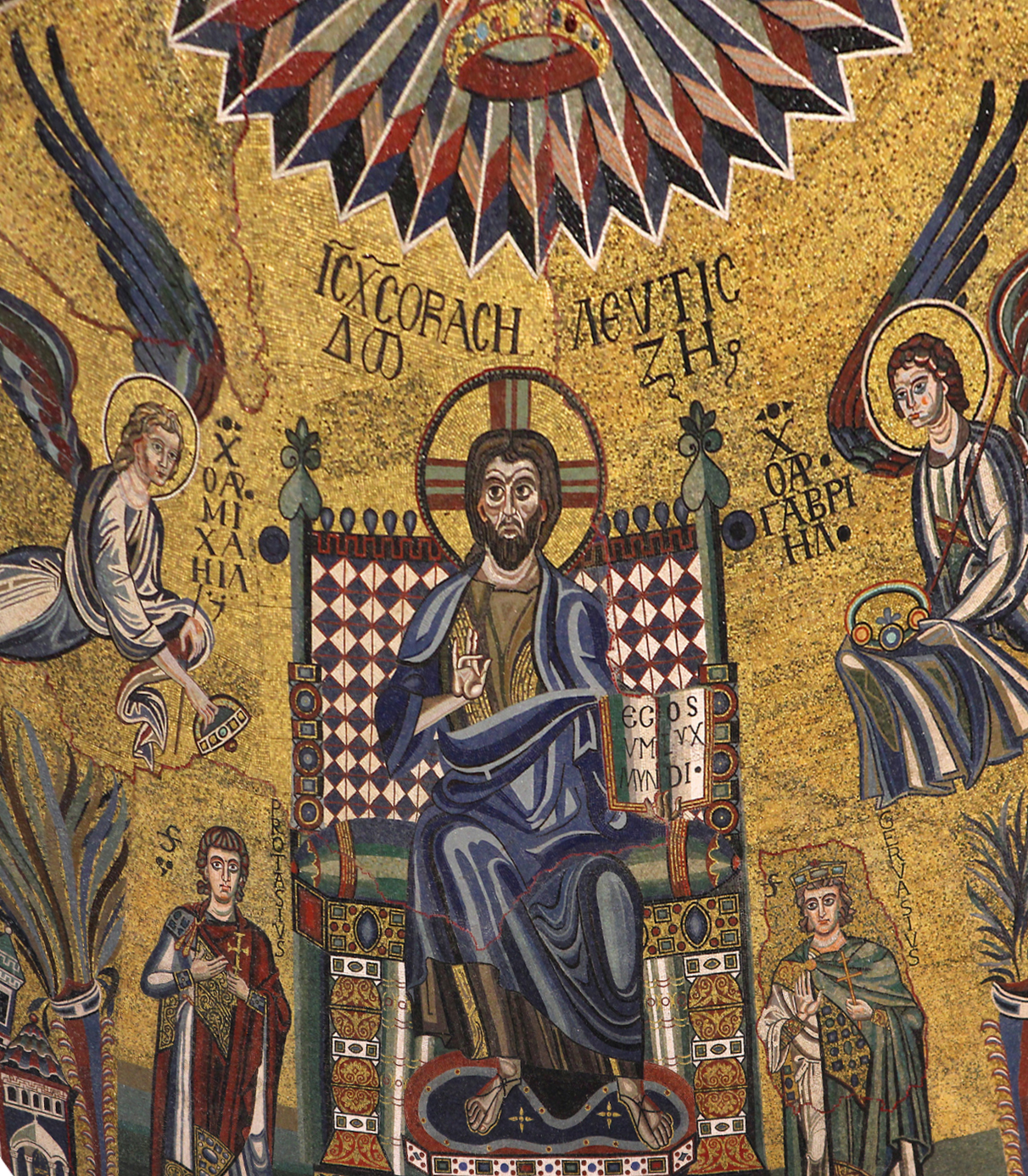
For the Sixth Sunday After Epiphany, the final Sunday of Epiphany season, the B.C.P. provides a lesson on love from the pens of St. John the Apostle, Evangelist and Theologian.  His epistle comforts the faithful in the knowledge that what they believe is the Truth and that all else is falsehood advocated by the forces of the Evil One, who does what he has done “from the beginning,”  (1 John 3:8a) that is, tempt and mislead the faithful into sin.  He assures them that those who live lives following the teachings of Christ will be judged “righteous” and those who live lives led by the Evil One are sinful:  “He who sins is of the devil”  (1 John 3:8a).   The Gospel readings is Matthew 24:23-31, Jesus prophecy of His own death and Resurrection and discussions of the signs of His Second Coming.  Traditional teaching is that one cannot know when this event will happen but must always be prepared for it, whether it is now, tomorrow or some other time.  The closing prayer is the Collect for the day, largely based on the work of Bishop John Cosin on the theme of reality of evil/the devil and the hope of all the faithful to be made like their Maker and allowed into His glorious kingdom.  The illustration is a Christ Pantokrator (roughly: Ruler of the Universe) from around the 11th Century in Milan.

Thanks and blessings to all who have supported the electronic ministry of The Anglican Internet Church.

Sexagesima Sunday

The AIC Podcast Homily series for all the Sundays in the 1928 Book of Common Prayer continues this week with the posting of the homily for Sexagesima Sunday, the second of three homilies for “Gesima” Season.  Scripture includes 2 Corinthians 11:10-31, which is St. Paul’s advice, and personal history, on enduring adversity for the sake of the Christian Faith, and Luke 8:4-15, the Parable of the Sower.  Listen to the Podcast Homily.

The Sower by James Tissot, part of the Life of Christ series placed in the public domain by the Brooklyn Museum.   The entire series includes over 500 illustrations, including sketches and sketchbooks.
The Sower by James Tissot, part of the Life of Christ series placed in the public domain by the Brooklyn Museum. The entire series includes over 500 illustrations, including sketches and sketchbooks.

The Parable of the Sower is quite similar to the parable of the Wheat and the Tares in St. Matthew’s Gospel.  For the Podcast Homily I have attempted to explain, in terms compatible with the practice of Christian Spirituality, each of the characters and situations, as Jesus Himself explained them to the Disciples.

I’ve included with this Blog posting a miniature of The Sower, one of the wonderful illustrations by French artist James Tissot that are now at the Brooklyn Museum.  The Brooklyn Museum has placed these works, over 500 of them, into the public domain.  Many of the pictures are not on display in 2015.  They are called the Life of Christ series and are accessible for viewing on the Museum’s web site.  The collection also includes several sets of sketches which Tissot prepared as work studies before completion of the final works.  Each is a watercolor, highlighted with charcoal, on grey wove paper.   Tissot’s collection was completed in the late 1880s.

This week I have also been working on Episode 38, the next installment of our on-going Bible Study series (New Testament: Gospels and Epistles) which is posted on the AIC’s You Tube channel.  Episode 38 is focused on the dialogue that followed the Healing of the Blind Man and also the final unique “sign” in St. John’s Gospel, the Raising of Lazarus.   Next week’s blog post will include a 14th Century egg tempera and gold leaf Byzantine-style depiction of the Raising of Lazarus, plus another version by Rembrandt in the Western style.

I want to thank the folks at Google/You Tube for giving us a new, shorter URL address for the Bible Study series.   If you haven’t already added your name to our Google + circle, you can do so at the site and get notification from Google (which owns You Tube) of each new posting.  http://www.YouTube.com/c/SaintJohnC

The Gesima Season and New Testament – Episode 37

Here we are again at the start of the “Gesima” season with Septuagesima Sunday, the ninth Sunday before Easter, 64 (and not 70) days before Easter.  In the Podcast Homily I posted today you will find a brief discussion of the origin of the “Gesima” naming system, plus a homily for Septuagesima Sunday.   The Scripture references are 1 Corinthians 9:24-27 and Matthew 20:1-16, the Parable of the Laborers.  I discuss the symbolism of the characters from the perspective of St. Paul and many of the writers of the early Christian Church.   Listen to the MP3 version.

I also uploaded Episode 37 in The New Testament:  Gospels & Epistles to our You Tube channel.  Episode 37 is focused on three more “signs” in the Gospel of St. John: the Healing of the Nobleman’s Son (John 4:46-54); the Paralytic Man (John 5:1-15) and Part 1 of 2 of the healing of the Blind Man (John 9:1-41).  For the Blind Man portion, the discussion is limited to the account of the healing, with discussion of the aftermath involving the blind man, his parents, the Pharisees and Jesus reserved for Episode 38.   Watch the Video.    There is also a Podcast version (audio only):  Listen to the MP3 Podcast

You Tube has given the AIC a new, direct and unique URL address:  www.YouTube.com/c/SaintJohnC.    That will take you directly to the host page showing all the videos, listed in reverse order with the  most recent first.   They also gave me a unique new URL address for my Google+ profile page:  www.Google.com/+SaintJohnC.     If you join my Google circle, they will notify you of all new postings.

New Testament – Episode 36, plus Homily for Third Sunday After Epiphany

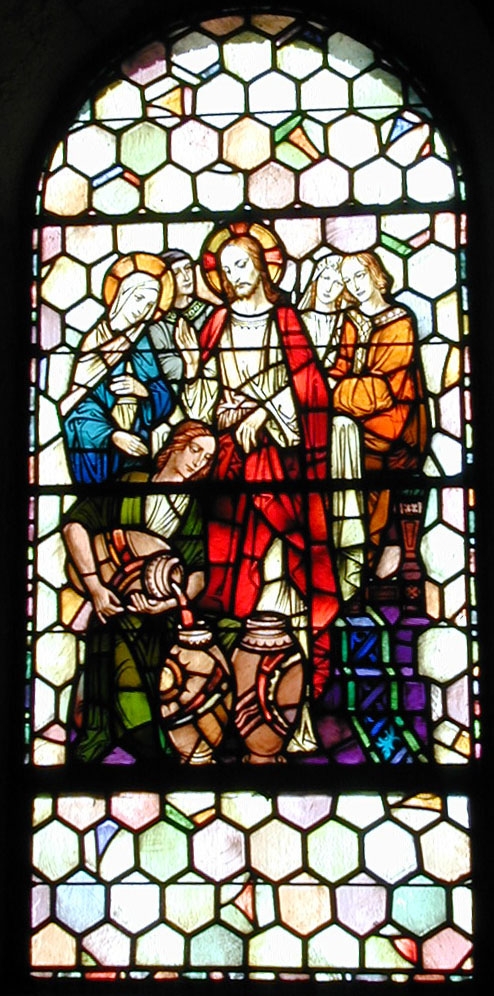
Stained Glass by Mayer of Munich at St. Joseph's Villa Chapel, Richmond, VA, from PAINTINGS ON LIGHT: THE STAINED GLASS WINDOWS OF ST. JOSEPH'S VILLA CHAPEL, available at the AIC Bookstore and from Amazon.com and Kindle
Stained Glass by Mayer of Munich at St. Joseph’s Villa Chapel, Richmond, VA, from Paintings on Light: the Stained Glass Windows of St. Joseph’s Villa Chapel, available at the AIC Bookstore and from Amazon.com and Kindle

This week it happens that the subject of The New Testament: Episode 36 in our AIC Bible Study series and the Gospel text for Third Sunday After Epiphany is the same text from John 2:1-11, the account of the first of seven “signs”, being the Wedding at Cana.  Episode 36 is illustrated with several stained glass windows, including a Mayer of Munich window at St. Joseph’s Villa Chapel, Richmond, VA.   Watch Episode 36 on our You Tube channel.

I also posted a Podcast Homily version which is linked from the page of the same name at the AIC web site.   Listen to the Podcast Homily version.

There is also a Podcast version of the sound track for the video, which includes the theme music for the series.   Listen to the sound track only.

The Mayer of Munich window shows Jesus, with the Blessed Virgin Mary looking on, at left background, instructing the servants to fill the jugs with water.  For reasons of space, the Mayer artists included only three jugs rather than the six described by St. John.

The current series of Bible Study videos is exploring the seven signs.  In Episode 37, which will be posted midweek during the week of January 26th, I will focus on the Healing of the Nobleman’s Son, the Lame Man and take up Part 1 of 2 on the healing of the Blind Man.

Paintings on Light can be ordered from my author page at Amazon in a paperback edition which includes pictures and narratve on all the stained glass windows in the Chapel, plus a brief history of the Chapel and the firm of Franz Mayer of Munich, Inc.   I have not been able to complete the DVD Companion for the book, owing to technical issues, which I hope will be resolved soon.

Second Sunday After Epiphany

Window No. 5, the Baptism of Christ, Franz Mayer of Munich, at St. Joseph's Villa Chapel, Richmond, VA, 1931 A.D.
Window No. 5, the Baptism of Christ, Franz Mayer of Munich, at St. Joseph’s Villa Chapel, Richmond, VA, 1931 A.D.

This afternoon I posted a Podcast Homily for the Second Sunday After Epiphany, based on the BCP readings from St. Paul’s homily on various Christian virtues (Romans 12:6-16, to which I added two additional verses to better establish the context) and Mark 1:1-11, with quotations from similar material in the Gospels of St. Matthew, St. Luke and St. John.  The primary subject is the Baptism of Jesus by John the Baptist.  The Podcast Homily is the third episode in a series of seven homilies for Epiphany season following the readings in the 1928 Book of Common Prayer.  Listen to the Podcast

The scene is richly illustrated by the stained glass window by Franz Mayer of Munich at St. Joseph’s Villa Chapel, Richmond, VA, 1931 A.D.  The simultaneous appearance of Father, Son and Holy Spirit is represented by the presence of Jesus Christ; the Dove (the Spirit); and the legend carried by the Dove:  Ecce Agnus Dei.   This and all the other stained glass windows at the Chapel are features in the AIC Bookstore publication, Paintings on Light: the Stained Glass Windows at St. Joseph’s Villa Chapel.   For more information or to order your own copy, visit my Author Central page at Amazon.com

canstockphoto17571167
Copyright Can Stock Photo, Inc./Flik47. Cathedral of the Assumption, Mt. Zion, Jerusalem

In doing the research for the Christmas series, Reflections on the Twelve Days of Christmas, I came across another illustration of John the Baptist in the form of a mosaic at Jerusalem.   John the Baptist is depicted in mosaic form at the Cathedral of the Assumption on Mt. Zion, the highest point in Jerusalem.  The Cathedral is also called the Cathedral of the Dormition, which means falling asleep, in the Eastern Orthodox tradition.  The church was built in the late 19th C. on a site where a previous building existed in the 6th or 7th Century.

First Sunday After Epiphany

For the First Sunday After Epiphany the Book of Common Prayer’s Gospel reading is St. Luke’s childhood glimpse of Jesus at age 12, usually called “teaching the Doctors in the Temple.”   I’ve posted a 12-minute Podcast Homily on the Podcast Homilies page at our Web Site, part of a series of homilies for Epiphany season.

SJVC-32-TeachingTemple-Altered
Teaching the Doctors in the Temple; Window No. 32, St. Joseph’s Villa Chapel, Richmond, VA, by Franz Mayer of Munich, 1931 A.D.

This event has been depicted many times, but my favorites are two stained glass windows, both in the Munich Style.  The first of these is at St. Joseph’s Villa Chapel, Richmond, VA, where my former parish, St. John Chrysostom Anglican, worshiped.  The window was designed by Franz Mayer of Munich.  It shows Jesus at the center of the image with the several “doctors,” meaning the wisest men among the Temple leadership, looking on.   St. Mary and St. Joseph are the background figures.  The window was installed in 1931 A.D. as part of a set of 46 windows.  Teaching the Doctors in the Temple is one of ten Life of Christ windows in the upper wall of the Nave.   All the windows in the Chapel are shown in the AIC Bookstore publication, Paintings on Light: the Stained Glass Windows of St. Joseph’s Villa Chapel.

The second window is also in the Munich Style and might have been a Mayer design or one by the associated firm of F. X. Zettler, founded by Mayer’s son-in-law.  It is one of a pair of windows depicting scenes in the childhood of Jesus Christ.  The other half of the scene is St. Joseph holding the baby Jesus.

This window is at the National Shrine of St. Francis Assisi in San Francisco.  A smaller window than the one at St. Joseph’s Villa Chapel, there was room for only one “Doctor.”  Note that the face of the column to the left of the 12-Year old Jesus bears an image representing the Commandmants.  The location of the scene is indicated by the lighted Menorah and the scroll at Jesus’ feet.  The source from which I purchased the picture did not identify the designer or show information about the windows.  The twining bands of colored glass and the use of leaves with finely-detailed vine tracery are suggestive of the work of Franz Mayer.

Jesus Teaching in the Temple.  copyright Can Stock Photo, Inc./BillPerry
Jesus Teaching in the Temple. copyright Can Stock Photo, Inc./BillPerry

Listen to the Podcast Homily.

The Feast of the Epiphany – A.D. 2015

Yesterday (January 5th) I uploaded to our Podbean host site a new Podcast homily for Epiphany, January 6th, A.D. 2015.  This Blog posting supplements and complements the podcast, which is a purely sound-based environment.  If you’d like to hear the podcast, click here.   This morning I completed the redesign of our web site.  The new design offers a cleaner look and a more functional design, giving easy access to our books, videos and podcasts.   Click here to visit the redesigned site. If you’d like to comment on it or make suggestions, please send me an email at frron.stjohnanglican@earthlink.net

Epiphany is celebrated in different ways among the various denominations.  As Anglicans we celebrate not only the event commemorated on Epiphany Day, the Visit of the Wise Men, but also six other “manifestations” of Jesus Christ to the broader Gentile world.  These six are the Teaching the Wise Men in the Temple (First Sunday After Epiphany); the Baptism of Christ (Second Sunday After Epiphany); the Wedding at Cana, including the first miracle of turning water into wine (Third Sunday After Epiphany); the twin healings of the Leper and the Centurion’s Son (Fourth Sunday After Epiphany); the Parable of the Wheat and the Tares, concerning the “harvesting” of the faithful at the coming of Judgment (Fifth Sunday After Epiphany); and Judgment at the Second Coming (Sixth Sunday After Epiphany).   Among Eastern Orthodox Christians it is the Baptism of Christ that is the central event.  In years when Easter is early and Epiphany season is shortened, the readings for the Fifth and Sixth Sundays After Epiphany are used as the final readings for Trinity season.  These fit nicely as a transition to the Penitential season of Advent, celebrating both His Nativity and His Second Coming.

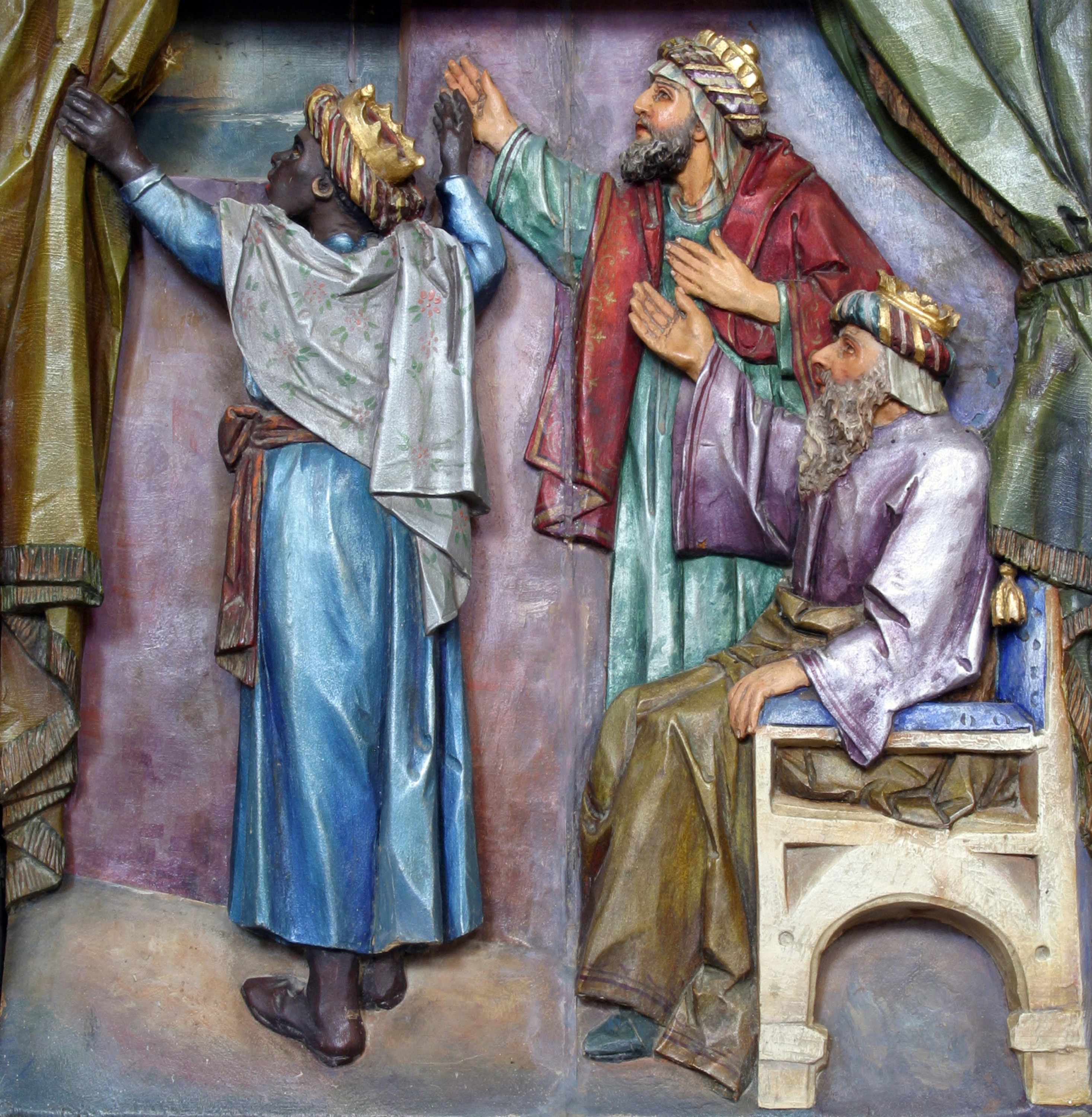
Three Kings Watching  copyright Can Stock Photo, Inc./zatletic
Three Kings Watching copyright Can Stock Photo, Inc./zatletic

Epiphany is not a Scriptural word.  It is derived from several Greek words, all meaning to show forth or shine forth and from the Greek word for light.  In the first three centuries of the Church, Epiphany was part of the Nativity feast, being the day after the Twelfth Day of Christmas (Epiphany Eve).   Around the time of Roman Pope Gregory the Great (440-461 A.D,), the Feast had become a celebration of the visit of the Wise Men, or Maji, thus the name Adoration of the Maji for the Feast.  The illustration is a modern photograph of a raised relief carving, most likely somewhere in central or eastern Europe.   Note that the three figures are displayed according to the Roman Catholic doctrine that they represent the three races of mankind, the European, the Asian and the African, an idea developed about the same time that the Roman Church fixed the number of wise men at three and gave them names:  Caspar (or Gaspard in Anglican usage), Balthazar and Mechior.

The Book of Common Prayer readings for Epiphany, January 6th, are St. Paul’s epistle to the Ephesians (Ephesians 3:1-12), in which the Apostle to the Gentiles, explains that the Gentiles have the same access to the salvation promised by Jesus Christ, and St. Matthew’s account (Matthew 2:1-12) of the encounter between Herod and the wise men, the wise men’s visit to the Holy Family and their “worship” of the Child/King, and their return to “their own country” without informing Herod of the Child’s whereabouts.

This year the AIC website will host a Podcast Homily for Epiphany (January 6th) and all six of the Sundays After Epiphany, whether or not they are actually read in services this year.  These will be available on the new Podcast Homily page at the AIC web site.  These seven homilies will focus upon the designated Prayer Book readings for each of the Sundays, with a focus on how they relate to traditional Apostolic teaching.

May God bless each of you with a happy and prosperous New Year in A.D. 2015.

The Twelve Days of Christmas

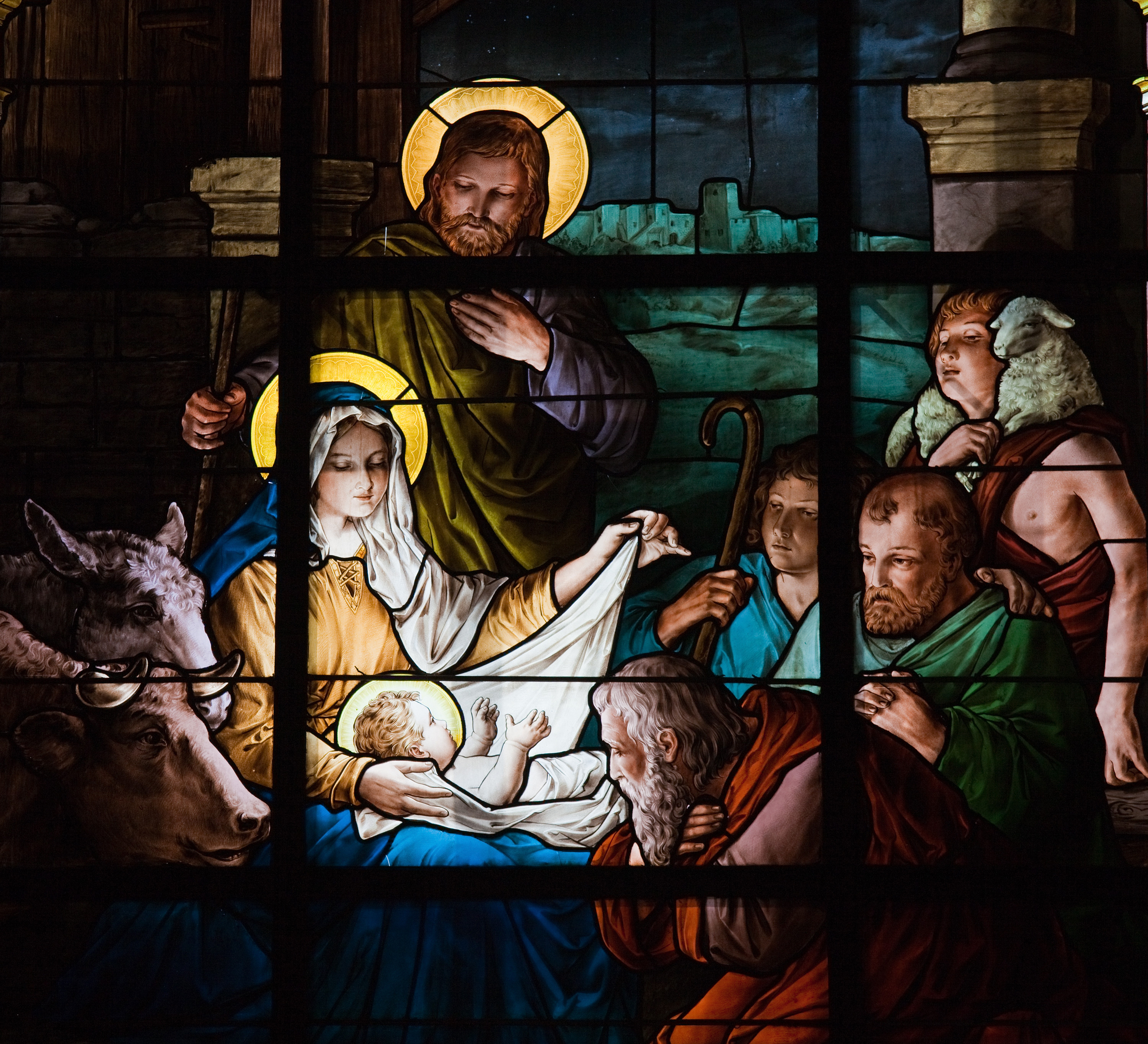
Owing to a family emergency, all twelve episodes in Reflections on the Twelve Days of Christmas for A.D. 2014-2015 are being made available today instead of one episode per day.  The theme picture is the Nativity window at St. Gertrude’s Church, Gamla Stan, Stockholm, Sweden.  The window was designed by the famous stained glass artist F. X. Zettler.  F. X. Zettler was the son-in-law of Franz Mayer, whose firm launched what become known as the Munich Style of stained glass in the mid-19th Century.  Mayer of Munich designed the windows included in AIC Bookstore publication, Paintings on Light: the Stained Glass Windows of St. Joseph’s Villa Chapel.  (available at my author page at Amazon:   https://www.Amazon.com/Author/Ronald-E-Shibley>

copyright Can Stock Photo, Inc../jorisvo
copyright Can Stock Photo, Inc../jorisvo   

Zettler set up his own firm in the 1860s.  F. X. Zettler became part of Mayer of Munich again in 1939.  Both the Zettler and Mayer studios were known world-wide for the exceptional luminosity and attention to detail of their stained glass windows.  This one glows with soft white light around and from from the central figure, the Infant Jesus.  The halo for the Blessed Virgin Mary and St. Joseph are bright gold and stand out against the dark background, with a rural setting barely visible in the background.  Shepherds and domestic animals observe the scene on Christmas morning.

I hope you enjoy the collection of pictures of stained glass windows, icons, frescoes, ceramic tiles, statuary and mosaics that are used for this fourth edition our our annual Christmas series.

May God bless you and your family with a happy and joyful Christmas season.

I have also made Podcast (MP3) versions of all these programs, which are linked from the Podbean gadget on the Digital Library page at our web site:  www.AnglicanInternetChurch.net.

First Day of Christmas (Love)
Second Day of Christmas (Forgiveness)
Third Day of Christmas (Peace)
Fourth Day of Christmas (Compassion)
Fifth Day of Christmas (Obedience)
Sixth Day of Christmas (Joy)
Seventh Day of Christmas (Family)
Eighth Day of Christmas (Church)
Ninth Day of Christmas (Angels)
Tenth Day of Christmas (Commandments)
Eleventh Day of Christmas (Glorifying God)
Twelfth Day of Christmas (Grace & Faith)