Fourth Sunday in Lent & AIC Bookstore 17

For Fourth Sunday in Lent in the 1549 Book of Common Prayer Archbishop Cranmer composed a Collect derived from the Gregorian Sacramentary (10th C., honoring the late 6th-early 7th C. Pope Gregory the Great) on the theme of Christ’s redemptive sacrifice (“by the comfort of thy grace” for the salvation of those who “worthily deserve to be punished.”). The Epistle reading (Galatians 4:21-31) continues St. Paul’s teaching concerning the differences between the old and new covenant using a “slave” vs. “free” allegory. The reading offers a break from the cycle of St. Paul’s teachings on the Christian virtues in the readings for the season of Lent. The Gospel reading (John 4:1-14), St. John’s account of the event traditionally known as the miraculous feeding of the 5,000, is the first of two readings from the Evangelist John during Lent.

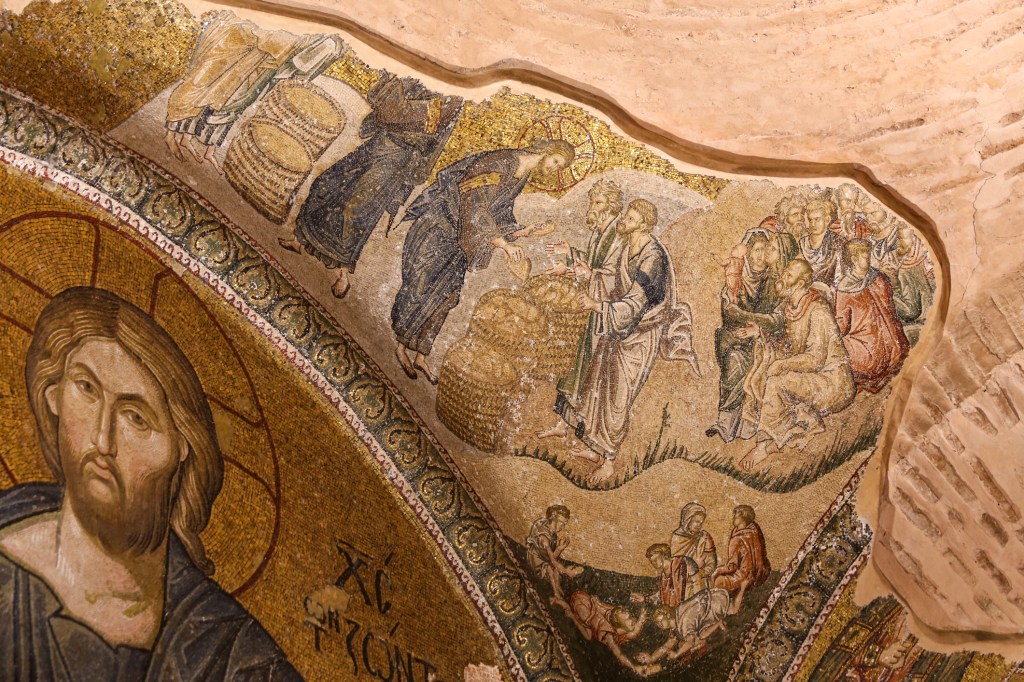
The Multiplication of the Loaves and Fishes, Byzantine mosaic, Outer Narthex, above the Christ Pantokrator image over the door between the Outer and Inner Narthex, Chora Church, Constantinople/Istanbul, Turkey, 14th C. © Evren Kalinbacak|Dreamstime.com.

The Fourth Sunday in Lent is discussed and illustrated in Episode Two in the AIC Christian Education Video series, Lent: the Season of Penitence, which is linked from the Digital Library page. The audio-only version of Episode Two is linked from the Podcast Archive page. My Podcast Homily for Fourth Sunday in Lent is linked from the Podcast Archive page. The Podcast Homily for Fourth Sunday in Lent is linked form the Podcast Homilies Page. A related Podcast Homily based on the Psalm reading for Morning Prayer on Fourth Sunday in Lent, Psalm 147, is linked from the Podcast Homilies-Morning Prayer page.

Christ Panatokrator with Saints & Angels, mosaic, 1140-1170 A.D., West Wall, Sanctuary, Capela Palatina, Palermo, Sicily. Photographed by John Schermann. Used with permission.

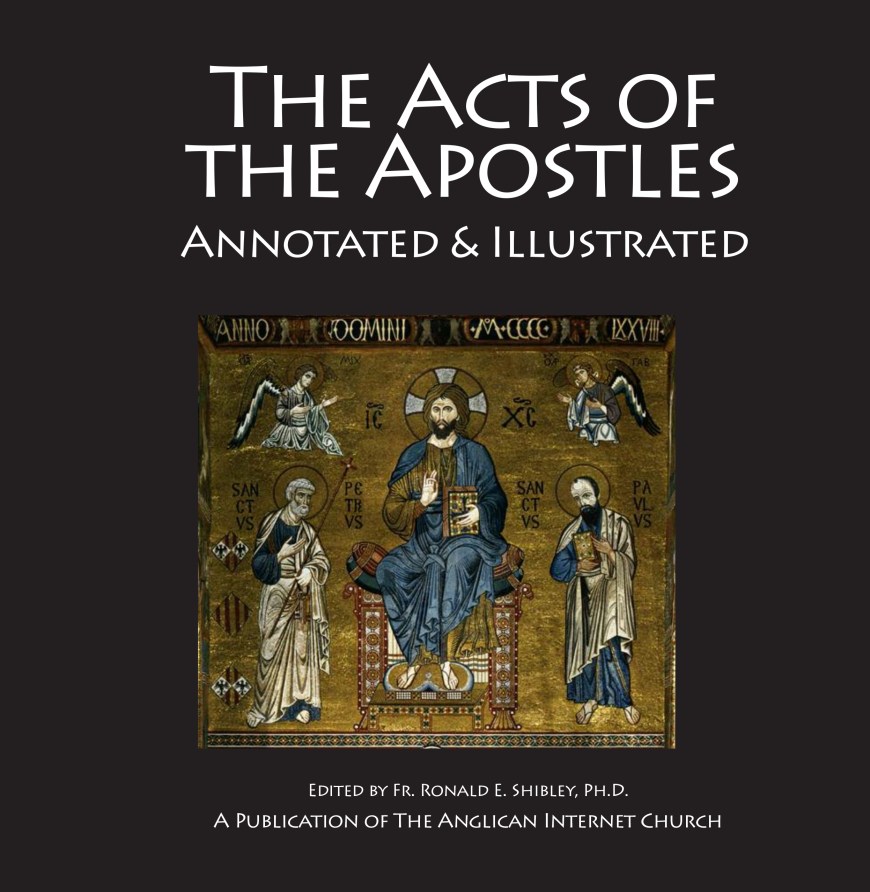
This week’s focus among the 22 AIC Bookstore Publications is The Acts of the Apostles: Annotated & Illustrated. This work is the first fully illustrated version of St. Luke’s unique account of the growth of the Church Universal during the decades after Christ’s Ascension. The full text of Luke 1 and 2 and Matthew 2 (using the New King James Version text) are followed by commentary and illustrations from the 9th to the 20th C., including maps of St. Paul’s missionary journeys. Three appendices: Angels in the Acts of the Apostles; The Holy Spirit in The Acts of the Apostles; and a complete Glossary of all persons, places and events mentioned in St. Luke’s text, an especially useful resource in understanding the volume of detail provided by St. Luke. 226 pages. $49.00. The book is available exclusively through our Virtual Bookstore, which is my Amazon Author Central page.

As always, thank you for your interest and support. Glory be to God for all things! Amen!
Fourth Sunday after Easter

For Fourth Sunday after Easter Archbishop Cranmer adapted another prayer from the Gelasian Sacramentary, one of the three most important prayers sources in the Roman Catholic tradition. The Collect affirms the sovereignty of God and His only-begotten Son over all things, including the wide range of human emotions.

ALMIGHTY God, who alone canst order the unruly wills and affections of sinful men;
Grant unto thy people, that they may love the thing which thou commandest, and
desire that which thou dost promise, that so, among the sundry and manifold changes
of the world, our hearts may surely there be fixed, where true joys are to be found;
through Jesus Christ our Lord. Amen.

James the Just, tempera and gold on panel Russian Orthodox icon in the Novgorod style, 1560 A.D. James holds a book, representing his epistle, in his left hand. Public Domain.

The Epistle reading, James 1:17-21, is one of foremost examples of New Testament “wisdom.” It illustrates concepts found in the “wisdom” books of the Septuagint Old Testament, which include the Psalms, Proverbs, Ecclesiastes and Song of Solomon (also known as the Song of Songs). The selection is the first of two consecutive readings from the Book of James during Easter season, the other being the reading for Fifth Sunday after Easter. The author, traditionally said to have been the first “Bishop” of Jerusalem, includes themes from the Collect. St. James affirms the importance of the virtue of self-control: “…let every man be swift to hear, slow to speak, slow to wrath: for the wrath of man worketh not the righteousness of God” (verses 19 and 20a). The great early Church Bishop, first of Antioch, then of Constantinople, John Chrysostom often used his homilies to counsel his listeners on the concept of the tongue as a weapon and the obligation of all men to “give it a rest,” especially during penitential seasons on the Church Calendar. A modern reproduction of the icon shown above is available online from the web site www.iconsofsaints.com. James is commonly called Brother of the Lord, based on the tradition that Joseph of Nazareth was his father from a marriage prior to his marriage to the Blessed Virgin Mary. James is traditionally thought to have been a “healer.”

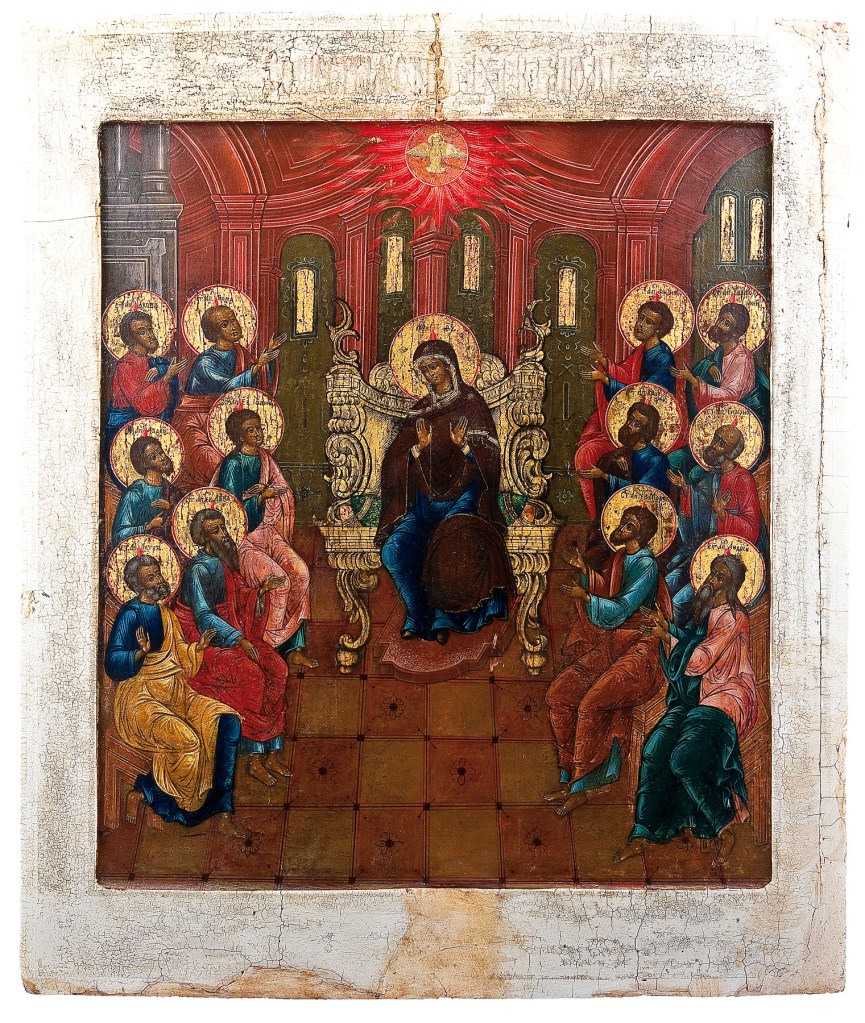
The Gospel reading, John 16:5-11, is the fifth of six readings from the Gospel of John for the Sundays from Easter Day through Fifth Sunday after Easter. The account is unique to the Gospel of John and offers a link between the events of Easter Day and the coming of the Holy Spirit, or “Comforter” and “Spirit of truth” (King James Version) and “Helper”(New King James Version). Details of the Descent of the Holy Spirit is dramatically and uniquely told by St. Luke in Acts 2:1-4. The words of Jesus Christ in John 16 were spoken to the Apostles on the evening of Maundy Thursday after the Last Supper. Jesus offers words of comfort to His followers concerning His departure from them and the benefits to themselves of the coming of the Holy Spirit. Jesus offered them assurance that the Spirit “will guide you into all truth: for he shall not speak of himself; but whatsoever he shall hear, that shall he speak; and he will shew you things to come” (verse 13). The Descent of the Holy Spirit is described and illustrated in the AIC Bookstore Publication, The Acts of the Apostles: Annotated & Illustrated, available through my Amazon Author Central page, with details found on the AIC Bookstore page. The volume includes 77 illustrations and seven “special text” pages. In historic Christian art, at least in the surviving examples, The Acts of the Apostles was very rarely illustrated and even then included only one or two examples, usually of the scene in Acts 2:1-4. The volume also includes an 1888 map of the Mediterranean Sea with annotation concerning the origin of those present for the event and five examples of historic illustrations for Acts from circa 1100 A.D. to the late 19th C.

As always, thank you for your interest and support. Glory be to God for all things! Amen!