Welcome to my Blog post for Third Sunday after Epiphany, the last of three Sundays following Epiphany Day in A.D. 2026. Sunday, Feb. 1, will mark the beginning of the three “Gesima” Sundays (or Pre-Lent season). The “Gesima” Sundays offer a transition in tone and content before the start of Lent on Sunday, February 22nd.
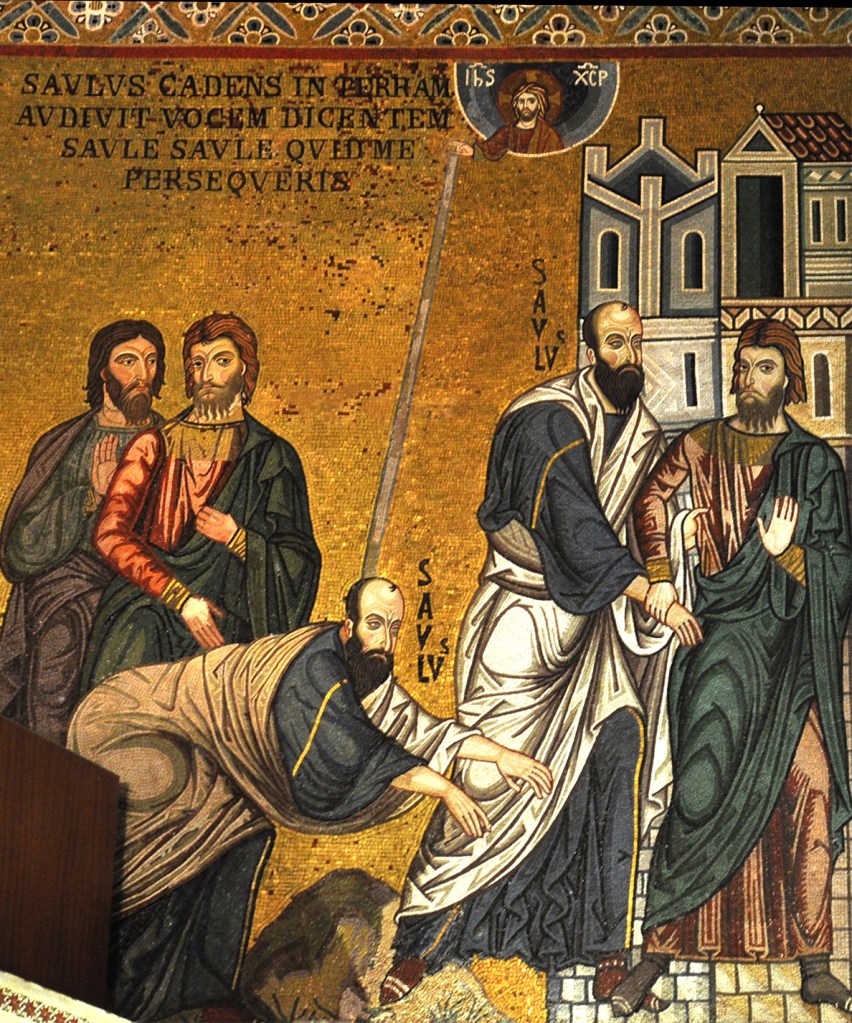
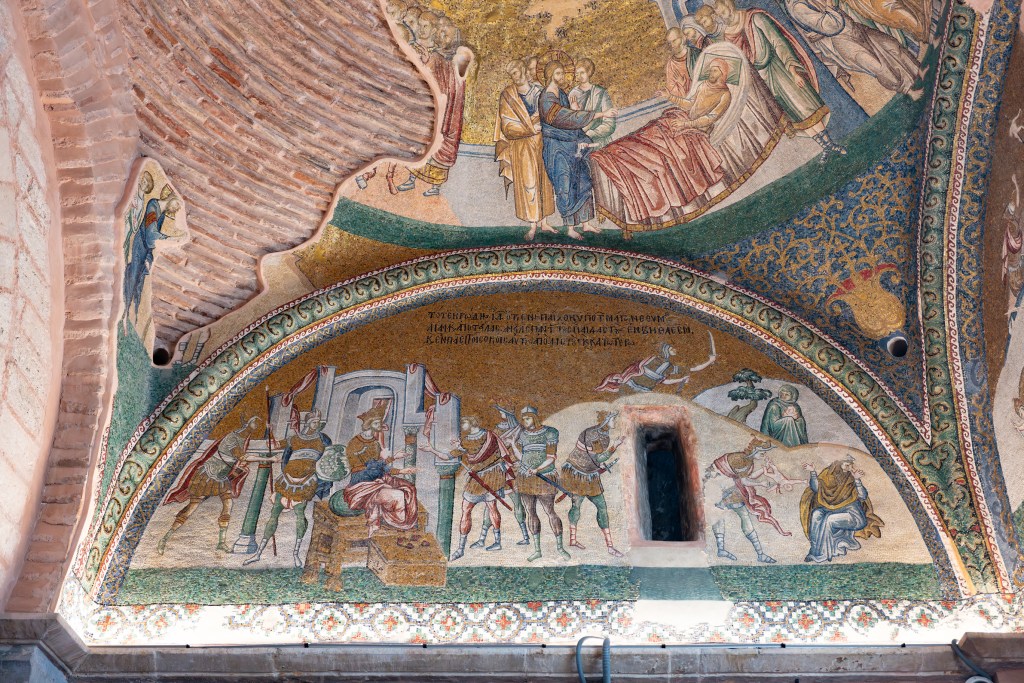
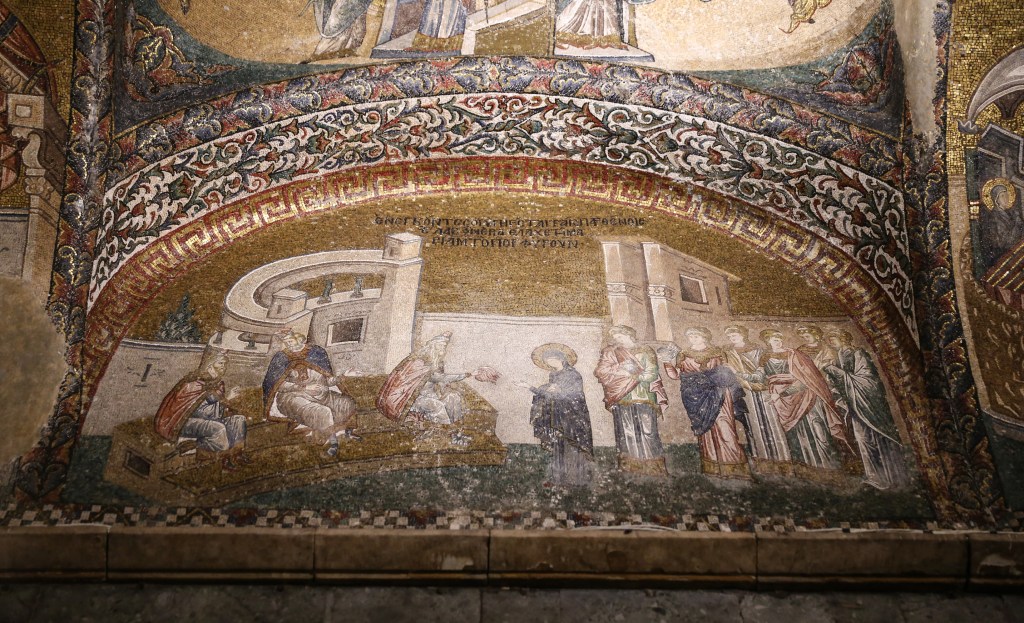
In A.D. 2026, Sunday, January 25th, is also the appointed fixed day honoring the Conversion of St. Paul, a pivotal event in the history of the Church Universal. Below is a remarkable mosaic depicting the event (left) and its immediate consequences (right), of the blinded St. Paul led away, with Christ in a semi-circle at top right. The Collect for the Conversion of St. Paul refers to Saul/Paul as one who “caused the light of the Gospel to shine throughout the world.” The event and the unique legacy of one of Christianity’s most fervent defenders, is discussed and illustrated in more detail in Episode Five in our Christian Education Video series, The Lives of the Saints, Volume 1 – the 1928 B.C.P. Saints. All sixteen episodes in the series are linked from the Digital Library page. The audio track of Episode Five is linked from the Podcast Archive page.
I discuss and illustrate the readings for Third Sunday after Epiphany in Episode Three on our video series, Epiphany: The Manifestation of Christ to the Gentiles. The audio version of the Episode Three is linked from the Podcast Archive page. My Podcast Homily for Epiphany 3 is linked from the Podcast Homilies page. Another Podcast Homily, this one derived from the Psalm readings in Morning Prayer for the day, Psalms 42 and 43, attributed to the Sons of Torah, is linked from the Podcast Homilies-Morning Prayer page. In the Hebrew worship tradition, Psalm 43 was spoken aloud by the priest upon approach to the altar.
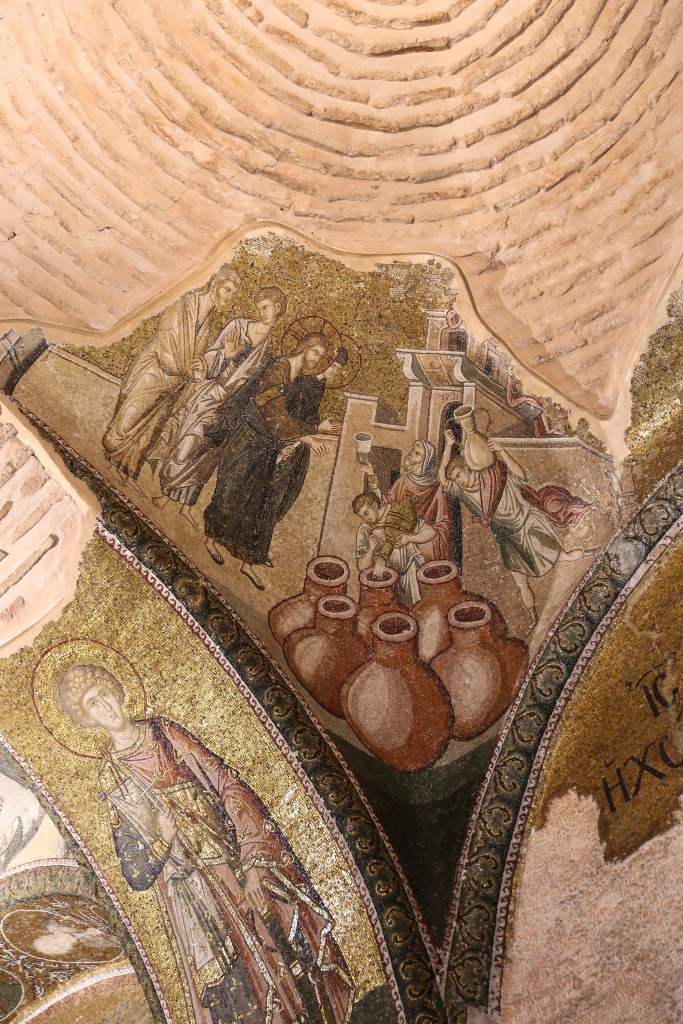
For the occasion, Archbishop Cranmer prepared a Collect based upon the Gelasian Sacramentary in a version strongly influenced by the late 8th-early 9th C. translation of the Vulgate Bible by the Blessed Alcuin of York. Alcuin was the author of the Collect for Purity in the 1928 Book of Common Prayer, spiritual advisor to Holy Roman Emperor Charlemagne and teacher of Christianity to the Emperor’s family, and Abbot of the Abbey of St. Martin of Tours in France. The Epistle reading, Romans 12:16-21 is the third of four teachings of St. Paul on the Christian Virtues. The reading ends with the advice to “overcome evil with good.” The Gospel reading, John 2:1-11, is St. John’s account of the Wedding at Cana, or, in St. John’s words, “the beginning of the miracles did Jesus in Cana of Galilee.”
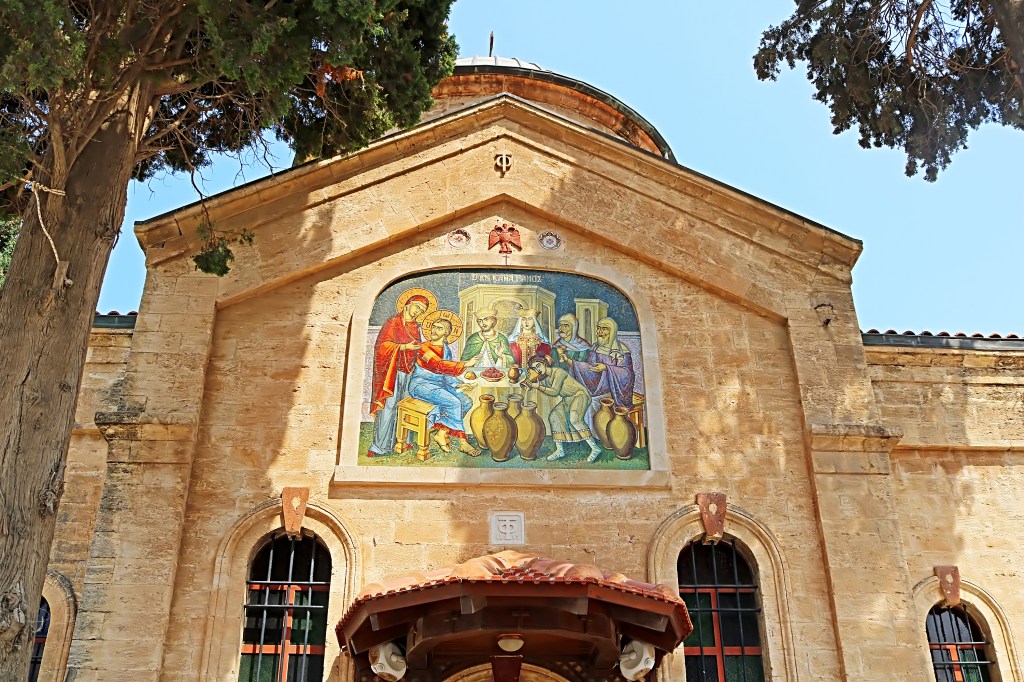
This important symbolic event is honored in the Galilee by several churches claiming to be on the site of, or near the historic location of, the Wedding, including a Greek Orthodox “Wedding” Church in Kfar Kana, which claims to possess two of the jars used in the wedding. The Greek church features an image of the event over its front door. It is near a similar “Wedding Church” owned by the Franciscans. © Gelia|Dreamstime.com.
This week’s focus among the AIC Bookstore Publications is Fr. Ron’s Kitchen Companion. The book evolved out of several sources over several decades, beginning with the first version (produced in the early 1980s for a former employee off to college and, later, for my daughter in her first apartment at college). It emerged in a greatly-expanded form for use by my former parishioners, most of whom were living on limited incomes. The current edition, the 9th, dates to 2024, when all the Bookstore publications were updated. The books was given a new cover and expanded content as part of the celebration of the start of the AIC’s second decade on the web.

The book’s sub-title, is self-explanatory. Inside the volume is a list of essential seasonings, some easily available, some which must be ordered from Amazon or other vendors. It is what I label as a backwards cookbook, with the recipes, grouped by protein source, organized to help decide what to do with a particular ingredient; examples: Beef: steak? stewed? ground? skewered? The book is worth the purchase price based on just a few key recipes, including my time-tested recipes for Classic Southern Pot Roast, Hawaiian “Mochi” Chicken and Byzantine Eggplant Moussaka. I hope to produce an updated version of the ingredients list and some new recipes later in A.D. 2026. The revised version also would add sources for some of the Hawaiian-sourced seasonings discovered during or after the trip my wife and I took to Maui at mid-year A.D. 2025. The cover image was arranged and photographed by Corinne (Corkie) Shibley.
As always, thank you for your interest and support. Glory be to God for all things.





 Anglican Internet Church