For Fifth Sunday in Lent, commonly known as Passion Sunday, Archbishop Thomas Cranmer composed a Collect based upon the Gregorian Sacramentary (10th C.), affirming that by His “great goodness” mankind may be “governed and preserved.” The Epistle reading, Hebrews 9:11-15, includes a rare reference to the “high priest of good things to come” who is “not made with hands.” The allusion is to the mysterious Melchizedek (Genesis 14:18-20; Ps. 110:4; Hebrews 5:6-11 & 6:20-7:28), who is considered as a type of Christ. The Gospel reading, the second of two in Lent from the Gospel of John, John 8:46-58, includes Jesus’ bold “I AM” declaration.
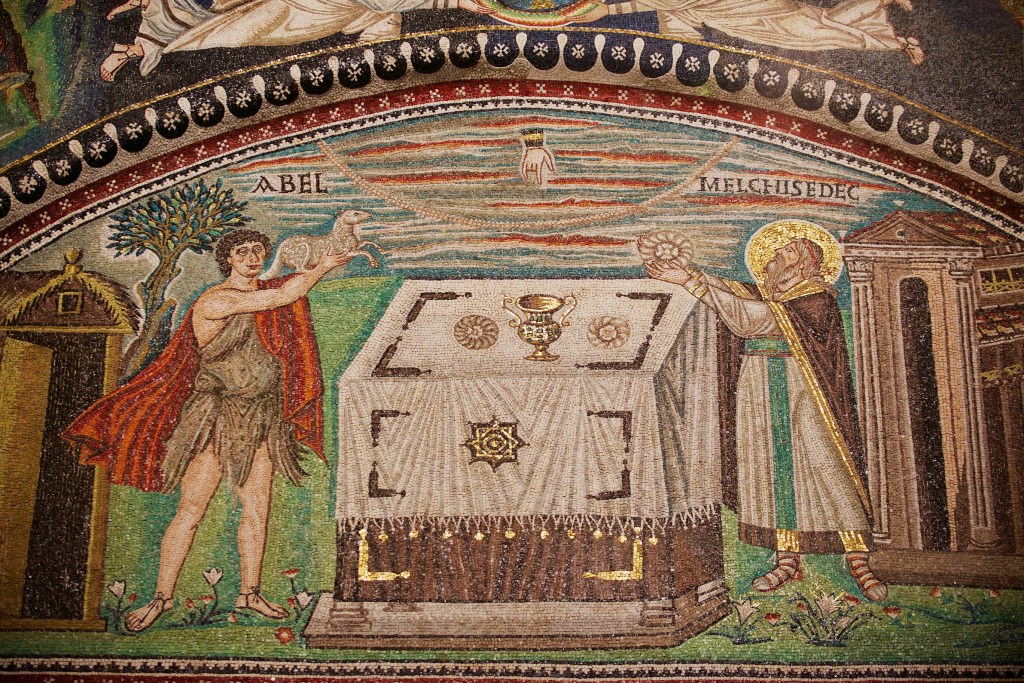
The Collect, Epistle and Gospel readings are discussed and illustrated in Episode Three in the AIC Christian Education Video series, Lent: the Season of Penitence, which is linked from the Digital Library page. The audio-only version of Episode Three is linked from the Podcast Archive page. My Podcast Homily for Fifth Sunday in Lent is linked from the Podcast Homilies page. A separate Podcast Homily for Fifth Sunday in Lent, based on Psalm 51, the Morning Prayer reading for Fifth Sunday in Lent is linked from the Podcast Homilies-Morning Prayer page.
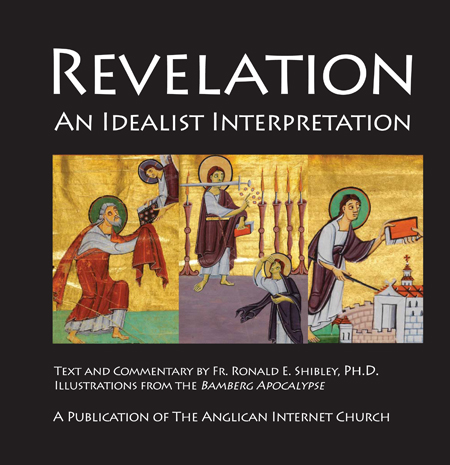
The focus of this week’s AIC Bookstore Preview is Revelation: An Idealist Interpretation, another volume produced in the large page, 8.5″ x 8.5″ paperback format designed to enhance the illustrations and allow their placement fully in the context of book text. The book, patterned after the AIC Bible Study Video series of the same name, was made possible by the generous support of the Bamberg State Library, which provided high-resolution images from the original volume, The Bamberg Apocalypse, produced between 1000 and 1020 A.D., during the reigns of the Ottonian Holy Roman Emperors Otto III and Henry II. One of the Ottonian royal family was linked by marriage to a Byzantine princess. Artists working at the Reichenau monastery on Reichenau Island on Lake Constantine produced some of the finest expressions of traditional Christian teachings ever produced in the Western Church tradition. Their art drew upon earlier works produced in and around Constantinople. The volume includes A Brief History of Revelation and A Primer on Numerology in Revelation, the latter important in understanding St. John’s many uses of numbers. The companion video series of the same name is linked from the Bible Study-New Testament page. The volume is available exclusively through our Virtual Bookstore, which is my Amazon Author Central page. Additional information about the book is found on the AIC Bookstore page. 220 pages. 52 illustrations. $49.95.
A tip for understanding the Revelation and the four Gospels: when reading the Gospels, start with the Gospel of John and read it slowly, as if listening yourself to the Evangelist dictate the words to his scribe, Prochorus. Likewise with Revelation, especially noting the many allusions to 1st C. understandings about the Old Testament, from which St. John derived many of his allusions to important numbers (explained in A Primer on Numerology in Revelation, pages 7 to 11.
As always, thank you for your interest and support. Glory be to God for all things! Amen!
 Anglican Internet Church