My wife and I have just returned from a week’s vacation on Hatteras Island, so I thought to catch up with the various AIC web presences, including reading all the many email messages.
 One viewer raised a question concerning the current episode, Episode Five, in AIC’s Christian Education video series, The War on Christianity. The question indicates the need for a clarification for those who my have not seen Episode One through Episode Four. For those who have just joined in watching series, let me repeat some of the points I made in that first episode.
First, there is a vigorous War on Christianity that is literally going on each and every day all around the world. In Episode One I included data about how many physical assaults there have been and highlighted five such events in 2016 and 2017 A.D.
Second, the ultimate objective of those leading, and/or encouraging, the War on Christianity is to eliminate Christianity from the public and private sphere. The War on Christianity has nothing to do with fairness doctrines or equal treatment of all religions or cultural prejudices. It is a fight for the survival of Christian belief, although many modern Christians are in a state of denial. The objective is, just as it was for those who successfully suppressed the Church in the 2nd through the 15th C, is to make Christianity irrelevant in public, and, in my opinion, in private worship.
Third, the five incidents are a warning sign that, in spite of those who deny reality, the loss of majority status “can’t happen here,” such a loss has happened before and is happening now right before our eyes.
Self-imposed Limitations on the Format: Because AIC video series usually are presented in episodes of under 25 minutes. I cannot summarize in each episode all that has been said in previous episodes. The first effort to produce such a summary caused the initial version of Episode Two, the Summary History of the Church from Pentecost Until Now, to run about 34 minutes. I retreated and instead presented the subject matter in two episodes. The same problem reappeared in the first version of Episode Four, which ran even longer, with all three case studies of regional declines in a single episode. As with the previous example, I retreated and rewrote the material into two episodes, with important events in the Holy Land and North Africa treated in one episode, leaving Asia Minor to be treated in its own separate episode.
I made many of the same points that I made in Episode One in Episode Five, but perhaps I did not make the following point strongly enough in the section on Lessons Learned. Let me make it clearer now: many of the players in the decline of Christianity in the Holy Land, North Africa, and Asia Minor still exist today. They are Islamic fundamentalism plus international and Church politics. Additionally, in place of the greedy merchants of the Republic of Venice in the 13th through 15th C., whose objective was to destroy the Byzantine Empire and reap the benefits for themselves, are the international corporations and rich individuals with limitless wallets and atheistic values.
In future episodes I will offer ideas and practices which I think will make any Christian more able to defend the Christian Faith. In Episode Six, subtitled The First Line of Defense, I will discuss how important it is for any Christian to understand traditional Christian doctrine. Currently, I anticipate a total of 12 to 15 episodes.
All episodes of The War on Christianity series are linked from the Digital Library page (for the videos) and the Podcast Archive page (for the MP3 podcast versions. Use the appropriate tabs above and below to reach these pages.
Sunday Next Before Advent: On another topic of current interest: If you attended Church today and did not hear a homily/sermon on what the concept of “stir-up” means, where it came from, and how important it is to the coming Advent celebration, you can listen to a my Homily for Sunday Next Before Advent on the Podcast Homilies page of this site.
As always, thank you for your interest and support. You can help make our material more widely available by subscribing to this Blog or to our YouTube or Podbean pages.
May God bless you in all that you do in His Name! Glory be to God for all things! Amen!
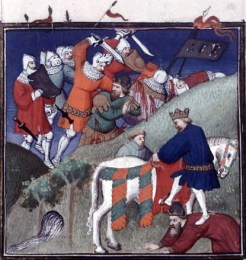 To Western minds, so filled with confidence that the whole world constantly progresses, this episode demonstrates how three pivotal events which happened up to a millennium ago had consequence that are still being felt in the second decade of the 21st C. The three events are the Battle of Manzikert in 1071 A.D.; the capture of Constantinople by misguided Crusaders, led astray by the ambitions of the Venetian Republic, in 1204 A.D.; and the Fall of Constantinople in the Spring of 1453 A.D. The illustration is a 15th C. a miniature of the Battle of Manzikert in the National Library of France.
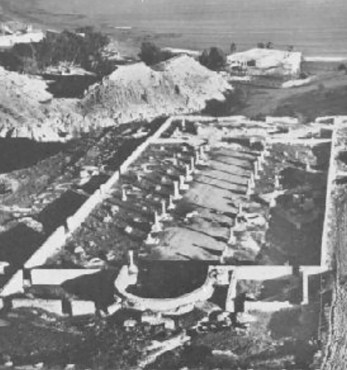
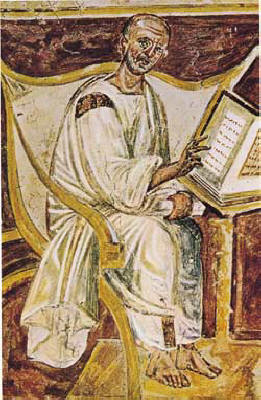

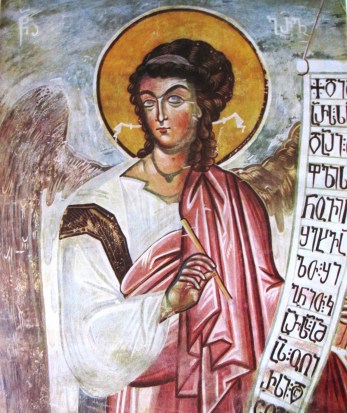

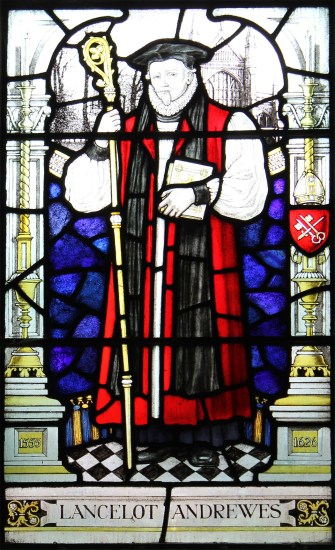 Episode Twenty-two, also published today, celebrates the life and contributions of one of the greatest of the 16th-17th Anglican divines, the Blessed Lancelot Andrewes, whose Feast Day is September 25th. Andrewes is one of my personal favorites. I suspect that he was one of those rumored to have desired placing the Church of England under the jurisdiction of the Patriarch/Archbishop of Constantinople. The illustration is a memorial window in the Cloister at Chester Cathedral, Chester, England. The picture is public domain through Wikipedia Commons. I applied perspective correction using Photoshop to the original file.
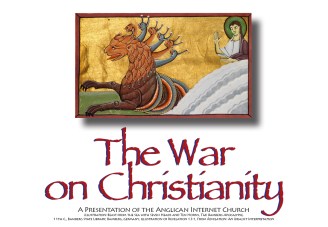 UPDATED VERSION – 08/25/2017
 Next week (week of 8/28) I will release Episode Twenty-one in The Lives of the Saints – Second Series. Episode Twenty-one celebrates the life of St. Cyprian of Carthage, whose Feast Day is September 12. The illustration is a detail which I lifted from a 6th C. Byzantine mosaic frieze at the Basilica of St. Apollinare, Ravenna, Italy (image copyright RibieroAntonio/Can Stock Photo, Inc.). In the frieze the martyred saints stand in line to give their crowns to Jesus Christ, who is seated as Christ Pantokrator flanked by angels. In the original, St. Cyprian stands between St. Cornelius, Bishop of Rome when Cyprian was Bishop of Carthage, and St. John Cassian, one of the earliest Western Church chroniclers of the early Church.
 Episode 19 in The Lives of the Saints – Second Series, focused on the life of St. Joseph of Arimathea is now available in both video and podcast versions. Finding a good graphic for St. Joseph was a challenge, since there are so few icons, mosaics or paintings of him. The Byzantine icon, Descent from the Cross (14th C., Agia Marina, Kalapanagiotis, Cyprus shows the scene well. But the most striking is Lamentation Over the Dead Christ, painted in oil on canvas by Pietro Perugino in 1495 A.D. and which is now displayed at the Pitta Palace, Florence, Italy, provides the most famous depiction. From it many have extracted the head of St. Joseph, who kneels at the feet of Jesus.
 Another image of Joseph of Arimathea is from the Life of Christ series of sketches in charcoal and watercolor by French artist James Tissot, now in the collection of the Brooklyn Museum, which has made them available in the public domain. In Tissot’s work the subject is much more clearly of Semetic origins (compared to the Europeanized image painted by Perugino and typical of Western Church art).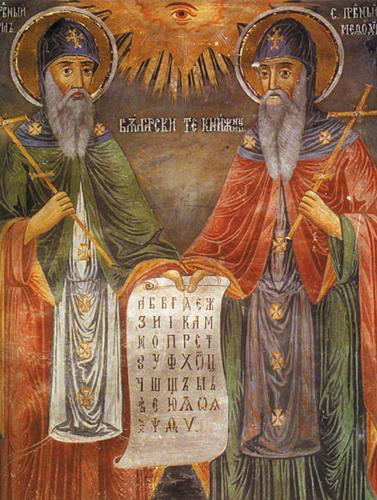
 Anglican Internet Church