Whitsunday/Pentecost

Welcome to this first entry in a new series of posts on topical themes. These themes may be focused on timely events of the week or upon details and further exposition on the Collect, Epistle or Gospel reading for any particular Sunday or on any topics that seems relevant, especially those which, in my view, are not receiving sufficient attention in the media.

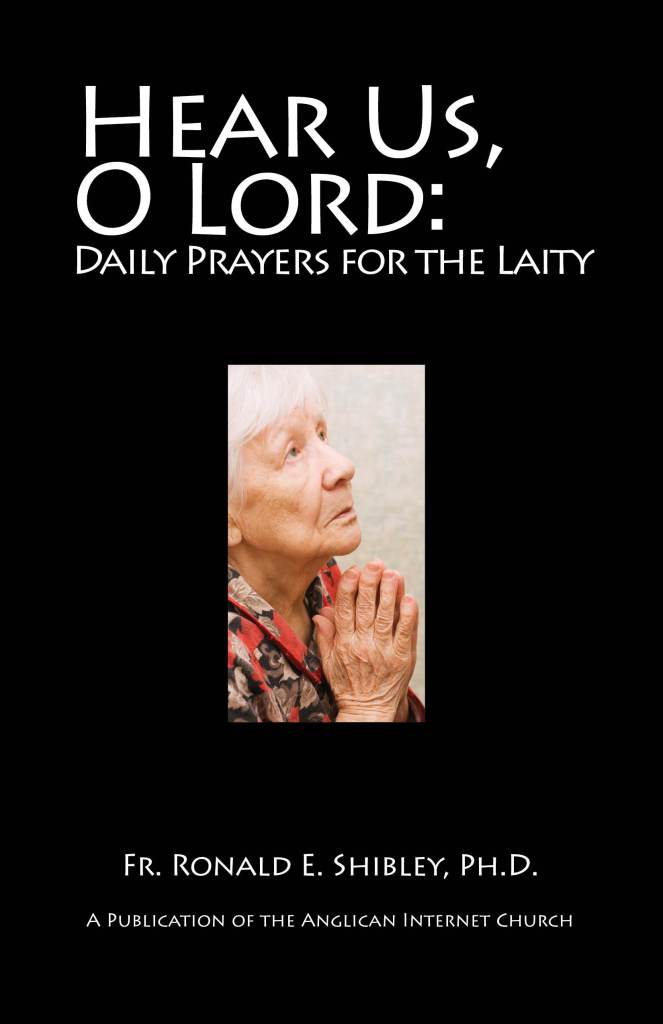
For this first posting, I offer a selection of prayers from the Third Hour (9:00 A.M.) office in Part Three in the AIC Bookstore Publication, Hear Us, O Lord: Daily Prayers for the Laity. This 3-part volume is available in paperback through my Amazon Author Central page, with a summary on the AIC Bookstore page. Part One, Awesome Prayers to Our Awesome God, includes prayers on the themes of Praise & Thanksgiving; Protection & Deliverance; Penitence; Righteousness; Songs of Praise; and Other Prayers. Part Two includes a selection catnap, or short prayers, based upon Psalm verses.

Great is the day of Sunday;
And blessed is he who keeps it in faith;
Because on it Our Lord rose from the grave;
And the nations confessed the Father, the Son and the Holy Spirit.
Great is the Lord and greatly to be praised.
Halleluia! Halleluia! Halleluia!
Source: Syrian Antiochian Orthodox Church

Creator of the morning, who drove out the darkness and brings light and joy to thy creation; create in us habits of virtue and drive from us all darkness of sin; give us light and joy by the glorious rays of thy grace, O Lord our God, for ever and ever. Amen.
Source: Syrian Jacobite prayer, 5th C. or earlier.

For this first posting I offer a link to an interesting article posted on May 26th in The Catholic Herald. I hope that the article gives us evidence on why the new Roman Catholic Pope whose the name, Leo XIV. In a later post I will explain and discuss the concepts of apophatic and cataphatic prayers which are implied in the article linked below.

https://thecatholicherald.com/for-monday-why-pope-leo-xivs-gentle-criticism-of-contemporary-western-liturgy-is-a-vital-wakeup-call/

As always, thank you for your interest and support. Glory be to God for all things! Amen!

Sunday after Ascension

Anglican worship for the Sunday after Ascension marks the close of the prayer cycle focused on historical events, beginning with First Sunday in Advent and including the seasons of Advent, Christmas/Nativity of Our Lod, Epiphany, and Eastertide/Ascension. Next Sunday, Whitsunday/Pentecost, marks the start of what the AIC refers to as the “Teaching Season.” During this second half of the year, the collects and readings are focused on elements of doctrine rather than events.

For Sunday after Ascension, instead of another prayer adapted from one of three primary sources in the Western Church tradition, that is, the Leonine, Gregorian or Gelasian sacramentaries, Archbishop Thomas Cranmer turned to the traditions of the English Church. His Collect for Sunday after Ascension was adapted from a song which was sung for The Venerable Bede during Bede’s final illness in 735 A.D. In the English Church, the words of the song had been incorporated into a prayer in the Vespers office, usually celebrated around 5 P.M. or local sunset. The words of the Collect, very much like the Gospel reading from John 16 for Fourth Sunday after Easter, were intended to prepare worshippers for the transition from the celebration of Christ’s Ascension, celebrated on Ascension Day, the Thursday following Fifth Sunday after Easter, into the recognition of the Descent of the Holy Spirit at Pentecost/Whitsunday. In the King James Version and the Book of Common Prayer, the Holy Ghost, or Holy Spirit, is referred to as “Comforter.” In the New King James Version He is called the “Helper.” Bede is also venerated in the Roman Catholic tradition, although he was not canonized by the Roman Church until the reign of Pope Leo XIII in 1899 A.D. The Venerable Bede was the author of the earliest history of the Church in England, Ecclesiastical History of England, covering the period up to 731 A.D., the year the book was published. An online version is available through CCEL.org.

The Ascension, the left panel of a triptych in tempera on wood, Andrea Mantegna, 1463-1464 A.D., Uffizi Gallery, Florence, Italy. Image from The Yorck Project: 10,000 Masterworks. Public Domain.

O GOD, the King of glory, who hast exalted thine only Son Jesus Christ with great triumph
into thy kingdom in heaven; We beseech thee, leave us not comfortless; but send to us thine Holy Ghost
to comfort us, and exalt us into the same place whither our Saviour Christ is gone before,
who liveth and reigneth with thee and same Holy Ghost, one God, world without end. Amen.

The Epistle reading, 1 Peter 4:7-11, begins with St. Peter’s advice concerning preparation for final judgment (verse 7), goes on to extol the Christian virtue of love (Verse 8, translated as “charity” in the King James Version and the Book of Common Prayer) and acknowledges that virtues come to mankind as a sovereign gift from God. The final verse (verse 11) includes words which have been incorporated into many Christian liturgies and prayers, here printed in the Prayer Book translation:

If any man speak, let him speak as the oracles of God;
If any man minister, let him do it as of the ability which God giveth:
that God in all things may be glorified through Jesus Christ,
to whom be praise and dominion for ever and ever. Amen.

The Gospel reading, John 15:26 to John 16:4a, the fifth of five selections from the Gospel of John in the Sundays after Easter and Sunday after Ascension, includes a warning about the earthly dangers for followers of Jesus Christ, not only for those immediately within His hearing but also for those who would follow Him in the generations to come. Perhaps that is why the reading is presented in the Book of Common Prayer out of chronological order, with reference in verse 26 to an event already celebrated on Ascension Day.

But these things I have told you, that when the time comes,
you may remember that I told you of them.

The Ascension, illumination in tempera and gold on parchment, Rabbula Gospels, produced in the region of present-day Syria, then known as Mesopotamia, at the monastery of St. John of Zagba, 586 A.D. Codex Pluteus 1, 56, Folio 13v, Biblioteca Medicea Laurenzina, Florence, Italy. The document has been in Florence since the 16th C. The volume also includes the oldest surviving image of the Crucifixion. This version is from The Yorck Project: 10,000 Masterworks, published on a DVD and released into the Public Domain in 2002 A.D.

The actual descent of the Holy Spirit is celebrated annually on the Church Calendar on Whitsunday/Pentecost. The descent is described vividly by St. Luke in Acts 2:1-11, which is the Epistle reading for Whitsunday. The illustration displayed above the Collect for the Day represents the Western style of literalist interpretation of Christ’s Ascension. The illustration above this paragraph represents a more spiritual style. Both illustrations and twelve others were used in our publication, Easter: The Resurection of Our Lord in Scripture, Art & Christian Tradition, available through my Amazon Author Central page, with details of the volume found on the AIC Bookstore page. The Collect, Epistle and Gospel readings for Sunday after Ascension are discussed and illustrated in Episode Three in the AIC Christian Education Video series, Eastertide: From Resurrection to Ascension, linked from the Digital Library page and, in MP3 audio format, from the Podcast Archive page.

Next week I plan to begin a new series of topical Blog postings. Readers are reminded that Blog entries for the other Sundays on the Church Calendar are linked from the Fr. Ron’s Blog tab for the years from 2023 through 2025. The page includes links to all posts going back to the opening of this site in August 2014. The Blog includes topical links following the actual blog entries.

As always, thank you for your interest and support. Glory be to God for all things! Amen!

Fifth Sunday after Easter

For Fifth Sunday after Easter, also known as Rogation Sunday, Archbishop Cranmer again turned to the Gelasian Sacramentary as the source for the Collect for the Day. The first line in the Collect is a paraphrase of James 1:17, which was part of the Epistle reading for Fourth Sunday after Easter. The Christian tradition of praying for bountiful harvests is traced to practices endorsed by Pope Leo the Great in the late 5th C. Rogation comes from the Latin verb rogare, meaning to ask. In the English Church the first Rogation liturgy was used in the late 12th-early 13th C. in the Sarum Rite. Sarum is modern Salisbury in Wiltshire in southwest England.

O LORD, from whom all good things do come;
Grant to us thy humble servants, that by thy holy inspiration
we may think those things that are good, and by thy
merciful guidance, may perform the same, through
Jesus Christ our Lord. Amen.

The Epistle reading, James 1:22-27, another example of Christian “wisdom” writings during the Sundays after Easter, opens with the famous advice to Christians to “be doers of the word, and not hearers only and ends with other sage advice, to “keep oneself unspotted from the world.”

Christ Pantokrator, apse mosaic, Cathedral of Cefalu, Sicily, 11th C. with inscriptions in Greek and Latin. Christ offers a blessing with his right hand and hold the Gospel of John, open to the “I Am the Light of the world” (John 8:12) in his left hand. © Can Stock Photo, Inc./VLADJ55

The Gospel reading, John 16:23-33, is the third and last reading from the unique Gospel of John in Eastertide. Like the earlier readings for the Sundays after Easter, the words were spoken by Jesus after the Last Supper on the evening of Maundy Thursday. In verse 26, Jesus grants to the faithful the right to pray to the Father in HIs name and acknowledges that He came forth from the Father. Jesus closes with words that are both a forewarning and a comfort: “In Me you may have peace. In the world you will have tribulation; but be of good cheer, I have overcome the world” (NKJV text). These readings along with the readings for Fourth Sunday after Easter, Ascension Day and Sunday after Ascension are discussed and illustrated in Episode Three in our video series, Eastertide: From Resurrection to Ascension, linked from the Bible Study: New Testament page. The audio version in MP3 format is linked from the Podcast Archive page. The readings from John 16, although unique to the Gospel of John, are not easily illustrated and therefore were not commonly represented in Christian art across the centuries. Instead, for this fifth and final of the numbered Sundays after Easter, I have used another Christ Pantokrator image, an Apse mosaic at the Cathedral at Cefalu on the northern coast of Sicily east of Palermo, created under commission from Roger II, the Norman king of Sicily. These Byzantine-style mosaics in the Cathedral were commissioned in the 11th C. but were not completed until the 13th C., with the Christ Pantokrator image completed around 1150 A.D. Under the Christ Pantokrator image is the Blessed Virgin Mary flanked by the Archangels Gabriel (left) and Michael (right). In a wider view of the area under the Apse mosaic, the Archangels Raphael and Uriel are shown.

During the Sundays after Easter there have been a number of new subscribers to these blog postings. I thank each of you, as well as earlier subscribers, and invite other viewers to “follow” this blog by clicking the “Follow Fr. Ron’s Blog” and the WordPress logo. You will receive an email from WordPress for each future posting. Next Sunday, Sunday after Ascension, will be the last in this series of postings based upon the Collect and appointed readings. All the other Sundays on the Church Calendar already have appropriate postings during the last two years. My focus in Fr. Ron’s Blog will shift to theme-based commentaries, some based on appointed readings, others based on interesting topics currently under-represented in earlier posts, and anything else that I believer would help site visitors better understand the Anglican worship tradition and Christian art over the centuries.

As always, thank you for your interest and support.

Fourth Sunday after Easter

For Fourth Sunday after Easter Archbishop Cranmer adapted another prayer from the Gelasian Sacramentary, one of the three most important prayers sources in the Roman Catholic tradition. The Collect affirms the sovereignty of God and His only-begotten Son over all things, including the wide range of human emotions.

ALMIGHTY God, who alone canst order the unruly wills and affections of sinful men;
Grant unto thy people, that they may love the thing which thou commandest, and
desire that which thou dost promise, that so, among the sundry and manifold changes
of the world, our hearts may surely there be fixed, where true joys are to be found;
through Jesus Christ our Lord. Amen.

James the Just, tempera and gold on panel Russian Orthodox icon in the Novgorod style, 1560 A.D. James holds a book, representing his epistle, in his left hand. Public Domain.

The Epistle reading, James 1:17-21, is one of foremost examples of New Testament “wisdom.” It illustrates concepts found in the “wisdom” books of the Septuagint Old Testament, which include the Psalms, Proverbs, Ecclesiastes and Song of Solomon (also known as the Song of Songs). The selection is the first of two consecutive readings from the Book of James during Easter season, the other being the reading for Fifth Sunday after Easter. The author, traditionally said to have been the first “Bishop” of Jerusalem, includes themes from the Collect. St. James affirms the importance of the virtue of self-control: “…let every man be swift to hear, slow to speak, slow to wrath: for the wrath of man worketh not the righteousness of God” (verses 19 and 20a). The great early Church Bishop, first of Antioch, then of Constantinople, John Chrysostom often used his homilies to counsel his listeners on the concept of the tongue as a weapon and the obligation of all men to “give it a rest,” especially during penitential seasons on the Church Calendar. A modern reproduction of the icon shown above is available online from the web site www.iconsofsaints.com. James is commonly called Brother of the Lord, based on the tradition that Joseph of Nazareth was his father from a marriage prior to his marriage to the Blessed Virgin Mary. James is traditionally thought to have been a “healer.”

The Gospel reading, John 16:5-11, is the fifth of six readings from the Gospel of John for the Sundays from Easter Day through Fifth Sunday after Easter. The account is unique to the Gospel of John and offers a link between the events of Easter Day and the coming of the Holy Spirit, or “Comforter” and “Spirit of truth” (King James Version) and “Helper”(New King James Version). Details of the Descent of the Holy Spirit is dramatically and uniquely told by St. Luke in Acts 2:1-4. The words of Jesus Christ in John 16 were spoken to the Apostles on the evening of Maundy Thursday after the Last Supper. Jesus offers words of comfort to His followers concerning His departure from them and the benefits to themselves of the coming of the Holy Spirit. Jesus offered them assurance that the Spirit “will guide you into all truth: for he shall not speak of himself; but whatsoever he shall hear, that shall he speak; and he will shew you things to come” (verse 13). The Descent of the Holy Spirit is described and illustrated in the AIC Bookstore Publication, The Acts of the Apostles: Annotated & Illustrated, available through my Amazon Author Central page, with details found on the AIC Bookstore page. The volume includes 77 illustrations and seven “special text” pages. In historic Christian art, at least in the surviving examples, The Acts of the Apostles was very rarely illustrated and even then included only one or two examples, usually of the scene in Acts 2:1-4. The volume also includes an 1888 map of the Mediterranean Sea with annotation concerning the origin of those present for the event and five examples of historic illustrations for Acts from circa 1100 A.D. to the late 19th C.

As always, thank you for your interest and support. Glory be to God for all things! Amen!
Third Sunday after Easter

For Third Sunday after Easter the Collect was adapted by Archbishop Cranmer from the Leonine Sacramentary, one of the three primary sources in the Roman Catholic tradition. It is the oldest Collect in the 1928 Book of Common Prayer. Instead of the more commonly used phrase, Church Universal, the collect refers to “Christ’s Religion.” It reflects the Christian belief concerning the merciful nature of God the Father in offering His creation a path to return to “the way of righteousness.” This understanding was incorporated into the Sacrament of Confession.

ALMIGHTY God, who showest to them that are in error the light of truth,
that they may return unto the way of righteousness: Grant unto all those
who are admitted into the fellowship of Christ’s Religion, that they may avoid
those things which are contrary to their profession, and follow all such things
as are agreeable to the same; through Jesus Christ our Lord. Amen.

The Epistle reading, 1 Peter 2:11-17, actually comes before the reading for last week’s reading for the Second Sunday after Easter. In the closing verse, St. Peter urges Christians to “love the brotherhood. Fear God. Honour the King.” The phrase is part of the basis for the Prayer for the President of the United States and all in Civil Authority in the Anglican Evening Prayer office.

The Last Supper, illumination in tempera and gold on parchment, upper scene of two scenes on Maundy Thursday, Codex Bruchsal, circa 1220 A.D., which was produced for use at Speyer Cathedral in the Roman Catholic Diocese of Speyer, Germany. Ms. Codex Bruchsal 1, Folio 28r, Badische Landesbibliothek, Karlsruhe, Germany. CC by NC 3.0.

The Gospel reading, John 16:16-22, is one of six readings in Easter from the Gospel of John. It is the first of three readings from Chapter 16. The three readings are not presented in sequence. Verses 16-22 are presented before verses 5-11 (Fourth Sunday after Easter), with verses 23-33 presented on Fifth Sunday after Easter. The verses, which were spoken on the evening of Maundy Thursday, include one of Jesus’ several references to concepts of time. Here it is based on the Greek word, mikron (Strong’s Greek word # 3397), translated in the King James Version as “in a little while.” I discussed these verses and Jesus’ other uses of words focused on unique details in the Gospel of John, on this occasion concerning concepts of time, in Episode Forty-four in our Bible Study video series, New Testament: Gospels. The episode is linked from the Digital Library page, with the Podcast version linked from the Podcast Archive page. St. John records in verse 17 that his fellow Disciples were puzzled: “What is this that He says: ‘a little while?’ We do now know what He is saying” (NKJV text). In the reading for Fifth Sunday after Easter from John 16:23-33, Jesus uses another Greek word referring to time: “hora,” meaning “hour” (Strong’s Greek word # 5610), which refers to a specific amount of time or occasion when something will happen. The image above is part of Illustration No. 67 in our Bookstore publication, The Gospel of John: Annotated & Illustrated, available through my Amazon Author Central page, with summary information on the AIC Bookstore page.

As always, thank you for your interest and support. Glory be to God for all things! Amen!

First Sunday after Easter

This week I return to the usual formula of discussion of the Collect, Epistle & Gospel readings. All the readings for Easter Sunday and a short history of the Feast of Easter are discussed in Episode One in our video series, Eastertide: From Resurrection to Ascension, linked from the Digital Library page with Podcast Homilies for each linked from the Podcast Homilies page. Readings for Easter Monday and Easter Tuesday and First Sunday after Easter are discussed and illustrated in Episode Two of the same series. During Eastertide, the possible collects include two original compositions by Archbishop Cranmer, one based on the Church of England’s Vespers office that was derived from the writings of The Venerable Bede, one from the Gelasian Sacramentary, four from the Gregorian Sacramentary, and one from the Leonine, these latter three being the primary sources in the Roman Catholic tradition.

The Collect for First Sunday after Easter was composed for the 1549 Book of Common Prayer by Archbishop Cranmer based upon John 3:16, Romans 4:25 and 1 Corinthians 5:7-8. The verse from 1 Corinthians is one of the three verses which replace the Venite in Morning Prayer on Easter Sunday.

ALMIGHTY Father, who hast given thine only Son to die for our sins,
and to rise again for our justification;
Grant us so to put away the leaven of malice and wickedness,
that we may always serve thee in pureness of living and truth;
through the merits of the same thy Son Jesus Christ our Lord. Amen.

The Epistle reading, 1 John 4:4-12, includes a preview of the coming of the Holy Spirit at Pentecost, St. John’s bold statement in verse 4 that faith has overcome the world and ends with his sage advice in verse 10 concerning the Christian obligation to accept the certainty of the word, or “testimony,” of God over the opinions of men.

The Confession of Saint Thomas, also known as The Incredulity of Thomas, egg tempera, silver and gold icon on panel, Dionysius, circa 1500 A.D. Dionysius was the last of the great Russian icon painters of the 14th and 15th C. Wikimedia Commons.

The Gospel reading, John 20:19-23, as with the Epistle reading from the pen of John the Evangelist, or his dictation to his scribe, Prochorus. The subject is the post-Resurrection appearance of Jesus to ten disciples assembled in a closed room. It includes several blessings upon the Apostles and, in verse 23, the Scriptural basis for the Sacrament of Confession, or Penance: “If you forgive the sins of any, they are forgiven them; if you retain the sins of any, they are retained.” The illustration of Saint Thomas, commonly known as Doubting Thomas, appears as Illustration No. 59 in our Bookstore Publication: Easter: The Resurrection of Our Lord in Scripture, Art & Christian Tradition. It is one of five illustrations in Chapter Six, which covers a series of events late on Easter Day and the following eight days as described in the four Gospel accounts. The volume, with 117 illustrations, is available through my Amazon Author Central page, with the cover and a summary of the book on the AIC Bookstore page.

As always, thank you for your interest and support. Glory be to God for all things! Amen!

Sixth Sunday in Lent (Palm Sunday)

The Sixth Sunday in Lent, the final Sunday in the season, is commonly known as Palm Sunday but officially is labelled as “the Sunday next Before Easter” in the 1928 Book of Common Prayer. For the occasion, for the 1549 Book of Common Prayer, Archbishop Cranmer once again relied upon a prayer from the Gregorian Sacramentary. As notes in earlier posts, the Gregorian Sacramentary is one of the three primary sources in the Roman Catholic tradition.

The celebration of Palm Sunday began in the Western Church after the election of Constantine as Holy Roman Emperor, and his conversion to Christianity, in the early 4th C., the subsequent relocation of the center of gravity for the Church to Constantinople, and later still, the many good works of his mother, Helen. Her actions helped revive and expand the knowledge of Christianity’s history, but she also built many churches and basilicas in the Holy Land. It was her leadership that led to the beginning pilgrimage to the Holy Land as a Christian obligation, especially for those with the means to do so. Although known as Palm Sunday, it should be noted that New Testament Scriptural accounts of the Entry into Jerusalem refer to “tree branches” and to garments being thrown in Jesus’ path. The use of palms is of later origin and is based upon an Old Testament practice of palm usage in celebrations, especially those celebrating military victories. In regions where palm branches are not available other local flowers and branches of trees are used, such as willows, olive and yew trees. The final phrase in the Collect for Palm Sunday was written by Archbishop Cranmer.

ALMIGHTY and everlasting God, who, of thy tender love toward mankind,
hast sent thy Son, our Saviour Jesus Christ, to take upon him our flesh,
and to suffer death upon the Cross, that all mankind should follow the example of His great humility;
Mercifully grant, that we may both follow the example of His patience, and also be made partakers of His Resurrection;
through the same Jesus Christ our Lord. Amen.

The epistle reading, Philippians 2:5-11, is another of Pauline authorship and is the Scriptural source for the many Christian doctrines and of the tradition of bowing and making the sign of the Cross when approaching the altar: “Wherefore God also hath highly exalted, and given him a name which is above every name: that at the name of Jesus every knee should bow, of things in heaven and things in earth, and things under the earth; and that every tongue should confess that Jesus Christ is Lord, to the glory of God the Father (verses 9-11).

The Crucifixion of Christ, illumination in tempera and gold on parchment, Rabula Gospels, the oldest surviving image of the Crucifixion, produced in present-day Syria in 586 A.D., from the collection of the Biblioteca Medicea-Laurenziana, Florence, Italy. The image is the upper of two scenes. This version is from The Yorck Project: 10,000 Masterworks. Public Domain.

The Gospel reading, Matthew 27:1-54, is the fourth, the last, and by far the longest reading, from the Gospel of Matthew in Lent. In the Anglican tradition, unlike in most other denominations, the reading is not the Scriptural/historical account of the Entry into Jerusalem (Matthew 21:1-13, which is read on the First Sunday in Advent). It is instead the Evangelist’s long form account of the trial, sentencing, Crucifixion and death of Christ upon the Cross. As noted by Massey Sheperd in his Commentary on the Book of Common Prayer, it is the first of the New Testament accounts of the Passion of our Lord which area printed in the BCP for the days between Palm Sunday and Good Friday. The central section of the image above is Illustration No. 82 in The Gospel of John: Annotated & Illustrated, available through my Amazon Author Central page. Many other versions of the Crucifixion, including illuminations, icons, mosaics and frescoes, are included in the publications in the same series covering the Gospels of Matthew, Mark and Luke, likewise available through my Amazon Author Central page. Summary information about all four volume, including pagination, price and content is found on the AIC Bookstore page.

These readings and the Collect are discussed and illustrated in Episode Three in our Christian Education Video series, Lent: the Season of Penitence, which is linked from the Digital Library page. The episode also includes discussion of the important part St. Helen played in the discovery of plaque upon the cross (THIS IS JESUS THE KING OF THE JEWS) and remnants of the Cross in the early 4th C. and the start of pilgrimages from the Western into the Holy Land. My podcast homily for Palm Sunday is linked from the Podcast Homilies page.

As always, thank you for your interest and support. Glory be to God for all things! Amen.

Fifth Sunday in Lent (Passion Sunday)

For the Fifth Sunday in Lent, commonly known as Passion Sunday, the Collect is the fourth of five in Lent which Archbishop Cranmer adapted from the Gregorian Sacramentary, one of the three major collections of prayers in the Roman Catholic tradition. It is another in which God is given the title Almighty God. Passion Sunday marks a change in tone from the penitential focus of the season toward preparation for the Church’s celebration of the Resurrection on Easter Sunday.

WE beseech thee, Almighty God, mercifully to look upon thy people;
that by thy great goodness they may be governed and preserved evermore in body and soul;
through Jesus Christ our Lord. Amen.

Not Made with Hands, tempera and gold on panel icon in the Russian Orthodox tradition. Public Domain.

The Epistle lesson, Hebrews 9:11-15 is the only quotation in Lent from Hebrews, traditionally credited to the Apostle Paul. In the reading, Jesus is called “High priest of good things to come,” in verse 11, an allusion to the mysterious Melchizedek (Genesis 14:18, “King of Salem” and Psalm 110:4) and “Mediator of the new covenant” in verse 15. In the Anglican worship tradition Jesus is “our only Mediator and advocate” in the prayer for the whole state of Christ’s Church in Communion liturgy in the 1928 Book of Common Prayer. The author of Hebrews adds another title for Christ in verse 11: “more perfect tabernacle not made with hands.” The illustration is a “Not Made with Hands” icon of Christ that became popular in the early Church in Syria around the 4th C. or 5th C. and continued in the Russian Orthodox worship tradition.

The Gospel lesson, John 8:46-49, is the second and last from the Gospel of John in Lent. It includes one of the best-known examples of the several “I Am” declarations which are unique to the Gospel of John: “Before Abraham was, I Am” (John 8:58), based on the Greek ego emi (Strong’s Greek words #1473 and #1510). The I AM declaration is the climax of a conflict between Jesus and a group of Temple leaders on the meaning of the word “Father.” The incident, as well as the Collect and Epistle reading is discussed in Episode Three in our video series, Lent: A Season of Penitence. All the “I AM” sayings are discussed in Episode Twenty-nine to Episode Thirty-five in our video series, The New Testament: Gospels. Episodes of both series are linked from the Digital Library page. The text box, “I Am in the Gospel of John” is printed on page 83 in The Gospel of John: Annotated & Illustrated, available through my Amazon Author Central page. A summary of the volume is included on the AIC Bookstore page. In the box is a quotation from the writings of the Venerable Bede equating the “I AM” in verse 58 with the words God spoke to Moses in Genesis 3:14.

As always, thank you for your interest and support. Glory be to God for all things! Amen!
Fourth Sunday in Lent

For the Fourth Sunday in Lent Archbishop Thomas Cranmer again relied upon the Gregorian Sacramentary as the source for the Collect. It is the third of five Collects in Lent to come from that source. This adaptation even more strongly than other collects in the season points toward the redemptive sacrifice of Jesus Christ for the many sins of God’s creation, mankind. In the Western Church, the word or title “Almighty,’ affirms that God is the Supreme authority over all things. In the Eastern Church tradition, especially as understood in the Russian language, His Name in this capacity is Bozhe, which literally translates as the One who can do anything He wishes. It is one of several different Russian words referring to God the Father. Strong’s Exhaustive Concordance defines the title as meaning “sufficient or all-powerful. It is used 48 times, the first in Genesis 17:1 and the last in Joel 1:15, in the King James Version of the Old Testament. The title is derived from the Hebrew Shaddah (Strong’s Hebrew word # 7706). In the New Testament, there are only nine uses, eight of which are from Revelation, based on the Greek word Pantokrator (Strong’s Greek word # 3841). In the Eastern Church tradition, the image of Christ as “Pantokrator” is commonly used in icons, mosaics and frescoes. A common colloquial translation of the title into English is “Ruler of the Universe.” An image of Christ as Pantokrator as used in the Deesis mosaic in the Hagia Sophia at Constantinople/Istanbul, appears in the blog post for First Sunday after Easter, posted on 4/6/2024.

In the English language, one of the clearest example of the meaning of Pantokrator, in the late 17th C., Bible scholar, Bishop, and spiritual advisor to Queen Elizabeth I and King James I, the Blessed Lancelot Andrewes compiled a set of prayers based on Scripture. Since there was no single English word to convey the meaning, he used this all-encompassing phrase, “Blessed, praised,. celebrated, magnified, exalted, glorified and hallowed be thy Name, O Lord; Great and marvelous are Thy works, Lord God Almighty,” which is part of the Second Antiphon in the Sixth Hour office in our publication, Hear Us, O Lord: Daily Prayers for the Laity. More of Andrewes’ writings are printed in the Introduction to Christian Spirituality: An Anglican Perspective. Both books are available through my Amazon Author Central page. A summary of each is found on the AIC Bookstore page.

GRANT, we beseech thee, Almighty God, that we, who for our evil deeds do worthily deserve to be punished,
by the comfort of thy grace may mercifully be relieved; through Jesus Christ our Lord. Amen.

The Epistle reading, Galatians 4:21-31, is part of St. Paul’s explanation of the difference between the Old Covenant and the New Covenant. This epistle was addressed in verse 2 to the several churches in the region of Galatia in Asia Minor, but St. Paul does not name any particular city. In the reading, in symbolic language St. Paul explains the important difference between the descendants of the two sons of Abraham, one born of a “bondmaid” (Hagar, or Agar in the KJV, symbolizing bondage under the law, in verses 22, 24, 25; called a “bondwoman in the NKJV text) and one born of a “freewoman” (Sarah, referred to but not named in verses 22 and 23). He uses the phrase “children of promise” (verse 28), which refers to Christians guided by the Holy Spirit under the New Covenant.

The Miracle of the Loaves and the Fishes, opaque watercolor over graphite on gray wove paper, James Tissot, 1886-1894, Brooklyn Museum, Brooklyn, NY. Public Domain.

The Gospel reading, John 6:1-14, is the first of two readings from St. John’s Gospel in Lent. The subject, with great detail including the talk of Philip and Andrew, is the miracle of the Feeding of the 5,000, which is the fourth of the seven “signs” in the Gospel of John. Discussed in detail in Episode Thirty-nine in our video series, The New Testament: The Gospel of John. The image, also commonly known as The Feeding of the 5,000, is Illustration No. 37 in The Gospel of John: Annotated & Illustrated, like the other AIC Bookstore Publications cited above, linked from my Amazon Author Central page. Full information about the book is found on the AIC Bookstore page. Tissot’s image, like his other Bible illustrations, includes great detail and a visual expression of the scale and the setting, including an extensive variety of clothing commonly worn in the 1st C.

As always, thank you for your interest and support. Glory be to God for all things! Amen!

Third Sunday in Lent

Archbishop Thomas Cranmer’s choice for the Collect for Third Sunday in Lent is the second five Collects in Lent which he sourced from the Gregorian Sacramentary, one of the three primary sacramentaries in the Roman Catholic tradition. Its most memorable phrase, “the right hand of Thy majesty,” is based on the Hebrew understanding of the “right hand” of God being the most honored position. The understanding was incorporated into Christian theology at the Council of Nicea in 325 A.D. In the Nicene Creed, written at that First Ecumenical Council and amended at the Council of Constantinople in 381 A.D. (Second Ecumenical Council, Jesus Christ sits at the right hand of the the Father. There is much more information about the Creeds of the Church in our eight-episode video series, The Nicene Creed, linked from the Digital Library page.

WE beseech thee, Almighty God, look upon the hearty desires of thy humble servants,
and stretch forth the right hand of thy Majesty, to be our defense against all our enemies;
through Jesus Christ our Lord.

The Epistle reading, Ephesians 5:1-14, continues past practice in Lent with another Pauline epistle focused on the concept of guidance for leading a Christian life, later known as the Christian Virtues. These virtues were fully developed by in the 6th through 8th C. in the Western Church. In this reading, the subject is the need for the mastery of passions, here meaning both physical and emotional. These include sexual impropriety and covetousness (verses 3 & 5); intemperate language (verse 4); and idolatry (verse 5). Other themes in the reading include “light” vs. “darkness,” with Christ as the symbol of light who countered the “darkness” of the world before His coming as Saviour. In verse 14, based on Isaiah 60:1, the Evangelist to the Gentiles calls out: “Awake, you who sleep, arise from the dead, and Christ will give you light.” The phrase was immortalized into a hymn, Sleepers Awake!, written in 1599 A.D. by German composer, Philipp Nicolai, and later a cantata of the same name by Johann Sebastian Bach. Bach’s cantata was sung for the first time at Leipzig in 1731 for the Twenty-seventh Sunday after Trinity.

Christ Healing the Mute Man, opaque watercolor over graphite on gray wove paper, James Tissot, 1886-1894, Brooklyn Museum, Brooklyn, NY. Image based upon the less-detailed account in Matthew 12:22-24. Public Domain.

The Gospel reading, Luke 11:14-28, is the first and only reading from St. Luke’s Gospel in Lent. For whatever reason, probably its complexity of its imagery, this encounter was not often illustrated in mosaics, frescoes or icons in the first millennium of Christianity. Numerous commercial examples were produced in the 20th and 21st C. As noted above, the reading is complex. I have divided it into four parts. The first (verse 14) is St. Luke’s brief record of Jesus driving out a demon, or evil spirit, from a mute man and the result: an immediate healing. The event is pictured above as interpreted by French artist James Tissot based on St. Matthew’s account (Matthew 12:22-24). In part two (verse 15) St. Luke records the criticism of Jesus by Temple authorities that He has used “demonic” powers in the manner of Beelzebub. The name roughly means “Lord of the Flies” in Hebrew. In part three (verses 17-26), Jesus offers a demonstration of His divinity: proving that He knew their thoughts (verse 17a) and offers a short sermon on spiritual warfare (verses 17b-26), referring to the possible return of demons that are driven out. Here Jesus uses the Hebrew magical number 7, referring to their return with seven other, even more powerful, spirits. In the final section, part four (verses 27-28), St. Luke offers an account of a woman from the crowd of observers, quoting her beatitude concerning the Blessed Virgin Mary: “Blessed is the womb that bore You, and the breasts which nursed You” (NKJV text). Jesus replied: “Rather, blessed are they that hear the word of God, a keep it” (NKJV text). Eastern Church scholars contend that Jesus is here stating a principle and is not commenting upon the relative worthiness of His mother. For an approximately 15 minute discussion of the important Greek words which appear in this dialogue, listen to my Podcast Homily for Third Sunday in Lent, which is linked from the Podcast Homilies page. One of these important words is “menounge” (Strong’s Greek word # 3304 in verse 28), which the King James Version translates as “rather” and the New King James Version renders as “more than that.” In The Gospel of Luke: Annotated & Illustrated I noted that Jesus made a similar declaration to the Pharisees in John 8:47. Like all our AIC Bookstore Publications, the book is available through my Amazon Author Central page. A summary of the volume is found on the AIC Bookstore page.

F.Y.I: The previously-promised soundtracks for the two new episodes in our video series, The War on Christianity, have not been recorded. Tax-filing preparation, getting my garden ready for Spring, and many other items competing for time have gotten in the way. The new target date is early April. Apologies for the delay.

As always, thank you for your interest and support. Glory be to God for all things! Amen!