For the Nineteenth Sunday after Trinity Archbishop Cranmer adapted a collect from the Gelasian Sacramentary, a document much favored in the England in the years before the separation of the English Church from Rome. The Archbishop’s adaptation was altered for the 1662 B.C.P. by the addition of the reference to the Holy Spirit. The collect addresses clearly understandings that are under attack in the 21st C.: God the Father as mankind’s ultimate protector and His Holy Spirit as His agent in His Creation (vs. the concept that mankind can save itself through self-awareness and good works).
O GOD, forasmuch as without thee we are not able to please thee; mercifully grant that thy Holy Spirit may in all things direct and rule our hearts; through Jesus Christ our Lord. Amen.
The Epistle reading, Ephesians 4:17-32, is one of the longest pericopes, or quotations from Scripture used in Christian liturgies, in the 1928 Book of Common Prayer. Trinity is, as I call it, The Teaching Season, so there should be no surprise that in these verses St. Paul continues his teachings of the subject of what is now known as the Christian Virtues. In the 6th, 7th and 8th C. these concepts were more fully developed by saints and theologians in both the Eastern and Western Church traditions. St. Paul refers to what modern writers refer to as “passions” or “lusts.” In his writings, mostly from the period of his confinement at Rome before his martyrdom, St. Paul widens the definition into more than sexual passions into the subjects of excessive desire for material things, greed and corrupt language. The closing verse refers to forgiveness, urging Christians to forgive others as God, through Christ, forgives the shortcomings of mankind. For more on the concept of the Christian virtues, you can read the Virtue(s) entry in the AIC Bookstore Publication, Layman’s Lexicon, available through my Amazon Author Central page.
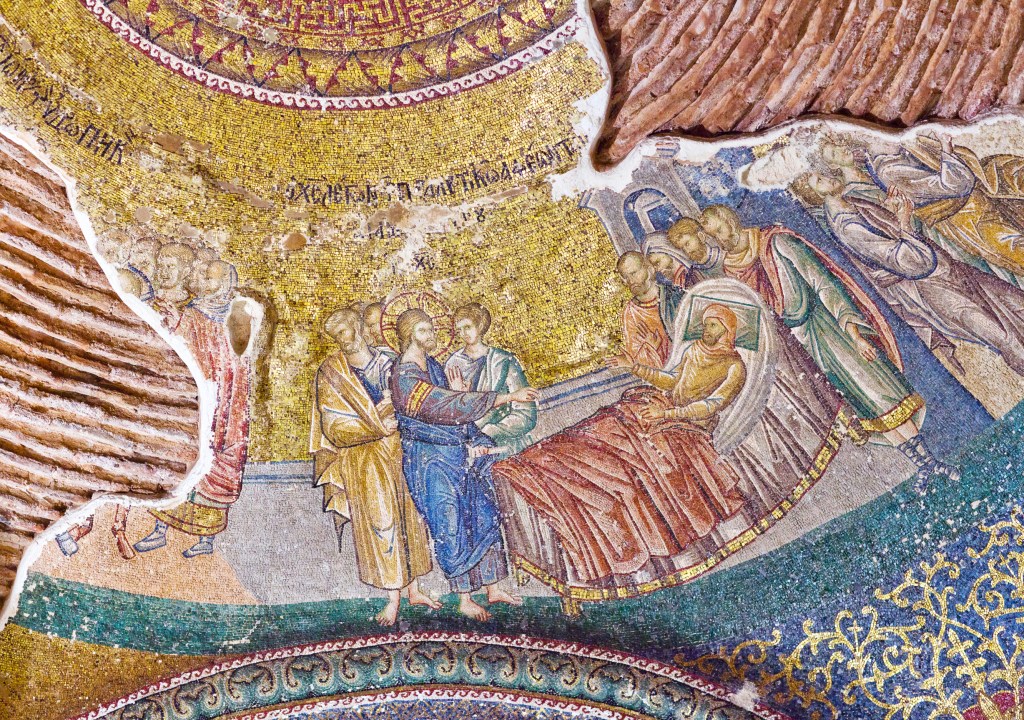
The Gospel reading, Matthew 9:1-8, an account of the healing of a paralytic man in the region of Capernaum, on the western shore of the Sea of Galilee late in 27 A.D. near the start of Jesus’ earthly ministry. The most interesting aspect of the account is Jesus’ statement that he man’s healing at His hand was, in part, the result of the faith of the man’s friends. As I noted in Episode Seven in our Bible Study Video series, Trinitytide: The Teaching Season, Jesus follows the healing with three demonstrations of His divinity (knowing the thoughts of men in verse 4; the power given Him by God the Father to forgive sins in verse 4b; and the healing by His word only in verse 6). The audio-only version is linked from the Podcast Archive page. I discussed the Collect, Epistle and Gospel readings, with two illustrations, in my Blog post for 10/4/24, which is also linked from the Archives page in the righthand column.
As always, thank you for your interest and support. Glory be to God for all things! Amen!

