The celebration of Sunday next before Advent marks the end of the long season of Trinitytide for A.D. 2026. The occasion is traditionally called “Stir-up Sunday,” owing to the opening words of the Collect for the Day. I commented upon the Collect, Epistle and Gospel readings for Sunday next before Advent in my Blog post for November 21, A.D. 2024. The post included a 4th Qtr., 19th C. watercolor by James Tissot, using both a full size version and a detail. Tissot’s collection of 350 images was purchased by public subscription in the early 1900s by the Brooklyn Museum, Brooklyn, NY. The museum made them available online in the public domain. Many of them have appeared in one or more of the AIC Bookstore’s illuminated and illustrated volumes one the four Gospels.
The Collect for Sunday next before Advent was derived by Archbishop Cranmer from the Gregorian Sacramentary (10th C.). Church historian Massey Shepherd notes that the first words, “Stir up,” come from the Latin excita. He further explains that in the English Book of Common Prayer and the first American version in 1789, the day was labelled ”Twenty-fifth Sunday after Trinity” and, further, that the name was changed to its present form, based on the usage in the Sarum Missal, in the American 1892 Book of Common Prayer. One other notable observation by Shepherd is that this asked for “stirring up” refers both to applications of God’s power and of man’s will.
STIR up, we beseech thee, O Lord, the wills of thy faithful people; that they, plenteously bringing forth the fruit of good works, may by thee be plenteously rewarded, through Jesus Christ our Lord. Amen.
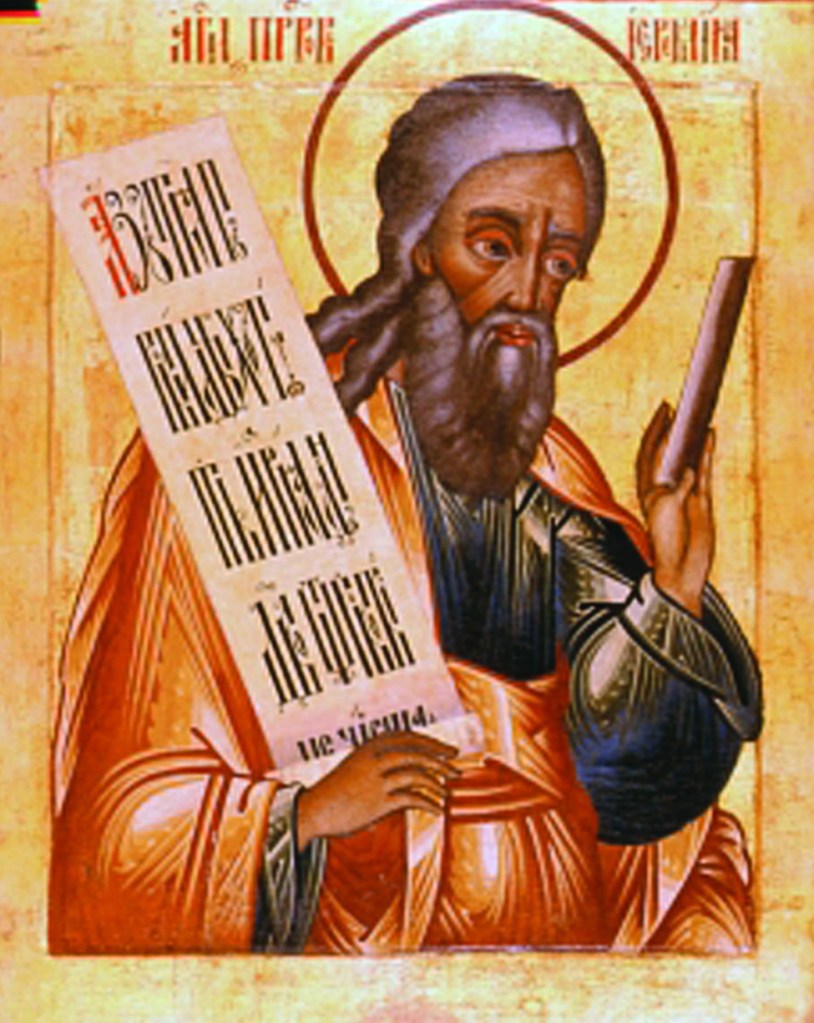
The “For the Epistle” reading, Jeremiah 23:5-8, includes Jeremiah’s messianic prophecy of the coming in the line of David of “a righteous Branch” whose name “shall be called THE LORD OF OUR RIGHTEOUSNESS” (verse 6) and ends with reference to a return of the Israelites to their “own land” (verse 8). The title “for the Epistle” is used on the rare occasions when the first Scripture reading is from an Old Testament book or from The Acts of the Apostles and not from one of the canonical epistles of Paul, Peter, John and James in the New Testament. Other such occasions with a “For the Epistle” reading are Ash Wednesday, Monday and Tuesday before Easter, Monday and Tuesday in Easter Week, Whitsunday, Monday and Tuesday in Whitsun Week, and Trinity Sunday (when the reading is from Revelation, one of the few liturgical use of Revelation in Holy Communion.
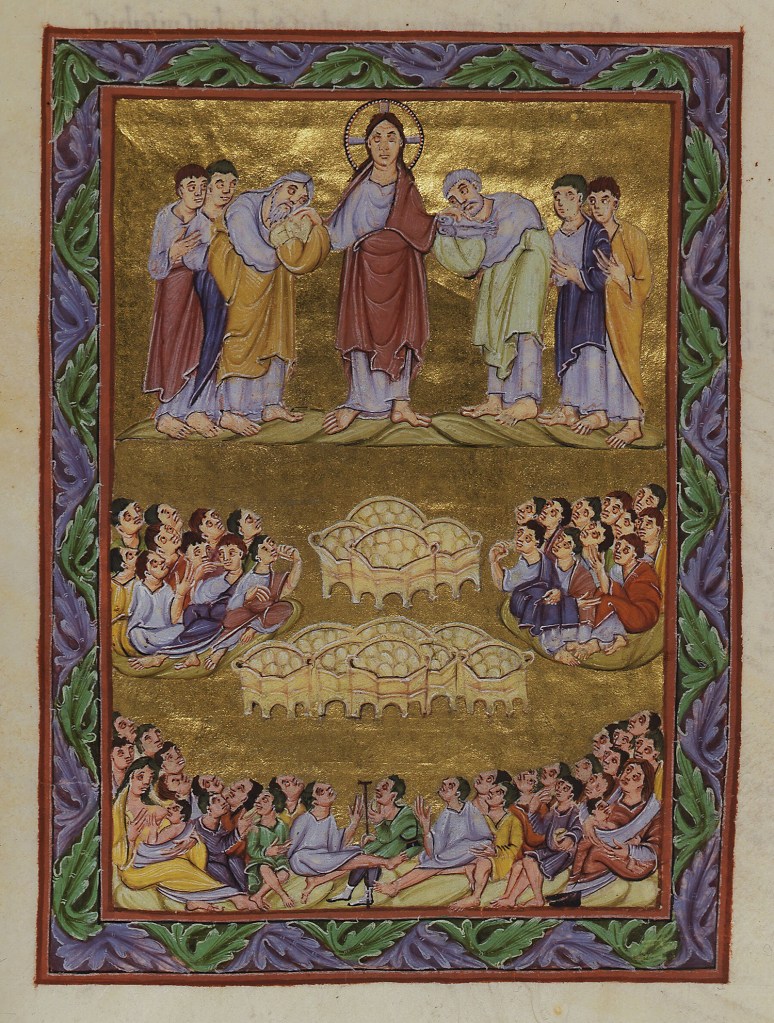
The Gospel lesson, John 6:5-14, records the miraculous Feeding of the 5,000. On the Fourth Sunday after Trinity the same Chapter of the Gospel of John is read but with verses 1 through 4 added. The illustration used above appears in association with the account in Luke 8:10-17. The Scriptural account of the Feeding of the 5,000, also known as the Miracle of the Loaves and Fishes, is told in all three Synoptic Gospels (Matthew 14:13-21; Mark 6:30-44; Luke 8:10-17). In St. John’s Gospel, the Feeding of the 5,000 is treated as the fourth of the seven “signs” of Jesus’ divinity (from the Greek semeion, translated as “miracle” in the King James Version). A special text box, The Seven ‘Signs’ in the Gospel of John” is found on page 25 in the AIC Bookstore Publication, The Gospel of John: Annotated & Illustrated. Church historian Massey Shepherd records the theory that this lesson from the Gospel of John may have been chosen because of the reference to St. Andrew, whose Holy Day/Feast Day is Nov. 30. The topic of “signs” is discussed and illustrated in Episode Thirty-six, Episode Thirty-seven, Episode Thirty-eight and Episode Thirty-nine in the AIC Bible Study Video series, The New Testament: Gospels, linked from the Bible Study page. The audio-only versions of all four episodes in MP3 format are linked from the Podcast Archive page.
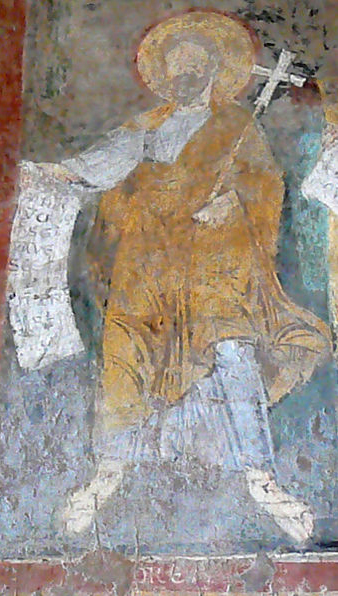
Episode Thirty-nine also includes discussion of the only instance in which St. Andrew is quoted in the Gospels. In John 6:9, John quotes St. Andrew directly: “There is a lad here who has five barley loaves and two small fish, but what are they among so many.” The audio only version in MP3 format is linked from the Podcast Archive page. St. Andrew with his brother Peter and another two brothers, James and John, were the first four called into the ministry of Jesus Christ. The calling of Peter and Andrew is celebrated on Nov. 30, the Feast of St. Andrew, based on the account in Matthew 4:18-22. St. Andrew is celebrated in Episode One, St. Peter in Episode Eleven, St. John in Episode Four and St. James in Episode Twelve in the AIC Christian Education Video series, The Lives of the Saints: First Series. The video series honors the eighteen saints with Holy Days/Feast Days in the 1928 Book of Common Prayer. The audio-only versions of all four episodes in MP3 format are linked from the Podcast Archive page.
Other AIC Resources on topics in this post and not mentioned above: The readings for Sunday Next Before Advent are discussed and illustrated in Episode Nine in the AIC Christian Education Video series, Trinitytide: The Teaching Season, linked from the Digital Library page. The audio-only version in MP3 format is linked from the Podcast Archive page. The image above from the Gospels of Otto III is Illustration No. 63 in the AIC Bookstore Publication, The Gospel of Luke: Annotated & Illustrated. Like all the AIC Bookstore Publications, both the volume on the Gospel of Luke and the volume on the Gospel of John, are available exclusively through my Amazon Author Central page. The first full sentence in the “For the Epistle” reading from the Prophet Jeremiah is the Third Chapter (referring to the third of five Scripture verses read in each hour) in the Third Hour office (for 9 A.M.) in Hear Us, O Lord: Daily Prayers for the Laity. My Podcast Homily for Sunday Next Before Advent is linked from the Podcast Archive page. Another Podcast Homily, this one based upon the Psalm reading in Morning Prayer, is linked from the Podcast Homilies-Morning Prayer page. Hear Us, O Lord, like the AIC Bookstore Publications mentioned above is available exclusively through my Amazon Author Central page. F.Y.I.: The use of Amazon as the vendor keeps down our costs and tax-reporting. All royalties from the sale of AIC Bookstore Publications are donated to the AIC as they received monthly.
Next unday, Nov. 29th, the First Sunday in Advent, will mark the start of a new Church Year, according to the calendar established by Archbishop Cranmer in 1549. Since I have not recently offered commentary and images on the Collect, Epistle and Gospels readings for the four Sundays in Advent, I will do so this year on 11/29, 12/6, 12/13 and 12/20. The post for 11/29 will also include cross-references to the Holy Day/Feast Day of St. Andrew, 11/30. Since the 1549 Book of Common Prayer, the start of Advent is always the Sunday closest to Nov. 30th. My Blog post for 11/29 will include references to AIC resources related to the celebration of St. Andrew’s Holy Day, 11/30.
As always, thank you for your interest and support. Glory be to God for all things! Amen!