Revelation – Episode Fifteen and Seventh Sunday After Trinity

The War on Christianity continues, with imperial edicts promoting transsexuals in the military, fines for opposing gay marriage, gag orders against expressing Christian doctrine, and, yesterday, murders in the American heartland.   I do not think there has ever been a more concerted, disciplined assault on Christianity in the United States.  I fear more is coming.  Your only defense is the practice of Christian Spirituality, which they cannot take from you.  More on that in a later post.

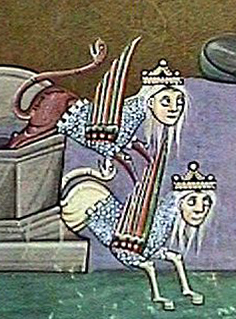
John Receives the Little Book, Bamberg Apocalypse (1000-1020 A.D.), Bamberg State Library, Germany.

Revelation – Episode Fifteen, focused on Chapter 10, the Mighty Angel and the Little Book, is now available on our You Tube channel and our Podcast channel. Continue reading “Revelation – Episode Fifteen and Seventh Sunday After Trinity”

Revelation – Episode 14 and Sixth Sunday After Trinity

Detail from the Fifth Trumpet illustration from the illuminated manuscript, The Bamberg Apocalypse (1000-1020 A.D.), Bamberg State Library, Bamberg, Germany.

Yesterday evening I uploaded Episode Fourteen in the New Testament: An Idealist Interpretation series of Bible Study videos on our You Tube channel.  In this episode the focus is Chapter 9, the account of the Fifth and Sixth Trumpets.  The video includes illustrations of both events from the 11th C. manuscript, The Bamberg Apocalypse.  A key phrase is the Bottomless Pit (Abyss), Continue reading “Revelation – Episode 14 and Sixth Sunday After Trinity”

Revelation – Episode 13 and Fifth Sunday After Trinity

Episode Thirteen in Revelation: An Idealist Interpretation has been uploaded to the AIC You Tube channel and is available through a link on the Bible Study page at the AIC web site.   The focus of Episode Thirteen is Chapter 8, St. John’s account of the first four trumpets, illustrated with several new pictures from the Bamberg Apocalypse.   Watch Episode 13 Continue reading “Revelation – Episode 13 and Fifth Sunday After Trinity”

Revelation – Episode 12 and Fourth Sunday After Trinity

Four Angels Hold Back the Four Winds of the Four Corners, The Bamburg Apocalypse, 1000-1020 A.D., Bamburg State Library.  Public domain.
Four Angels Hold Back the Four Winds of the Four Corners of the Earth, from Folio 17, The Bamberg Apocalypse, 1000-1020 A.D., Bamberg State Library. Public domain.

Episode Twelve, the newest episode in Revelation: An Idealist Interpretation was uploaded to our You Tube channel this morning.  It’s loaded with illustrations from The Bamberg Apocalypse, an illuminated manuscript made between 1000 and 1020 A.D. at the Scriptorium at Reichenau, Germany, under authorization by the Holy Roman Emperor Otto III. Continue reading “Revelation – Episode 12 and Fourth Sunday After Trinity”

Revelation – Episode 11 and Third Sunday After Trinity

Episode 11 in Revelation: An Idealist Interpretation includes my first use of illustrations from the 11th through the 19th centuries depicting scenes from Revelation  The focus in this episode is Chapter 6, St. John’s account of the opening of the

The Four Horsemen of the Apocalypse, by Russian artist Victor Vasnetsov, 1887.

first six of the seven seals, including St. John’s vision of the Four Horses of the Apocalypse, the fate of the souls and martyrs “under the altar” and the great cataclysm of earthquake, sun darkening, and the moon and stars falling.   Continue reading “Revelation – Episode 11 and Third Sunday After Trinity”

First Sunday After Trinity and Revelation – Episode 10

It was exciting and very satisfying yesterday to have completed and uploaded both a Podcast Homily for First Sunday After Trinity and Episode 10 in Revelation: An Idealist Interpretation.

The Podcast Homily for First Sunday After Trinity is focused primarily on the Gospel reading from Luke 16:19-31, the Parable of the Rich Man and Lazarus.   Continue reading “First Sunday After Trinity and Revelation – Episode 10”

Trinity Sunday and New Testament – Episode 45

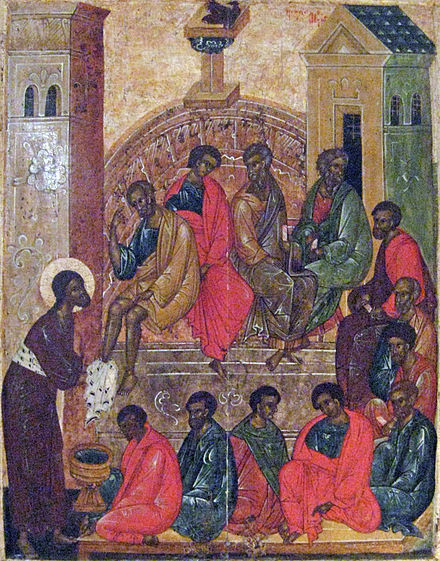
There have been moments when I did not think I would ever be able to complete the New Testament: Gospels and Epistles series, but it is now finished.  Episode Forty-five completes the study with the final four of five Unique Events in the Gospel of St. John:  Restoration of the Adulterous Woman; Foot Washing; Scriptural Warrant for the Sacrament of Confession/Penance; and Jesus’ post-Resurrection Breakfast by the sea with the eleven Disciples.  Illustrations for the episode include work by Gustav Dore’ (from Dore’s English Bible); James Tissot; a 6th C. mosaic at Ravenna, Italy and another at the Hagia Sophia, Constantinople/Istanbul; a 16th C. Russian Orthodox icon in the Pskov tradition; and the ICHTHYS logo that was inspired, in part, by St. John’s account of the post-Resurrection breakfast.

16th Century Russian Orthodox icon of Jesus Washing the Disciples' Feet painting in the Pskov tradition.  St. Peter points to his own head.
16th Century Russian Orthodox icon of Jesus Washing the Disciples’ Feet in the Pskov tradition. St. Peter points to his own head.

The episode is available in both QuickTime movie/video and Podcast formats.     Watch Episode 45.   Listen to Episode 45. Continue reading “Trinity Sunday and New Testament – Episode 45”

Whitsunday-Pentecost A.D. 2015

For this coming Sunday the Podcast Homily focuses on explaining the traditional Church understanding and teaching concerning the Holy Spirit, based upon the first of the two Collect-Epistle-Gospel combinations in the 1928 Book of Common Prayer.  Listen to the Podcast Homily

15th Century Eastern Orthodox Icon of Pentecost as described by St. Luke in Acts 2:1-11

For most of the AIC Podcast Homilies (each linked from the Podcast Homilies page at the AIC web site (www.AnglicanInternetChurch.net)), the homilies explain the actual Epistle and Gospel readings (in this case Acts 2:1-11 and John 14:15-31).   Continue reading “Whitsunday-Pentecost A.D. 2015”

Sunday After Ascension

Greetings.   Corkie and I took several days off last week, making a mid-week visit to the Outer Banks of North Carolina, where it was hot one day, warm one day (with wind off the land side bringing flies), and downright cold one day (with a roaring wind off the ocean).  We enjoyed visits to some of our favorite dining spots:  Sam & Omie’s (great for breakfast), Ortega’Z (the Cubano sandwich for lunch), the Rundown Cafe (a Caribbean term that does not describe the state of the place) for a late afternoon lunch/dinner), and Tortuga’s Lie (another Caribbean term meaning a place and not a falsehood) for a late night dinner.  The Volvo XC90 AWD did very well going up and down all those perfectly flat roads.  We got back in time to help grandson Jaoob celebrate his 10th birthday.

I have posted a Podcast Homily for Sunday After Ascension, focusing on the two readings, 1 Peter 4:7-11. which is more New Testament wisdom, and John 15:26 to 16:4, part of the final discourses with the Disciples on Maundy Thursday in which the compassionate Christ warns the Disciples the fate that awaits them because they followed Him.   Listen to the Podcast Homily.

If your local parish did not offer a service for Ascension Day (Thursday), you can find the complete Ascension Day service I read at my former parish, including the text and music for A Hymn of Glory Let Us Sing, the Venerable Bede’s written description of what the Apostles saw from Acts 1 at my Amazon author page in the AIC Bookstore publication, Occasional Services for Anglican Worship:   Visit the Amazon page.

A 16th Century Orthodox Church icon of the Ascension from Bulgaria.

The 16th Century Bulgarian Eastern Orthodox icon for Ascension displays the amazed Apostles watching Jesus rise in a blue aura, with an angel on each side.  The background is rich, bright gold with a darker gold border.  Note the legends above the angels which contain traditional symbols of Christ.

In the 8th Century, the Venerable Bede, the distinguished first historian of the Church in England which gives us our only view of the Church as it existed at that time, wrote A Hymn of Glory Let Us Sing which remains the model for Ascension Day music, especially in the Anglican and Lutheran traditions.  Sung to the German tune, Lasst Uns Erfreuen. the hymn has seven verses with seven alleluias (a double halleluia at the end of the first stanza of each verses and a five-part Alleluia chorus following each verse.

Verses 1 and 5:

A hymn of glory let us sing;
New songs thro’out the world shall ring;
Alleluia! Alleluia!
Christ by a road before untrod,
Ascendeth to the throne of God.
Alleluia! Alleluia!
Alleluia! Alleluia! Alleluia!

O risen Christ, ascended Lord,
All praise to Thee let earth accord,
Alleluia! Alleluia!
Who art, while endless ages run,
With Father and with Spirit One.
Alleluia! Alleluia!
Alleluia! Alleluia! Alleluia!

Have a glorious Sunday After Ascension celebrating Christ’s return to the Father from Whom He descended at His Nativity.

Fifth Sunday After Easter and New Testament: Episode 44

The weather in the Richmond area has been wonderful, with cool nights and warm days, modest amounts of rainfall and not much wind.  I’ve been busy removing snake strawberries and wild violets out of my back yard with a hand tool (since all the chemicals which will get rid of both will also kill the abundant growth of clover which keeps the yard looking green!

In the last 24 hours, I have posted a Podcast Homily for Fifth Sunday After Easter (Rogation Sunday) and completed, uploaded, and linked Episode Forty-four in the Bible Study series on the AIC You Tube channel.   The Podcast homily includes discussion of more New Testament wisdom from James 1:22-27 and more from the Gospel of St. John (16:23-33), which contains Jesus’ promise not to speak in parables and His promise concerning whatever we ask of the Father in His Name.  Listen to the Podcast Homily

The Bible Study episode continues the discussion of the words Jesus’ uses to express concepts of time, on this occasion the Greek mikron, or “in a little while,” the meaning of which was very confusing to the Disciples, and hora, in this case translated as “time.”  Other topics includes two final Unique “Small” Details:  Jesus’ explanation to Pilate on the location of His Kingdom and His assignment of the Blessed Virgin Mary to the care of the “beloved Disciple” John; and the first of Five Unique Events:  the Visit of Nicodemus.  The video includes a picture of the House of Mary at Ephesus.  Watch Episode 44     Listen to the Podcast version

SJVC-4-Nicodemus-ver2
The Visit of Nicodemus by Franz Mayer of Munich from Paintings on Light: the Stained Glass Windows of St. Joseph’s Villa Chapel, an AIC Bookstore publication. Copyright Ronald E. Shibley

The Visit of Nicodemus is illustrated using the stained glass window by Franz Mayer of Munich at St. Joseph’s Villa Chapel, Richmond, VA, from the AIC Bookstore publication, Paintings on Light: the Stained Glass Windows of St. Joseph’s Villa Chapel.  The Mayer artist include such details as the dark blue sky with stars to suggest the evening visit described by St. John.  Jesus stands over a seated Nicodemus, whose robes are embellished with elaborate borders.  The raised right hand/arm suggests Jesus is granting a Blessing on the Pharisee who became a defender of Jesus and who brought aloe and scented herbs for His burial.

Episode Forty-four is the next-to-last episode on the Gospel of St. John before I resume production of the revised series, Revelation: an Idealist Interpretation.  The final four Unique Events are the Restoration of the Adulterous Woman; the Foot Washing of the Disciples; Jesus’ institution of the Sacrament of Confession/Penance; and His post-Resurrection meal with the remaining eleven.

The Podcast Homily includes my adaptation of a liturgical prayer of Thanksgiving from the tradition of the Maronite Catholic Church in Lebanon.   St. John Maron lived in the late 7th and early 8th Century.  The Church named in his honor uses an Eastern Rite liturgy but accepts the primacy of the Bishop of Rome in ecclesiastical matters.  It is a sign of our secular-dominated times that Christians no longer pray in this highly-respectful, reverential tone that grants to God sovereignty in all things:

GRANT US, O Lord God, that as we assemble here today, our minds released from worldly thoughts and our attention turned to Thee; we may stand in Thy presence with tranquility, offering ceaseless praise and uninterrupted thanksgiving and acknowledging the loving-kindness through which our lives are directed, ruled and protected and our souls saved; to Thee we offer praise and thanksgiving; now and ever and unto the ages of ages.  Amen.

As always, thanks for your interest in the Internet-based ministry of the Anglican Internet Church.